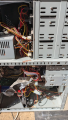
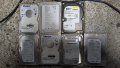
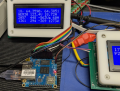
No joy with the format. Created a RAID 1 drive with the two good ones, filled it with random data. to the donation bin with a lot of other junk.
Keeping the SCSI cable.
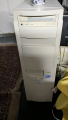
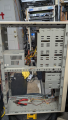
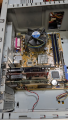
Spinning up another relic.
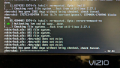
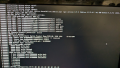
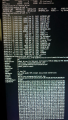
One last boot of the old OS and setup.
Clean it up and only use the two SATA drives for the new configuration.
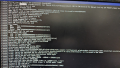
Using the PCMCIA card interfaces to test old hardware. Drives and DAQ cards. 6.1.0-48-amd64 Debian 12.14
I have a (CRT) TV with built in VCR here, won't be dumping it if I can help it.
I have no remote control for it but it does work manually.
Why do I miss watching noisy TV all of a sudden? These are worth a watch, techies will love these (the show was made in UK but not a big deal), the hands on stuff is great and the history recap is fascinating.
Since you were talking about magnetism based recording...
Sometimes I feel like the British have some sort of allergy to giving any credit to American inventers.
Early in the video "about the time Bell 'discovered' the telephone. (yea, he found it in a cave)
Also, no mention of Philo Farnsworth who was actually granted the patent after proving in court where "that Russian guy" had stolen the concept of scanned lines from Farnsworth.
Sometimes I feel like the British have some sort of allergy to giving any credit to American inventers.
Early in the video "about the time Bell 'discovered' the telephone. (yea, he found it in a cave)
Also, no mention of Philo Farnsworth who was actually granted the patent after proving in court where "that Russian guy" had stolen the concept of scanned lines from Farnsworth.
That seems like a rather hasty conclusion to have reached, watch:
Hertz, Marconi weren't Americans but Armstrong was, and he's mentioned (at some length) as the inventor of FM. I agree it would have been nice to mention Farnsworth but I very much doubt this was due to any prejudice by the guy making the show, which was made on a shoestring budget with a very limited resources and time.
Now watch this:
Huge credit is given to Chester Carlson (one of my heros as a kid).
Most Americans I meet even techies, have never even heard of Carlson.
Also huge credit is given to Bell in the episode on telephones as is Strowger and Shockley and Bardeen and Brattain - all Americans.
No, actually it wasn't a hasty conclusion, it was just watching that video made me think of the many debates I have seen and been involved in over time.
Ported the DAQ_BMC system (kernel module, kernel patches, Device Tree and application programs) to the latest Linux kernel 7.1.0rc7 on the Orange Pi Zero 3 board. The Chinese vendor Allwinner kernel is stuck at 6.1.31 with no security updates or patches.
The mainline code has support for most of the important SoC devices but they renamed and moved a few hardware symbols in the code for things like SPI CS. It's now 0 for SPI instead of 1 on the vendor kernel so a little kernel code hacking was required to make things work correctly again.
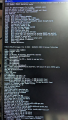
Boot from the SD card. U-Boot debug on the SoC TTL serial port.
These SoC embedded type boards use U-Boot, a Soc Device Tree and Device Tree overlays to configure and setup hardware on boot. I'm using stock Debian Bookworm as the base system.
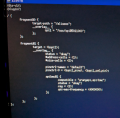
This dts source file gets compiled into a binary overlay dtbo for U-Boot to load and setup.
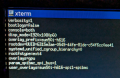
User overlay directory.
U-Boot config file for user functions.
Most in-circuit and GPIO based interfaces (SPI, I2C, I2S, UART, …) don’t have a mechanism for detecting and identifying devices connected to the bus, so Linux kernel has to be told explicitly about the device and its configuration details.
While Device Tree is a way of describing hardware configuration to the kernel, Device Tree overlays are a way for modifying the DT in order to provide the kernel and kernel drivers with details about external devices or to activate interfaces disabled by default.
Note: from the Linux kernel maintainer perspective all unused in-circuit type interfaces that use GPIO pins should be disabled by default and all pins on pin headers or soldering pads will be configured as standard GPIOs.
Most of these are embedded sensor Soc boards (OPi 3W Linux custom 7.1+ and RPi 2W modified kernel Trixie) with Q84 DAQ hardware boards for the homes energy control system.

 Facebook
 Google
 GitHub
 Linkedin