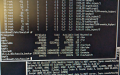
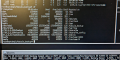
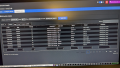
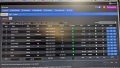
My backup solution for home computers using Bacula and the Bacularis Web interface.
One 8TB two drive mirror for backups using a dedicated system (sma2) on the server rack.
One 20TB usb drive on a Orange Pi system, (also used with the bmcdaq solar monitor and control board) for 'remote' (in a shed away from the main building)
Last year I completely disabled Windows Update and its so-called Defender, and I now rely on an antivirus/antimalware that is not embedded in the OS. I've had zero issues ever since.
I still want to migrate to Linux eventually, though.
"It may be that, by happenstance in AI development, we have stumbled upon an underlying natural law, a fundamental principle. When applied to trained neural network systems, information-fidelity loss and collapse may be universal, not specific to digital systems. This line of reasoning has serious sociological implications: decadence may be more than just a moral failing; it may be universally applicable."
If 1% of shipped semiconductor products failed in the field installed in consumer products after something like a die shrink, that company would in deep dodo.
If 1% of shipped semiconductor products failed in the field installed in consumer products after something like a die shrink, that company would in deep dodo.
When the Pentium's original array was compiled into the mask pattern used for fabrication, five values of +2 were not received by the lithography equipment. As a result, five array cells in the actual chips' etched PLAs that were supposed to contain +2 actually contained zero.
The severity of the FDIV bug is debated. Though rarely encountered by most users (Byte magazine estimated that 1 in 9 billion floating point divides with random parameters would produce inaccurate results),[3] both the flaw and Intel's initial handling of the matter were heavily criticized by the tech community.
...
In December 1994, Intel recalled the defective processors in what was the first full recall of a computer chip.[4] In its 1994 annual report, Intel said it incurred "a $475 million pretax charge ... to cover replacement and write-off of these microprocessors."[5]
It's been 'when' for me three times now, and I'm back with Windows again. I want to make the move, and it's great until something doesn't work and I run smack into the cliff of the learning curve. I think Windows is ahead on user interface at the technical level, sadly.

 Facebook
 Google
 GitHub
 Linkedin