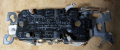
Leviton Introduces New Wall Outlet Design

MrAl

Joined Jun 17, 2014
13,724
A correctly twisted set of conductorswith a properly sized wire nut will not cause problems. The grief comes from the unknowing folks who have no clue as to what they are doing or why the instructions tell them to do it. I have replaced burned up outlets where there were 2 wires under one screw and a third wire under the other screw. My friend was very fortunate tghat the fire did not get outside the steel box and into the wall. And fortunately there was enough slack to allow fresh wire into the 4-conductor sized wire nuts.. So she escaped a wall fire and got her refrigerator and microwave working again. Yes, they do make wire nuts sized for 4x #12 wires.
And those rectagonal outlets and switches/dimmers have been around for quite a few years. So I would not call them "new".
Hi,

Wire nuts are a special case. When the wires are twisted properly, they have a relatively large surface area that can maintain contact. That doesn't mean that is the best way to connect wires.
Yes, you're right, some of those blade contact type outlets have been around for a long time. I don't use them.
This other type appears to be newer though.
Also keep in mind i have not examined one internally yet either so i can only quote generalities for now.
 

MisterBill2

Joined Jan 23, 2018
27,706
The commercial users who are in a burning rush to complete the job and leave are quite different from those of us who choose to assure that every step of the project is done very well. Those pus-in connectors are a substitute for assuring that everyconnection is adequately tightened so that the connection will be low resistance. Also, it is a definite benefit to be able to focus one's attention on each part of the task to assure that it is completed correctly.
 

nsaspook

Joined Aug 27, 2009
16,359
The commercial users who are in a burning rush to complete the job and leave are quite different from those of us who choose to assure that every step of the project is done very well. Those pus-in connectors are a substitute for assuring that everyconnection is adequately tightened so that the connection will be low resistance. Also, it is a definite benefit to be able to focus one's attention on each part of the task to assure that it is completed correctly.
WAGO LEVER connectors are not push-in/stab-lok devices. I agree with not using push-in connectors on a professional job but this is something better that results in a job well done. Test them, try them, like them. :)

I'll redo one local approval test.

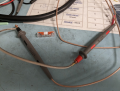
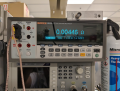
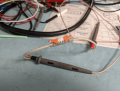
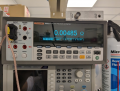
Connection resistance check with a high precision 8846A ohm meter with Fluke TL2X4W probes.
https://dam-assets.fluke.com/s3fs-public/TL2X4WPTiseng0100.pdf?nDYJ.6.ipb0__UqcbcKoLiifHnk1zwaF
The Fluke TL2X4W-PTII 2x4-Wire 1000 V Test Leads are
designed for use with the 8845A and 8846A multimeters. The
split contacts of the test lead’s banana plugs are aligned to mate
with the split contacts of the 8845A and 8846A HI and LO input
connectors.
The split contact design used by both the meters and the test
leads bring both the input and sense terminals of the meters to
any 4-wire resistance measurement with only two, instead of four
test leads
1685888788013.png
1685888809244.png
Jumper resistance.
1685890824533.png
1685888829487.png
1685888859043.png
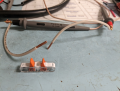
Jumper and WAGO Lever connector static resistance.

Other tests checked the voltage drop and temperature at max rated load on a 220vac circuit for 24 hours. All tests easily passed in comparison to the best wire-nut connection with a fraction of the prep and install time.
 
Last edited:

MrAl

Joined Jun 17, 2014
13,724
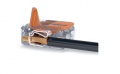
A little bit about Wago... It's not quite an "edge" connector, they call it a "Cage".
View attachment 295707

COMPACT splicing connector (221-613) | WAGO USA

Wago vs. Wire Nuts tested!
https://www.bing.com/ck/a?!&&p=e0c7...yOTA2QkQ0MTIyNDRDMEU2OUU2JkZPUk09VklSRQ&ntb=1
Hi,

That's great to hear. That's way i was sure to mention that i have not yet examined one of these connectors. There are ones too i have not yet examined.
My main concern is about the edge type which tend to be a little strange, although they too can work for several years without too much of a problem with low enough current levels.
 

MrAl

Joined Jun 17, 2014
13,724
The commercial users who are in a burning rush to complete the job and leave are quite different from those of us who choose to assure that every step of the project is done very well. Those pus-in connectors are a substitute for assuring that everyconnection is adequately tightened so that the connection will be low resistance. Also, it is a definite benefit to be able to focus one's attention on each part of the task to assure that it is completed correctly.
Hi,

Yes, and please see post #25.
 

MisterBill2

Joined Jan 23, 2018
27,706
What I am not sure about with the WAGO connectors is how they would work with solid conductor wires. In working with assorted "old construction" systems it is common to come across both solid and stranded at a junction point. A correctly sized wire nut with adequate attention to the twisting detail will yield a good connection. And while there are knock-off wire nuts, when knock-off WAGO connectors appear, there will certainly be serious issues.
 

Thread Starter

SamR

Joined Mar 19, 2019
5,501
I've never trusted the back stab type edge connectors on outlets and switches even though they are UL approved. I didn't find an actual "contact area" or tension spec for the Wago cam lock connectors (never used them either) but their test results speak for themselves. Always beware copycat products as being of questionable quality. I also don't much care for soft plastic wire nuts (even though they have "wings" to help tightening) over the hard plastic style. Yeah, the hard plastic can crack but the soft ones melt at a much lower temp it seems. I also prefer taping on top of wire nuts instead of leaving them bare. If nothing else the tape holds a loose wire nut in place.
 

nsaspook

Joined Aug 27, 2009
16,359
What I am not sure about with the WAGO connectors is how they would work with solid conductor wires. In working with assorted "old construction" systems it is common to come across both solid and stranded at a junction point. A correctly sized wire nut with adequate attention to the twisting detail will yield a good connection. And while there are knock-off wire nuts, when knock-off WAGO connectors appear, there will certainly be serious issues.
They work fine with solid conductor wire and because each wire has its own connection port, twisted wire to solid wire connection are IMO better than wire-nut connections.

For big stuff and lots of wires I use split-bolts and tape.
1685974876673.png
1685975154535.png
 
Last edited:

MrAl

Joined Jun 17, 2014
13,724
I've never trusted the back stab type edge connectors on outlets and switches even though they are UL approved. I didn't find an actual "contact area" or tension spec for the Wago cam lock connectors (never used them either) but their test results speak for themselves. Always beware copycat products as being of questionable quality. I also don't much care for soft plastic wire nuts (even though they have "wings" to help tightening) over the hard plastic style. Yeah, the hard plastic can crack but the soft ones melt at a much lower temp it seems. I also prefer taping on top of wire nuts instead of leaving them bare. If nothing else the tape holds a loose wire nut in place.
Hi,

Good point.
I like the wire nuts with the metal inserts best.
Talking about the tapes, I also prefer the cloth based electrical tape.
I also like to make a longer 'twist' with solid wire before screwing on the wire nut to increase the wire-to-wire contact area. Nut has to be big enough.

In old repairs, the wire is sometimes tarnished and needs a surface cleaning first too.
 

nsaspook

Joined Aug 27, 2009
16,359
I've never trusted the back stab type edge connectors on outlets and switches even though they are UL approved. I didn't find an actual "contact area" or tension spec for the Wago cam lock connectors (never used them either) but their test results speak for themselves. Always beware copycat products as being of questionable quality. I also don't much care for soft plastic wire nuts (even though they have "wings" to help tightening) over the hard plastic style. Yeah, the hard plastic can crack but the soft ones melt at a much lower temp it seems. I also prefer taping on top of wire nuts instead of leaving them bare. If nothing else the tape holds a loose wire nut in place.
+1

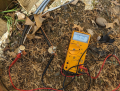
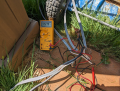
Just replaced an original back stab in the house today and every outlet in the circuit string with screw types.
Bad connections and overheating. Had to use WAGO connectors inside the outlet box to repair the bad wiring with new jumpers to the new outlet.
1686339092584.png
1686339175857.png
 

Thread Starter

SamR

Joined Mar 19, 2019
5,501
When you see cracked insulation like that it's a pretty good indicator of high temps on Romex. I've seen old brown 2 conductor extensions cords insulation deteriorate over time and start cracking but Romex insulation holds up pretty well.
 
Top