Facebook
 Google
 GitHub
 Linkedin
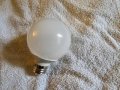
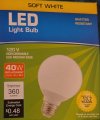
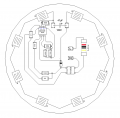
Had an LED go out in the bathroom over the vanity. Decided to do some testing on it. After determining that it wasn't a poor electrical connection I broke it open. Found a very cheap set of electronics inside. Nothing like the better made PWM type lights.
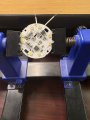
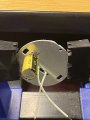
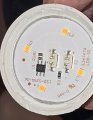
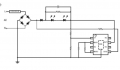
This is the second cheapest construction of a driver that I've seen so far. The only worse things I've seen have been those cheap Chinesium made which have hardly more than a capacitor for voltage drop.
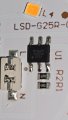
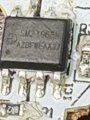
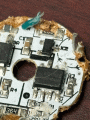
Anyway, the next two pictures focus on R13 (F1). When examined, it looked like a broken solder joint. Only it wasn't. The other side of R13 (F1) looked good but IT was the side that was open. Now, given that these are heat sink mounted it's not easy to solder on. But I managed to set the iron at its hottest and let the iron dwell on the joint for quite a few seconds. Maybe on the order of 20 to 30 seconds. But eventually solder began to bridge from R13 to the pad. You can clearly see the end that I resoldered. And yes, that's WAY too much solder. But that's what it took to transfer sufficient thermal energy to get the pad to flow.
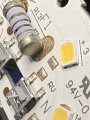
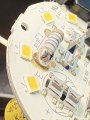
You may also note the pinch type wire junctions of both the Hot/Neutral lines and Capacitor (mounted through the board). If this is the reason why these things are coming down in price then we can begin to expect more failures in the future. After the butcher job - I mean solder job - it's working. Now, what to use it for?
This is the second cheapest construction of a driver that I've seen so far. The only worse things I've seen have been those cheap Chinesium made which have hardly more than a capacitor for voltage drop.
Anyway, the next two pictures focus on R13 (F1). When examined, it looked like a broken solder joint. Only it wasn't. The other side of R13 (F1) looked good but IT was the side that was open. Now, given that these are heat sink mounted it's not easy to solder on. But I managed to set the iron at its hottest and let the iron dwell on the joint for quite a few seconds. Maybe on the order of 20 to 30 seconds. But eventually solder began to bridge from R13 to the pad. You can clearly see the end that I resoldered. And yes, that's WAY too much solder. But that's what it took to transfer sufficient thermal energy to get the pad to flow.
You may also note the pinch type wire junctions of both the Hot/Neutral lines and Capacitor (mounted through the board). If this is the reason why these things are coming down in price then we can begin to expect more failures in the future. After the butcher job - I mean solder job - it's working. Now, what to use it for?