Learning In the Open with PCB Layout

Thread Starter

Rockettfuel

Joined Sep 17, 2025
29
Hey folks,
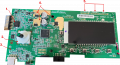
To learn more about electronics, I've been removing the PCB from a wide variety of products
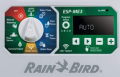
and studying/learning in the open. The PCB I have below is a Rain Bird ESP-ME3 controller for
irrigation and I'm asking for assistance on properly identifying areas of this PCB that
look unfamiliar to me.

My questions,
1. I'm unsure as to what this component is, my best guess is that its a (TVS)​
What are the ways I can go about identifying this component?​
2. What is this type of switch called? I'm interested in learning how it works however​
its internal workings are sealed inside of a plastic housing.​
3. This question is for clarification, is FK a "Fuse"? and what does the K refer to?​
4. My question is what are these gold flat plated areas? Is the purpose of them​
to assist with dissipating heat?​
5. Now I'm familiar with "SPI" and what would be the possible use cases for these areas?​

Many thanks!
RainBirdPCB.png
 

MisterBill2

Joined Jan 23, 2018
27,182
#1 The device is a ferrite block Low Pass filter. (LP1)
#2 Bertus got it. A 4-bit binary switch
#3 It is a fuse identified as "F1"
#4 The gold plated areas ARE Heat Sinks.
#5. The unpopulated holes are, as mentioned, provided to connect options not available on this model of the controller.
 

MaxHeadRoom

Joined Jul 18, 2013
30,561
Re: No5
If SPI2 Is for communication, ver. 2 is a little different to the typical mode 0
SPI Mode 2 configuration is where the clock idle state is high (CPOL = 1) and data is sampled on the falling edge of the clock signal (CPHA = 0) .
Data is shifted out on the rising edge.


Thread Starter

Rockettfuel

Joined Sep 17, 2025
29
#1 The device is a ferrite block Low Pass filter. (LP1)
#2 Bertus got it. A 4-bit binary switch
#3 It is a fuse identified as "F1"
#4 The gold plated areas ARE Heat Sinks.
#5. The unpopulated holes are, as mentioned, provided to connect options not available on this model of the controller.
Ahhh #1 is interesting because given the size and placement of the component on the PCB I assumed it was some sort of inductor but I wasnt getting inductor like readings on my DMM. Im going to read more about ferrite block Low Pass filters so that I can familiarize myself with them.
Many thanks for the reply!
 

Thread Starter

Rockettfuel

Joined Sep 17, 2025
29
Ok for anyone like me wondering whats the purpose of a ferrite block low-pass filter and the significance of its placement on the circuit board? I've got some answers for you.
So the ferrite block low-pass filter is a passive component and used for suppressing high frequency noise on power and signal lines. Hence the name low-pass filter, allowing the wanted signals thru and filtering out the high frequencies.
The ferrite material is made of a magnetic ceramic that has a frequency dependent impedance.
Now for the placement of the ferrite block low-pass filter, my first assumption is to prevent frequencies of the power lines causing interference with the 4 bit binary switch's IC. I could have it the other way around, however my money is on the former.
I'm not yet 100% sure as I don't have a oscilloscope to verify and with that being said, I'll do research to gain a clear conceptual flow of the operation.
Bonus: The TTL-232-USB on bullet #5 is possibly access for UART. Funny story, many months ago I bought a NANO FT232 module only becuase it was heavily discounted and at that time I didnt know the use and it didnt matter because I would find out. Fast forword to preset day and I go down a rabbit of reserach on serial communcation and boom the FT232 was mentioned as a needed hardware for protocols. Welp looks like I'll be doing some UART diving and putting the FT232 to good use.
Thanks for reading and continuing to learn with me. Any corrections, clarification, ideas, insights, etc are always welcomed.
 

nsaspook

Joined Aug 27, 2009
16,251
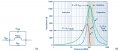
Has frequency dependent impedance that's mainly resistive at the undesired frequencies. That means the blocked/filtered energy is dissipated as heat in the ferrite material. I've had the ferrite housing melt on large filters clamped to cables carrying high current transients.
1761611919557.png
https://www.analog.com/en/resources/analog-dialogue/articles/ferrite-beads-demystified.html
An effective method for filtering high frequency power supply noise and cleanly sharing similar voltage supply rails (that is, analog and digital rails for mixed-signal ICs) while preserving high frequency isolation between the shared rails is the use of ferrite beads. A ferrite bead is a passive device that filters high frequency noise energy over a broad frequency range. It becomes resistive over its intended frequency range and dissipates the noise energy in the form of heat. The ferrite bead is connected in series with the power supply rail and is often combined with capacitors to ground on either side of the bead. This forms a low-pass filter network, further reducing the high frequency power supply noise.
 

Thread Starter

Rockettfuel

Joined Sep 17, 2025
29
Has frequency dependent impedance that's mainly resistive at the undesired frequencies. That means the blocked/filtered energy is dissipated as heat in the ferrite material. I've had the ferrite housing melt on large filters clamped to cables carrying high current transients.
View attachment 357780
https://www.analog.com/en/resources/analog-dialogue/articles/ferrite-beads-demystified.html
Oh man this is awesome! Major thanks for this info, the visual representation, and the link, def bookmarking this. It was difficult to locate solid info on ferrite block low-pass filter so this helps a ton.
 

tribbles

Joined Jun 19, 2015
37
I don't think SPI2 refers to the mode; it's simply a second SPI bus that can be used for expansion purposes. SPI1 could be driving the display.

F1, as mentioned, is a fuse, and the "1" simply means it's the first fuse on the board. The second fuse would be F2 and so forth..
 
Top