Landline (VOIP) Caller ID

MisterBill2

Joined Jan 23, 2018
27,713
The problem of spoofed caller ID is not a trivial one. The phone network is very complex with a lot of entry points. The ready availability of SIP termination made it easy for bad actors of a system with security measures that were overtaken by events. When it was all one thing trust wasn’t an issue; even when it became more distributed, it was still a gentleman’s club and so trust wasn’t even on the radar.

Suddenly, it only cost few dollars a month to effectively be your own phone company. The information passed between parts of the network was suddenly not inherently trustworthy, and there was no framework to deal with that. But, because robocalls are not respecters of power and wealth even those with such things became victims, so something was done.

A combination of regulatory and technological has dramatically reduced the number of robocalls. Companies providing access to caller id services now have to be more vigilant about what Caller ID and CNAM (the name part) information is permitted. If you want to display a Caller ID number different from the originating number, it has to be one the vendor knows you own, or that has been verified as one you control.

Even if you gain access to the level of the network at which the Caller ID information originates, STIR/SHAKEN protocol is being put in place to prevent using numbers not in your control. In effect it is like SPF is for email, providing a way to look up if the domain allows mail to be sent by whoever is sending it.

Not even addressing whether the phone companies want to do something about it, the problem is vexed. It can’t be done any one phone company, it requires a global effort and things are being done but it is a very big task and very messy. That’s why one prong of the attack is increased regulatory enforcement and prosecution—including some very high profile cases.
Given that a lot of the spoofed calls come from outside the US, my quick fix would be to cut off completely the areas that originate the most calls. When the local government understood that it was the callers were responsible for that area losing ALL internet access to the US, they might become willing to act. It would be worth trying for a while, it would cost them far more than it would cost the US. And money does not just "talk", it gets very loud some times.
 

MrAl

Joined Jun 17, 2014
13,724
The problem of spoofed caller ID is not a trivial one. The phone network is very complex with a lot of entry points. The ready availability of SIP termination made it easy for bad actors to take advantage of a system with security measures that were overtaken by events. When it was all one thing trust wasn’t an issue; even when it became more distributed, it was still a gentleman’s club and so trust wasn’t even on the radar.

Suddenly, it only cost few dollars a month to effectively be your own phone company. The information passed between parts of the network was suddenly not inherently trustworthy, and there was no framework to deal with that. But, because robocalls are not respecters of power and wealth even those with such things became victims, so something was done.

A combination of regulatory and technological measures has dramatically reduced the number of spam calls. Companies providing access to caller id services now have to be more vigilant about what Caller ID and CNAM (the name part) information is permitted. If you want to display a Caller ID number different from the originating number, it has to be one the vendor knows you own, or that has been verified as one you control.

Even if you gain access to the level of the network at which the Caller ID information originates, STIR/SHAKEN protocol is being put in place to prevent using numbers not in your control. In effect it is like SPF is for email, providing a way to look up if the domain allows mail to be sent by whoever is sending it.

Not even addressing whether the phone companies want to do something about it, the problem is vexed. It can’t be done any one phone company, it requires a global effort and things are being done but it is a very big task and very messy. That’s why one prong of the attack is increased regulatory enforcement and prosecution—including some very high profile cases.

[EDIT: minor corrections, some omitted words... err.... remitted.]
Hi,

How do you suppose they can have several numbers and several names that come up on the caller id ?
Can they all be somehow registered and still get through?

I see numbers coming in that always change from the same caller name. I also see several names coming in with several numbers one right after the other maybe 2 minutes apart. That tells me the two are related in some way.

Yesterday i cleared more than 20 calls from my land line phone that were all BS.

The real problem with this is not as much that they are annoying anymore, it's that they make you less sensitive to calls coming in so you could miss an important call from a party that you need to talk to. It's a real problem.

If it keeps up i may just get my line disconnected. I could try a new phone number but i have a feeling that wont work either.
 

Ya’akov

Joined Jan 27, 2019
10,262
Hi,

How do you suppose they can have several numbers and several names that come up on the caller id ?
Can they all be somehow registered and still get through?

I see numbers coming in that always change from the same caller name. I also see several names coming in with several numbers one right after the other maybe 2 minutes apart. That tells me the two are related in some way.

Yesterday i cleared more than 20 calls from my land line phone that were all BS.

The real problem with this is not as much that they are annoying anymore, it's that they make you less sensitive to calls coming in so you could miss an important call from a party that you need to talk to. It's a real problem.

If it keeps up i may just get my line disconnected. I could try a new phone number but i have a feeling that wont work either.
One trick the spammers have been using, and I believe is being addressed, is to buy DIDs (Direct Inward Dialing, short hand for a phone number the can make or receive calls) in bulk so the cals appear from a local area. They don't clear the CNAM or change it, from the previous user so it looks like a local call from some person but it's neither. This is taking advantage of a quirk.

I use VoIP for my home phone line but I run it myself. I have complete control over what happens when you call one of my numbers. Local DIDs cost me ~$1.00/mo. I have ported our ex-landline number of nearly 30 years to the provider, as well as a legacy mobile number of about the same vintage.

When you call our "home" phone, two things happen. First, there is an announcement that says "I'm sorry we can't answer right now, if you really need to talk to one of us, press 5 now and the system will try to locate us, otherwise stay on the line and leave a message".

If the caller presses 5, the iVR (Interactive Voice Response, sometimes called automated attendant) rings both our mobile phones a few times. If we don't answer it drops the caller into the VM system. When the caller leaves a VM, it is emailed to both of us and we can listen—or not—as appropriate. Waiting after the announcement initiates the VM part.

I also numbers with no CID shunted to a recording with the RO' SIT (Special Information Tones), that ascending 3 tone sequence you hear before a recording about something being wrong with a number. The announcement says "you must have a valid Caller ID to complete calls to this number, please correct the problem and try again". This will block "private" or misconfigured numbers, and automated systems may detect the tones and drop the number from the list they are using.

I also have some specific numbers treated specially, such a debt collectors who think our number belongs to someone else, or people that I don't want to have contact with. In those cases, the call receives the system message that the number is not assigned or is no longer in service. I never know it has happened.

One more thing is DISA (Direct Inward System Access). This allows me to call my home number and if I am coming from a specific CID and know the code to dial, routes me to a dial tone that allows me to place calls originating from my home number. This is good for systems that require I call from that number (such as card activations), or calls to customer service that use the number as part of authentication.

It does take work but I love being my own phone company. For a person who spent a chunk of his youth spelunking the dark passages of the amazing Bell System, being the phone company is a kind of cheap thrill. I also maintain a fax number for $1.00/mo that can receive fax and email it to me. It has been a lifesaver when dealing with business transactions with banks, lawyers, and the like that still use fax as official communication.

Facsimile has a special legal status but eventually it will be gone, just like the precious copper pair with DC continuity to the CO that I held onto for so long. I lament the deplorable condition of the once glorious copper plant that was so beautifully designed, installed, and maintained. Seeing the lines hanging from polls, and the pedestal missing covers or vandalized is tragic to me. Time marches on, surely, but sometimes "progress" also means losing things that the "progressives" can't understand and so don't appreciate.

Whatever its flaws, the pre-breakup Bell System was one of the most reliable and technically excellent systems of any kind. Given the scale of it, that's pretty amazing. Bell, and Bell Labs, and Western Electric were unparalleled as organizations with vision, competence, and adherence ot a mission. We really did lose something when they were effectively killed by people who didn't understand the importance of preserving the great benefit of an organization and system which more than any other I can bring to mind embodied the spirit of technology in service to people that the Bell System did.

I may seem excessively rhapsodic in my prose, but I would counter that I am unable to properly sing the praises of this amazing, lost paragon of American innovation and practical implementation of a critical and massive technical infrastructure has not only made our lives better but literally saved millions of them over its lifetime thanks to it's reliability, robustness, and the people who took their work as a serious and important service to those whose homes that copper pair connected to the world.

(Please excuse this discursive screed, you might detect I have strong feelings about this. If any one is interested, I can point to several resources to learn more about the history and legacy of the Bell System, including films and videos produced by them in the course of doing their work, and people who—like me—became fascinated with the deep secrets of the amazing system that was always "just there" when you needed it.)
 

MisterBill2

Joined Jan 23, 2018
27,713
OK, now the challenge will be to create a simple CMOS circuit to generate that 3-tone sequence whenever I press a button on a box by the phone. And to also add it to my outgoing voicemail message. Humans will understand the message when they hear me after the tones, while spoofer machines will not.
If I can do the circuit simply I will publish it here so that others can copy it. AND so that nobody can patent it and keep others from producing copies.
 

Ya’akov

Joined Jan 27, 2019
10,262
OK, now the challenge will be to create a simple CMOS circuit to generate that 3-tone sequence whenever I press a button on a box by the phone. And to also add it to my outgoing voicemail message. Humans will understand the message when they hear me after the tones, while spoofer machines will not.
If I can do the circuit simply I will publish it here so that others can copy it. AND so that nobody can patent it and keep others from producing copies.
Of course, an MP3 player module could do it, and have other useful recordings like "this number is out of service" and the like. Just answer without saying anything and if the caller is not kosher, choose an apropos recording.
 

Reloadron

Joined Jan 15, 2015
7,893
I also numbers with no CID shunted to a recording with the RO' SIT (Special Information Tones), that ascending 3 tone sequence you hear before a recording about something being wrong with a number. The announcement says "you must have a valid Caller ID to complete calls to this number, please correct the problem and try again". This will block "private" or misconfigured numbers, and automated systems may detect the tones and drop the number from the list they are using.
I want to think and operative word being think this subject came up not long ago. This link covers it in part. Each tone has a frequency and duration. I created the three tones in Audacity but never pursued it. Can't recall the tone frequencies of duration.

Ron
 

Reloadron

Joined Jan 15, 2015
7,893
OK, now the challenge will be to create a simple CMOS circuit to generate that 3-tone sequence whenever I press a button on a box by the phone. And to also add it to my outgoing voicemail message. Humans will understand the message when they hear me after the tones, while spoofer machines will not.
If I can do the circuit simply I will publish it here so that others can copy it. AND so that nobody can patent it and keep others from producing copies.
Easier way. If you never used it Audacity is a really nice open source (free) software program. I have been playing around with DTMF encoding and decoding. I used it to create the tones I mentioned in my previous post. Frequency and timing are everything with those tones. Number changed or disconnected might be 913.8 Hz, 1370.6 Hz and 1776.7 Hz with short, short and long. Short = 276 mS and Long = 380 mS with a tone spacing of 0 and 4 mS with 4 mS being the max between tones. I found them on the WiKi along with all of the SIT tones. When I created them I just saved them as an audio .wav file. I should make that file again. :)

Ron
 

Thread Starter

Oldman52

Joined Aug 26, 2022
22
I see that my post has gone in another direction! But lets get back to my problem. The caller ID information is located between the first and second rings. How do I stop the first ring from ringing into my house without cutting off the ability of making outgoing calls?
 

MrAl

Joined Jun 17, 2014
13,724
I see that my post has gone in another direction! But lets get back to my problem. The caller ID information is located between the first and second rings. How do I stop the first ring from ringing into my house without cutting off the ability of making outgoing calls?
What do you mean you want to stop the first ring? What good is that going to do?

In programming we call this "sub classing".
You basically uproot and get under the entire system and roll your own, completely.

This means you would turn your land line phone ringer off, and detect the ring yourself, and do whatever you want with it after that. You could skip one ring, two rings, whatever you want. When you get to the part you want, ring your added on ringer or buzzer.
For now i turn my ringer off, and just have the phone light up. That way no disturbing rings. They also sell LED ring detectors on the web like on Amazon.
 

Ya’akov

Joined Jan 27, 2019
10,262
If you put your device between the FXO port of your VoIP box and the phones you can use a relay to conext the phones only after the CID information is received.
 

Thread Starter

Oldman52

Joined Aug 26, 2022
22
Wouldn't you need to activate the relay to call out? I was thinking the same thing. I guess you could check for continuity between on hook / off hook to reset the relay so that you could call out.

By the way Dasym Technologies Inc, maker of the TB1000 "TeleBouncer" came up with a way to almost stop the first ring. They called it the zero-ring technology. TeleBouncer(TM) answers a call so rapidly (within 6/1,000 of a second), that telephone ringers cannot respond.
 

Ya’akov

Joined Jan 27, 2019
10,262
Wouldn't you need to activate the relay to call out?
Yes, but If you only activated the relay at the first ringing current the phones wouldn't have time to ring. So, normally the relay connects the phones to the FXO port as usual. If any ring current is detected the relay is immediately energized. If the caller ID passes muster, the relay is de-energized. Otherwise the relay is held on until the ring current stops. Obviously there would have to be a delay to account for the inter-ring pauses.
 

Ya’akov

Joined Jan 27, 2019
10,262
Wouldn't you need to activate the relay to call out? I was thinking the same thing. I guess you could check for continuity between on hook / off hook to reset the relay so that you could call out.

By the way Dasym Technologies Inc, maker of the TB1000 "TeleBouncer" came up with a way to almost stop the first ring. They called it the zero-ring technology. TeleBouncer(TM) answers a call so rapidly (within 6/1,000 of a second), that telephone ringers cannot respond.
You could also check for off hook and to connect the relay if a phone is picked up. I am not sure which would be more reliable.
 

Thread Starter

Oldman52

Joined Aug 26, 2022
22
I found this chip set (XE0068DT) that sounds perfect for my caller-ID system The XE0068DT is an FCC approved phone line interface that can answer a phone call, play a pre-recorded message back to the caller (Asking him to press a specific button on his phone), and then recognize the callers DTMF tones pressed. The Arduino will then check the DTMF tones against the outgoing messages request to determine if it’s correct. If incorrect or no DTMF tone it is a telemarketer!!

I found a web-site that explains how to hook it up, but its kind of in ”Telephone” language! And from all the responses on my posting it sounds like this is up your alley.

https://www.cermetek.com/Catalog/Telephone-Line-Interface/DataSheet/XE0068DTREVC.pdf

I can’t figure out:
Which pin tells me its time to start the outgoing message?
Which pin to hook up the outgoing message to?
Which pin tells me the telemarketer hung up?
Which pin I would use to force a hang up on my end? (Basically a timeout)
 

Ya’akov

Joined Jan 27, 2019
10,262
That's a nice chip button a simple one.

Ring indication, you can choose to count rings or just answer on the first.
1669883134093.png

Input to and output from the chip. It uses a normal line in and out.
1669882906030.png

To answer, you have to take the it OFF HOOK by driving this pin HIGH. Conversely, ON HOOK (hang up) is LOW.
1669883326623.png


Aa far as I can tell from the datasheet, you will just need to hang up however long you want to wait for the DTMF tone(s), or if you don't want to give the caller a chance to retry, immediately after an invalid tone is detected.
 

Thread Starter

Oldman52

Joined Aug 26, 2022
22
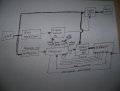
I believe that I finally figured this out.

Relay #3 is normally closed so that outgoing phone calls can be made anytime.

When a call comes in it will be categorized by the Arduino as one of three types.
White List: A known phone number that I want to ring the house phones
Black List: A known phone number that I do not want to ring the house phones
Unknown: An unknown phone number

When a call comes in it is first detected by “Ring Detection”. Relay #1 is normally closed so the signal travels to Relay #3. Relay #3 then opens and no ringing will occur in the house during this period of determining what type of call we have. HT9032D looks for the phone number which occurs between the first and second rings. The Arduino then categorizes that phone number as White List, Black List, or Unknown.

If it’s a “White List” number then Relay #1 is opened which then closes Relay #3. House phones start to ring.

If it’s a “Black List” number nothing happens. When the caller gives up, “Ring Detection” stops signalling. Relay#3 closes. Everything is back to were it was before the call. And the house phones never rang once.
100_7341.JPG
If it’s an “Unknown” number Relay #2 closes and the telephone line is connected to the XE0068DT chip. The XE0068DT tells the Arduino that it opened the phone line (OH). The Arduino then sends out the outgoing message (“Press 21 to continue”). The XE0068DT listens for a DTMF from the caller and sends the information to the Arduino. The Arduino checks the incoming DTMF (or nothing) against the DTMF requested and determines if it’s a real person calling or not (telemarketer). If it’s the correct DTMF Relay #1 is opened thereby closing Relay #3 and the house phones start ringing. Otherwise nothing happens. The house phones never ring once.

I just found a mistake. If the XE0068DT "answers" the phone, the phone STOPS ringing . I need to add a ringtone generator. If the caller presses the requested number, the phone ringing in the house needs to start ringing. That signal will not be coming from the VOIP.
 
Last edited:
Top