Landline (VOIP) Caller ID

Reloadron

Joined Jan 15, 2015
7,893
One minute people say they don't want government watching what they see, do, who they talk to, etc.
how do you expect "the government" to monitor a private company's electronic traffic (Verizon, AT&T, ...), and somehow not take notice of legitimate calls but stop spam calls? If you expect "the government" to watch out over you on the internet, should they monitor who enters your house? Whose house you enter? Who you do business with?

Be careful what you ask for the government to do.
It was said in humor not to be taken seriously. :) Like how is that do not call working out? Humor.

Ron
 

MisterBill2

Joined Jan 23, 2018
27,684
All we need for the government to do is to decide that stealing one party's ID for the purpose of defrauding another party is a felony-class crime. and then decide that spoofing a caller ID is exactly such an act.Then all tghe government needs to do is track down the callers using spoofed caller IDs. All others would not be examined.

If the spoofing of caller IDs could be stopped, then the blocking of the unwanted callers would soon put them out of business.
 

Reloadron

Joined Jan 15, 2015
7,893
On the bright side our caller ID shows up on the TV as well as the phone. Many calls show up as "Spam Risk". Our policy is if our system doesn't know you just leave a message and if someone starts to leave a message and we know the call we pick it up. We have friends who get a dozen spam calls a day so I guess, so far, we are fortunate with the few a day we get. While caller ID is nice it doesn't help with spoofed numbers.

If the spoofing of caller IDs could be stopped, then the blocking of the unwanted callers would soon put them out of business.
We can only hope. :)

Ron
 

Thread Starter

Oldman52

Joined Aug 26, 2022
22
That slow boat from China finally docked!

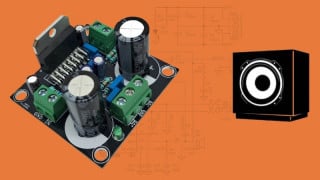
I have the unit in hand and it looks just like the picture Ya’akov included in this post. So I just went back to the “only” video on YouTube that uses the HT9032D for caller ID and that board has 3 pins coming out of it going to the Arduino labelled D, P, and S. My board has only one labelled “RXD”.

One wire might sound better than three, but how do I copy that!? Not to mention the probable difference in code. Anybody have any ideas? HELP
 

Ya’akov

Joined Jan 27, 2019
10,259
That slow boat from China finally docked!

I have the unit in hand and it looks just like the picture Ya’akov included in this post. So I just went back to the “only” video on YouTube that uses the HT9032D for caller ID and that board has 3 pins coming out of it going to the Arduino labelled D, P, and S. My board has only one labelled “RXD”.

One wire might sound better than three, but how do I copy that!? Not to mention the probable difference in code. Anybody have any ideas? HELP
Hello. Nice to see you again.

The HT9032D IC provides ring detection and status information but your module only makes the data out available and handles the rest for you. You will not know there is an incoming call until data starts to stream from the module, but that's not really a problem.

The datastream is a 1200bps hexadecimal string. This GitHub repo has the code needed to decode the data. HIs implementation also uses an LCD screen. The key part is the decoding. You will just need to attach the RXD pin to a GPIO on the Arduino. You can probably see the data by connecting a TTL to UART adapter to the PWR, RXD, and GND and using the Arduino serial terminal set to 1200. The RXD pin should be connected to the pin of the same name on the adapter and the PWR to the 5V output of it.
 

Ya’akov

Joined Jan 27, 2019
10,259
Followed your directions and it works perfectly !!! THANKS. I still have to tie the HT9032D into my code. Maybe in a couple of weeks this project will be completed.
Glad to hear it worked win the first try, that's always the best outcome. I look forward to hearing about your successful completion.
 

MrAl

Joined Jun 17, 2014
13,722
I need to get the caller ID phone number from a VOIP phone line so I can input it into an Arduino. So I was thinking why not buy one of those $20-30 caller ID boxes that display the caller ID number on the box’s LED and instead just input it to my project. I just don’t know how to do it. I’m sure the schematic for the box in question would be needed. But that as far as I go. If someone could help me I will get a box with the schematic that belongs to it. The Arduino project is already programmed. Thanks in advance
Hello,

I think the module Reloadron mentioned is probably the best way to go too.

If you wanted to, you could roll your own but you would have to be very familiar with programming of a microcontroller.

Since i worked with a number of different microcontrollers i was going to do this myself some years ago. If you look up the caller ID protocol it is not extremely difficult to understand, if you are know about those things like RS232. You can build your own box to filter calls.

What stopped me mostly was i am not sure what method i would use to filter the calls. That's because they are able to imitate any number whatsoever. I even got a couple calls from myself, my very own land line number. How could that even be possible or allowed. So i suspect that even with a ready made unit i can buy on Amazon i would face the same issues, so i havent done that either.

There has to be another method and maybe we can come up with something. Perhaps something similar to a captcha.
A voice would come on the phone for every call, and it would say, "We do not take solicitation for anything on this line. If you have received this message in error please press 3, 5, 2 and you will be put through to the person you are trying to contact. Thank you."
That would mean that only a human can get through no robo's. The three digit number can randomly change also to three different numbers. The message itself could change too to another line asking the person to perform some action.
This would probably have to change too though as time went on and they got smarter. We'd have to ask them to perform some task like what is the sum of 3 and 4, or some other task like that or even different. What is 5 minus 2. How many ears does a human have. Etc. They would have to press the right number. Or even just press any three numbers in succession. Something that makes it hard for a robo to do, at least for the time being.
The only catch here is that human solicitors would still be able to get through.

While i was typing this i just got another spam call. 10:46am and there will be more later throughout the day.
Just got another one two minutes later. That's two while i was typing this.

I hate to say this, but there is even a way around that if you have a answering service where you dial in to get your messages. This is available through the phone company usually.
The trick they use here is they call you with one number, then use another line to call you a second time while their first call is being answered/filtered. That puts their second line through to your answering service. That means you have to call your answering service enter your code then wait for the stupid thing to announce your calls, then delete each one. There may be a delete all though hopefully.

Good luck, and from what you read above you can see this may be an effort in futility as they say (if i spelled that right) :)
So you could go through all that work and still end up getting robo call problems.
 

Reloadron

Joined Jan 15, 2015
7,893
There has to be another method and maybe we can come up with something. Perhaps something similar to a captcha.
A voice would come on the phone for every call, and it would say, "We do not take solicitation for anything on this line. If you have received this message in error please press 3, 5, 2 and you will be put through to the person you are trying to contact. Thank you."
I had forgotten about this till I read your post. Years ago when my sister's daughter (my niece) was a young teen they had a system on their land line. All calls were intercepted before their phone even rang and callers had to enter a 4 digit code. No code, no call completion. Caller got a brief message telling them to enter the code. This flat out prevented unsolicited and unwanted calls. This had to be over 20 years ago. Next time I talk to my sister I have to ask her more about what that was. Couldn't very well call my sister to ask her the code. I ended up calling our mom and asking her. :)

Ron
 

MisterBill2

Joined Jan 23, 2018
27,684
I recall having to deal with that call-blocking service. I was trying to call an old friend and did not have the code, nor was I yet on his list of OK callers.
But now the hackers spoof the phone number. The problem with that interception service is that it was expensive.

My solution would be to deny phone service to any user found to be spoofing their caller ID phone number. This might eventually lead to some parts of the world not even having internet access.
It does seem that the internet service providers might be able to limit the number of phone calls. any user could make.
 

Reloadron

Joined Jan 15, 2015
7,893
I recall having to deal with that call-blocking service. I was trying to call an old friend and did not have the code, nor was I yet on his list of OK callers.
Yeah. Like many things it had it's good and bad features. I spoke to my sister last night and she remembers when they had it. One major downside was getting the word out to people you wanted to hear from and getting the code to them.

Ron
 

Thread Starter

Oldman52

Joined Aug 26, 2022
22
Needless to say every project always has one more problem to solve that you did not anticipate as you get toward the end.

The long story is my house phone uses VOIP. I use an Obihai OBi202 to convert VOIP to behave like the POTS. The OBi202 supplies the power to run the phone and it is about 44 VDC, 8 VDC when you pick up the phone to use it.

The OBi202 ringing signal is 14Hz – 68Hz, Ring Waveform: Trapezoidal, Sinusoidal, Ring Voltage: 55v – 85v. (Straight from the manual)

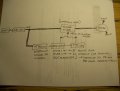
I need a circuit that I can switch between removing / not removing the ringing signal from getting thru to the house. I am the first one to say that I don’t have any idea how to do this.

I am using an Arduino and a TB1000 to determine which phone numbers get thru to the house. (In actuality all phone calls get thru to the house but without the phone ringing I will never know that)

The TB1000 asks the caller to enter a random number to continue. That eliminates the telemarketers. My friends are tried of doing that step. That’s were the Arduino comes in (White List and Black List)
100_7276.JPG
 

MrAl

Joined Jun 17, 2014
13,722
I had forgotten about this till I read your post. Years ago when my sister's daughter (my niece) was a young teen they had a system on their land line. All calls were intercepted before their phone even rang and callers had to enter a 4 digit code. No code, no call completion. Caller got a brief message telling them to enter the code. This flat out prevented unsolicited and unwanted calls. This had to be over 20 years ago. Next time I talk to my sister I have to ask her more about what that was. Couldn't very well call my sister to ask her the code. I ended up calling our mom and asking her. :)

Ron
Oh yes maybe you can find out what it was, maybe it is still available.
The only catch then is the two line trick where they call you on a second line while your machine is asking for a code. That puts them through to the call answering 'box' from the tel co so they leave a message with no audio cause they hang up.
 

MrAl

Joined Jun 17, 2014
13,722
I recall having to deal with that call-blocking service. I was trying to call an old friend and did not have the code, nor was I yet on his list of OK callers.
But now the hackers spoof the phone number. The problem with that interception service is that it was expensive.

My solution would be to deny phone service to any user found to be spoofing their caller ID phone number. This might eventually lead to some parts of the world not even having internet access.
It does seem that the internet service providers might be able to limit the number of phone calls. any user could make.
The system i was thinking of would actually tell the caller the number to enter. If a robo they probably cant enter the number no matter what it was. The number would be random for each call to prevent any robo from learning one set code.
I never got around to building it though even though i researched the caller id protocol thoroughly :)
 

MisterBill2

Joined Jan 23, 2018
27,684
Really, all that is needed is to detect if the caller ID number is spoofed, versus being an actual correct caller ID. Then reject all calls from spoofed numbers.

To block the ring signal a parallel tuned circuit in series with the line to the phones, resonant at the frequency of the ring voltage.
Although if the intention is simply to avoid nuisance ringing on fake calls, just blocking the first two rings while the caller ID is evaluated would work as well. And that will be much simpler to do.
 

MrAl

Joined Jun 17, 2014
13,722
Really, all that is needed is to detect if the caller ID number is spoofed, versus being an actual correct caller ID. Then reject all calls from spoofed numbers.

To block the ring signal a parallel tuned circuit in series with the line to the phones, resonant at the frequency of the ring voltage.
Although if the intention is simply to avoid nuisance ringing on fake calls, just blocking the first two rings while the caller ID is evaluated would work as well. And that will be much simpler to do.
And how do you tell the difference?
 

MisterBill2

Joined Jan 23, 2018
27,684
Detecting spoofage is indeed the problem. But I am thinking that there must be a difference, or perhaps changes need to be made in how the internet handles phone calls, so that spoofing could be detected. An alternative would be a charge for internet phone calls. Ten cents each, not a burden on any decent people, but it would put the robo-callers out of business in a fairly short time. Or maybe just charge for calls under two minutes, or some shorter time.
 

MrAl

Joined Jun 17, 2014
13,722
Detecting spoofage is indeed the problem. But I am thinking that there must be a difference, or perhaps changes need to be made in how the internet handles phone calls, so that spoofing could be detected. An alternative would be a charge for internet phone calls. Ten cents each, not a burden on any decent people, but it would put the robo-callers out of business in a fairly short time. Or maybe just charge for calls under two minutes, or some shorter time.
You know i bet the phone companies are making money off of these robo schemes that's why they wont do anything about it. They are not dumb so they must be partly criminal. They probably love to get new robo clients because they have to make a lot of calls and that probably makes money for the phone companies. If they do anything about it, they lose money so they pretend they cant do anything about it.
 

Ya’akov

Joined Jan 27, 2019
10,259
The problem of spoofed caller ID is not a trivial one. The phone network is very complex with a lot of entry points. The ready availability of SIP termination made it easy for bad actors to take advantage of a system with security measures that were overtaken by events. When it was all one thing trust wasn’t an issue; even when it became more distributed, it was still a gentleman’s club and so trust wasn’t even on the radar.

Suddenly, it only cost few dollars a month to effectively be your own phone company. The information passed between parts of the network was suddenly not inherently trustworthy, and there was no framework to deal with that. But, because robocalls are not respecters of power and wealth even those with such things became victims, so something was done.

A combination of regulatory and technological measures has dramatically reduced the number of spam calls. Companies providing access to caller id services now have to be more vigilant about what Caller ID and CNAM (the name part) information is permitted. If you want to display a Caller ID number different from the originating number, it has to be one the vendor knows you own, or that has been verified as one you control.

Even if you gain access to the level of the network at which the Caller ID information originates, STIR/SHAKEN protocol is being put in place to prevent using numbers not in your control. In effect it is like SPF is for email, providing a way to look up if the domain allows mail to be sent by whoever is sending it.

Not even addressing whether the phone companies want to do something about it, the problem is vexed. It can’t be done any one phone company, it requires a global effort and things are being done but it is a very big task and very messy. That’s why one prong of the attack is increased regulatory enforcement and prosecution—including some very high profile cases.

[EDIT: minor corrections, some omitted words... err.... remitted.]
 
Last edited:
Top