L7805 versus AMS1117

Thread Starter

doubledutch1962

Joined Oct 27, 2020
40
Newbie question....

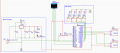
I have a very simple circuit in which an ESP32 drives 2 servos. It's powered by a 9V AC/DC power supply that runs through a voltage regulator. I measured the circuit's current, and it doesn't go above 800mA as the ESP32 logic ensures the servos never run simultaneously. The circuit is something like this:
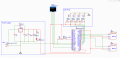
1731074491626.png

My question is:

With the L7805, the servos refuse to work and the ESP32 frequently resets.
When I use the ASM1117 it works fine.

The only thing I can think of is that the power supply doesn't provide enough current BUT looking at this site and the data sheets, the L7805 should provide more current (up to 1-1.5A) compared to the ASM1117 (800mA).

So could someone explain why this circuit does not work with the L7805?

Thanks in advance
 

Attachments

DickCappels

Joined Aug 21, 2008
10,661
It is possible that such a symptom may result from over-heating of the 7805. The die is thermally protected and shuts down at 150° C. For reference, water boils at 100°
 

panic mode

Joined Oct 10, 2011
4,874
yup AMS1117 is an LDO while 7805 is not.
and wasting 40-50% of energy is a lot it can be tolerable since you are using PSU. the question is why bother with own regulator? one could simply use 5VDC PSU directly.

I measured the circuit's current, and it doesn't go above 800mA
but what is the voltage across PSU terminals when you draw 800mA? that PSU should be rated for this.
 

Thread Starter

doubledutch1962

Joined Oct 27, 2020
40
It is possible that such a symptom may result from over-heating of the 7805. The die is thermally protected and shuts down at 150° C. For reference, water boils at 100°
I read about that before posting and already checked the temperature. It doesn't get that hot I would say 30-35C
 

joeyd999

Joined Jun 6, 2011
6,208
Not sure how this answers my question as to why this is happening?
There are so many low cost, efficient, easy-to-implement switching solutions that are far more appropriate for your application, and, had you used one, your question would need never be asked, nor, therefore, answered.
 

MrAl

Joined Jun 17, 2014
13,672
Newbie question....

I have a very simple circuit in which an ESP32 drives 2 servos. It's powered by a 9V AC/DC power supply that runs through a voltage regulator. I measured the circuit's current, and it doesn't go above 800mA as the ESP32 logic ensures the servos never run simultaneously. The circuit is something like this:

View attachment 335397

My question is:

With the L7805, the servos refuse to work and the ESP32 frequently resets.
When I use the ASM1117 it works fine.

The only thing I can think of is that the power supply doesn't provide enough current BUT looking at this site and the data sheets, the L7805 should provide more current (up to 1-1.5A) compared to the ASM1117 (800mA).

So could someone explain why this circuit does not work with the L7805?

Thanks in advance
Hi,

So your input power supply comes from a regulated wall wart?
If it is an old style there may be ripple you could check for that.

Try putting a 3300uf cap on the input to the 7805 regulator see if that helps. If so, the input power supply is not very well at keeping the voltage regulated to 9v for the input power.
 

ElectricSpidey

Joined Dec 2, 2017
3,313
LM7805 can enter in thermal shutdown at 9V input if you do not use a heat sink. The ASM1117 has a lower dropout. It dissipates less heat in this scenario. It is less likely to suffer from thermal shutdown, making it a better choice for this circuit.
https://www.electro-tech-online.com...tion-of-an-esp32-and-lm7805-regulator.160518/
https://forum.arduino.cc/t/issue-wi...-regulator-7805-from-12v-power-supply/1008097
How do you figure that? Both regulators will have to dissipate the exact same amount of heat.
 

BobTPH

Joined Jun 5, 2013
11,469
yup AMS1117 is an LDO while 7805 is not.
To expand upon this, The 9V supply voltage is probably dropping when the max current is drawn. If it drops ti 7.5V, the AMS1117 will still operate, but the LM7805 will not.

What is the current rating of the 9V supply? Is it regulated?

How did you measure the max current? If you used a multimeter, it is probably too slow to capture the peak current when the servo motor starts. You need a storage scope to measure that accurately.
 

sparky 1

Joined Nov 3, 2018
1,218
Using the diode check function on my multimeter I connect leads on the 7805 ground to input, and ground to output.
The voltage drop will vary, in this test it is 2.1V. The 5V LDO regulator 7350 was 0.4V both of these are too extreme for this application.
An objective comparison of what they call low drop out and your application is about testing. LDO does not guarantee it performs good.
It can mean when it will shut down rather than to hold that ideal solid 5V. You really might have a rubber band regulator 4.7V energy saving bonanza.
The suggestion of having a supply voltage above 7.5V is good suggestion and some load testing will help even more. But test what works.
Always buy small quantities of voltage regulators until you know they will work. Check if the supply voltage is sufficient.
https://mm.digikey.com/Volume0/opasdata/d220001/medias/docus/6283/AMS1117-5.0.pdf
http://www.advanced-monolithic.com/pdf/ds1117.pdf
The above shows how the temperature stability differs from an old LM7805 package style change. New regulator and pcb design have both changed.
The output capacitor on AMS uses a low esr 22uF tantalum. That fixed some issues for supply ripple as current draw increases. An improvement over an Arduino switching wall wart supply. Some of the better ESP designs are using mosfet source followers on the TO252 AMS.
The trend might continue with more supply current like the dual ESP uC has controls, display and encoders on one uC that communicates to the other processing sensors, software doing more analysis and dedicated ports. An example, a function generator does not need to stop and start each time the frequency or wave type is adjusted making it more robust in adjusting smoothly on the fly.
 
Last edited:

panic mode

Joined Oct 10, 2011
4,874
Using the diode check function on my multimeter I connect leads on the 7805 ground to input, and ground to output.
The voltage drop will vary...
Makes no sense... DMM diode test is used to measure Vf of a PN junction using DMM as power source. It works by providing low voltage (typically up to 3V or so) and current on the order of few mA.
Measuring voltage across input or output of the voltage regulator requires DMM to be set to DCV mode. In this case DMM is not supplying any power and current through DMM is in nA. That is several orders of magnitude different.
 

sparky 1

Joined Nov 3, 2018
1,218
I would appreciate if you would show more self control. I often sort through regulators that way and with good success.
Most people here can pick up a multimeter and a voltage regulator and find the IN, Out and Ground. on the diode selection.
Either you are incapable of making it work or you need a new multimeter but insist on knit picking.
It may not be as common knowledge as I thought but I get things done quickly by using that method using Zoyi ZT219T
Using the select mode click click click I am done I have the numbers I need.
Now I just lost time explaining to someone making belittling remarks, also recall you made false statements about me on another thread,
kindly mind yourself. If you remind yourself more often that you are not superior and need to recognize boundries.

sparky 1 said:
Using the diode check function on my multimeter I connect leads on the 7805 ground to input, and ground to output.
The voltage drop will vary...
Makes no sense... DMM diode test is used to measure Vf of a PN junction using DMM as power source. It works by providing low voltage (typically up to 3V or so) and current on the order of few mA.
Measuring voltage across input or output of the voltage regulator requires DMM to be set to DCV mode. In this case DMM is not supplying any power and current through DMM is in nA. That is several orders of magnitude different.

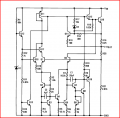
The TI data sheet shows this internal circuit of the old LM7805. I choose a quick multimeter check method on this.
I do not claim to be a voltage regulator expert. I agree, the AMS will do that and possibly add a source follower as needed.
It is about supporting his contribution to improve the ESP supply, glad to see the website. It represents effort.
At 2 minets Chip Gracey talks about using his apple II to commadore 64 he was age 14

LM7805 internal circuit.png


Panic Mode's criticism is not worth believing it is a very poor excuse for his compulsion to be irritating and nosey.
 
Last edited:
Top