Iteration does not converge

WBahn

Joined Mar 31, 2012
32,852
Hello again,

You mean you have never heard or read of anyone that said that sin(wt) is linear? Even though in the time domain it is not?
I've never heard anyone knowingly make such a claim, though I've seen many people try to pretend that it's linear and then proceed to write sin(a+b) = sin(a) + sin(b). But by that same token, I see people claim, via their work, that 1/(a+b) = (1/a) + (1/b). That doesn't make f(x) = 1/x a linear function.

Could you please provide a reference to where someone (with some kind of standing) makes such a claim?

Is it possible that you are mistaking the concept of a linear signal with a linear system?
 

MrAl

Joined Jun 17, 2014
13,707
I've never heard anyone knowingly make such a claim, though I've seen many people try to pretend that it's linear and then proceed to write sin(a+b) = sin(a) + sin(b). But by that same token, I see people claim, via their work, that 1/(a+b) = (1/a) + (1/b). That doesn't make f(x) = 1/x a linear function.

Could you please provide a reference to where someone (with some kind of standing) makes such a claim?

Is it possible that you are mistaking the concept of a linear signal with a linear system?
Well actually i should have written:
y=A*sin(w*t)

Obviously in time it is non linear..
In frequency however we end up with:
Y=A

and A is a constant which has to be linear.

Also, A*sin(n(w*t) and B*sin(m*w*t) are linearly independent with n and m integers.

Here is a link but not sure if it is the best example:
https://www.google.com/url?sa=t&rct=j&q=&esrc=s&source=web&cd=15&ved=2ahUKEwjasI7ZzJ7hAhXCk1kKHbeeDD8QFjAOegQIAhAC&url=https://ocw.mit.edu/resources/res-6-007-signals-and-systems-spring-2011/assignments/MITRES_6_007S11_hw03_sol.pdf&usg=AOvVaw3gYq4bHrMHVjqIorAjAmb1

if that link does not work then google:
MITRES_6_007S11_hw03_sol.pdf
see section S3.6

Note also that superposition works with waves.
 

WBahn

Joined Mar 31, 2012
32,852
Well actually i should have written:
y=A*sin(w*t)

Obviously in time it is non linear..
In frequency however we end up with:
Y=A

and A is a constant which has to be linear.
No, in the frequency domain y = A*sin(wt) is NOT a constant. It is an impulse at the frequencies of +w and -w.

Also, A*sin(n(w*t) and B*sin(m*w*t) are linearly independent with n and m integers.
Sep 19, 2014
Here is a link but not sure if it is the best example:
https://www.google.com/url?sa=t&rct=j&q=&esrc=s&source=web&cd=15&ved=2ahUKEwjasI7ZzJ7hAhXCk1kKHbeeDD8QFjAOegQIAhAC&url=https://ocw.mit.edu/resources/res-6-007-signals-and-systems-spring-2011/assignments/MITRES_6_007S11_hw03_sol.pdf&usg=AOvVaw3gYq4bHrMHVjqIorAjAmb1

if that link does not work then google:
MITRES_6_007S11_hw03_sol.pdf
see section S3.6
How do you go from two functions being linearly independent to a claim that either of them is in any way a linear function?

Linear independence merely means that if f(x) and g(x) are linearly independent, then the only solution for the equation

a·f(x) + b·g(x) = 0 is for a = b = 0

It's says NOTHING about f(x) or g(x) being linear.

Note also that superposition works with waves.
That has nothing to do with waves, but with the medium. Superposition only works if the medium itself is linear.
 

MrAl

Joined Jun 17, 2014
13,707
No, in the frequency domain y = A*sin(wt) is NOT a constant. It is an impulse at the frequencies of +w and -w.


How do you go from two functions being linearly independent to a claim that either of them is in any way a linear function?

Linear independence merely means that if f(x) and g(x) are linearly independent, then the only solution for the equation

a·f(x) + b·g(x) = 0 is for a = b = 0

It's says NOTHING about f(x) or g(x) being linear.


That has nothing to do with waves, but with the medium. Superposition only works if the medium itself is linear.
Hi,

Yeah you are getting off on some sort of tangent here.
All i care to say at this point is that A*sin(wt) is considered linear in some contexts. I gave a link. If you still dont agree i cant to much about it can i.
 

WBahn

Joined Mar 31, 2012
32,852
Hi,

Yeah you are getting off on some sort of tangent here.
All i care to say at this point is that A*sin(wt) is considered linear in some contexts. I gave a link. If you still dont agree i cant to much about it can i.
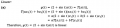
If you are talking about this:
FA_003.png

They are in no way claiming that sin(t) is linear.

The question is whether the SYSTEM y(t) is linear with respect to its INPUT, which is the signal x(t).

At any given value of t, (2 + sin(t)) is a constant. It has nothing to do with sin(t) having a constant frequency. You could have used a random oracle and multiplied its output by x(t) and the SYSTEM would still be linear, because the SYSTEM obeys superposition. It would also have been memoryless. It almost certainly would not have been time-invariant.

The test for whether the SYSTEM is linear is whether the output of the SYSTEM to a linear combination of the input x(t), not t, is the same linear combination of the SYSTEM's response to just x(t).
 

MrAl

Joined Jun 17, 2014
13,707
Hi,

Here is something to think about.

A perfect sine wave oscillator circuit (exact gain setting) is linear. True or false?
 

WBahn

Joined Mar 31, 2012
32,852
Hi,

Here is something to think about.

A perfect sine wave oscillator circuit (exact gain setting) is linear. True or false?
Even if it is, what's your point? It's the circuit that's linear, not the signal.

What you are trying to do is to essentially claim that because an ideal voltage divider is a linear circuit that any signal that anyone could ever apply to a voltage divider must therefore be a linear signal.

A linear oscillator relies on there being noise in the circuit at the desired frequency in order to start. Why? Because it's a linear circuit and linear circuits cannot change the frequency content of the signal, only the relative magnitudes of that content. So you have to have some signal content at the desired frequency which can then be amplified. You use a frequency-selective network to attenuate all frequencies except the one you want.
 

MrAl

Joined Jun 17, 2014
13,707
Even if it is, what's your point? It's the circuit that's linear, not the signal.

What you are trying to do is to essentially claim that because an ideal voltage divider is a linear circuit that any signal that anyone could ever apply to a voltage divider must therefore be a linear signal.

A linear oscillator relies on there being noise in the circuit at the desired frequency in order to start. Why? Because it's a linear circuit and linear circuits cannot change the frequency content of the signal, only the relative magnitudes of that content. So you have to have some signal content at the desired frequency which can then be amplified. You use a frequency-selective network to attenuate all frequencies except the one you want.
Hello again,

So you agree that the circuit is linear then?
I am going somewhere with this (chuckle a little here).
Yes unless we imagine that at the start of the universe an inductor and capacitor were created and connected together just the right way and had the right levels of energy to meet the phase requirement for a pure sine at the right frequency. Yeah that is pure theory ha ha.
 

WBahn

Joined Mar 31, 2012
32,852
Hello again,

So you agree that the circuit is linear then?
I am going somewhere with this (chuckle a little here).
Yes unless we imagine that at the start of the universe an inductor and capacitor were created and connected together just the right way and had the right levels of energy to meet the phase requirement for a pure sine at the right frequency. Yeah that is pure theory ha ha.
Still have no idea where you are going, chuckle or no chuckle.

We don't have to imagine anything of the sort. The universe does not have to create inductors and capacitors connected together just the right way and with just the right levels of energy.

You are familiar, I'm assuming, with the concept of noise?

But, even leaving all of that aside, how does anything of this have anything to do with whether or not the sine function is a linear function?

If that's not what you are still trying to claim, then once again, what is your point?
 

MrAl

Joined Jun 17, 2014
13,707
Still have no idea where you are going, chuckle or no chuckle.

We don't have to imagine anything of the sort. The universe does not have to create inductors and capacitors connected together just the right way and with just the right levels of energy.

You are familiar, I'm assuming, with the concept of noise?

But, even leaving all of that aside, how does anything of this have anything to do with whether or not the sine function is a linear function?

If that's not what you are still trying to claim, then once again, what is your point?
Yeah it is a thought experiment im sure you can do that. If not it's not my problem.

The circuit im sure you agree is linear, and the equation for the sine is linear in frequency, and the laplace of a sine or cosine is linear.
The laplace of a cosine is the same as the LC oscillator. The equation for the LC oscillator is linear therefore the laplace of the cosine is linear. As i said, in the frequency domain the sine (or cosine) is linear.
 

WBahn

Joined Mar 31, 2012
32,852
Yeah it is a thought experiment im sure you can do that. If not it's not my problem.

The circuit im sure you agree is linear, and the equation for the sine is linear in frequency, and the laplace of a sine or cosine is linear.
The laplace of a cosine is the same as the LC oscillator. The equation for the LC oscillator is linear therefore the laplace of the cosine is linear. As i said, in the frequency domain the sine (or cosine) is linear.
The Laplace transform of sin(t) is linear???????

Last I checked, the Laplace transform of

f(t) = sin(at)

was

F(s) = a / (s² + a²)

And you are claiming that this is linear?

Is there ANYTHING in your world that ISN'T linear?
 

MrAl

Joined Jun 17, 2014
13,707
The Laplace transform of sin(t) is linear???????

Last I checked, the Laplace transform of

f(t) = sin(at)

was

F(s) = a / (s² + a²)

And you are claiming that this is linear?

Is there ANYTHING in your world that ISN'T linear?
Hi,

Ha ha, that's funny thanks.

Actually for the circuit you agreed that is was linear right?
Well then how do you reconcile the fact that the circuit transfer function is
a*s / (s² + a²)

and the cosine function Laplace is:
a*s/ (s² + a²)

So it seems like either you dont think the circuit is linear anymore or maybe you have a better explanation which i'd like to hear really.
 

WBahn

Joined Mar 31, 2012
32,852
Hi,

Ha ha, that's funny thanks.

Actually for the circuit you agreed that is was linear right?
Well then how do you reconcile the fact that the circuit transfer function is
a*s / (s² + a²)

and the cosine function Laplace is:
a*s/ (s² + a²)

So it seems like either you dont think the circuit is linear anymore or maybe you have a better explanation which i'd like to hear really.
Simple.

The circuit transfer function is NOT a*s / (s² + a²) because the circuit transfer function is NOT Vout(t) = cos(Vin(t)).

You continue to insist on confusing a system with a signal.

The Laplace transform of a system is the Laplace transform of the system output as a function of the system input. Time is NOT an input to a system -- it merely plays a role in forming the output from the history of inputs.

The Laplace transform of a signal is the Laplace transform of the signal as a function of time.

Of course, 'time' can be replaced with another independent variable for the signal provided it plays a mathematically comparable role in the system.
 
Last edited:

MrAl

Joined Jun 17, 2014
13,707
Simple.

The circuit transfer function is NOT a*s / (s² + a²) because the circuit transfer function is NOT Vout(t) = cos(Vin(t)).

You continue to insist on confusing a system with a signal.

The Laplace transform of a system is the Laplace transform of the system output as a function of the system input. Time is NOT an input to a system -- it merely plays a role in forming the output from the history of inputs.

The Laplace transform of a signal is the Laplace transform of the signal as a function of time.

Of course, 'time' can be replaced with another independent variable for the signal provided it plays a mathematically comparable role in the system.

Hi,

You are assuming a voltage input.

I think maybe what you are missing is that an EQUATION can be non linear in one variable but be linear in another.

Let's start with an equation:
y(t)=K*cos(w*t), K a constant, w=2*pi*f, f a constant also.

If we graph this in time we see a non linear graph. No one would argue with that i dont think.

But what if we graph this in the frequency domain? Recall that in the frequency domain frequency is a constant.
Thus we cant change the frequency and time is non existent.
So if we have a sine wave of frequency f with amplitude K the only thing we can change is K. When we vary K by a factor 'a' "K*a" the output varies by the same factor y=a*F(f).
If this doesnt seem to make sense, if we had say a high pass filter and used an input of 5 volts at 100Hz and got an output of 2 volts at 100Hz then if we input 10 volts at 100Hz we would get 4 volts at 100Hz output.
Now if we input a 5vdc voltage we get 0v out, and if we increase that to 10vdc we still get 0v out.
So the sine wave works but the DC does not.

But i think if we combine a linear and non linear system together we still get a non linear system.
If we drive a system with a pulse, we get a non linear response. If we drive it with a sine wave, we get a linear response. Why is the sine wave excitation so different. Sine waves are a special case.
 

bogosort

Joined Sep 24, 2011
696
If we graph this in time we see a non linear graph.
By your reference to the shape of the graph, it seems like you're confusing linearity of a function (obeys additivity and homogeneity) with a function of a line (y(x) = mx+b). Note that functions of a line are, in general, nonlinear functions!

But what if we graph this in the frequency domain? Recall that in the frequency domain frequency is a constant.
Again, this is confused terminology. What does a constant function look like in the time domain? It's a horizontal line, yes? All inputs of the independent variable (time) produce the same output. What does a constant function look like in the frequency domain? It's also a horizontal line: all inputs of the independent variable (frequency) produce the same output.

A horizontal line is the frequency response of a single impulse, not a sine. As WBahn pointed out, sine in the frequency domain is two deltas, one at w and the other -w. Note that w is not a constant; it's the independent variable in the frequency domain.

If we drive a system with a pulse, we get a non linear response. If we drive it with a sine wave, we get a linear response. Why is the sine wave excitation so different. Sine waves are a special case.
You have this all wrong. The system is either linear or nonlinear, not the response. Driving a linear system with a short pulse will give you its impulse response, which completely characterizes the dynamics of the system. As explained above, a delta function in time has equal energy at all frequencies (horizontal line), which we can think of as "exercising" all possible resonances in the system.

What's special about sines is that if we give a sine function to a linear system as input, the system can only change its amplitude and/or phase. Sinusoid frequency and waveform shape are untouched by linear systems.
 

MrAl

Joined Jun 17, 2014
13,707
By your reference to the shape of the graph, it seems like you're confusing linearity of a function (obeys additivity and homogeneity) with a function of a line (y(x) = mx+b). Note that functions of a line are, in general, nonlinear functions!


Again, this is confused terminology. What does a constant function look like in the time domain? It's a horizontal line, yes? All inputs of the independent variable (time) produce the same output. What does a constant function look like in the frequency domain? It's also a horizontal line: all inputs of the independent variable (frequency) produce the same output.

A horizontal line is the frequency response of a single impulse, not a sine. As WBahn pointed out, sine in the frequency domain is two deltas, one at w and the other -w. Note that w is not a constant; it's the independent variable in the frequency domain.


You have this all wrong. The system is either linear or nonlinear, not the response. Driving a linear system with a short pulse will give you its impulse response, which completely characterizes the dynamics of the system. As explained above, a delta function in time has equal energy at all frequencies (horizontal line), which we can think of as "exercising" all possible resonances in the system.

What's special about sines is that if we give a sine function to a linear system as input, the system can only change its amplitude and/or phase. Sinusoid frequency and waveform shape are untouched by linear systems.
You are saying that a line:
y(x) = mx+b

is not linear in general but that goes by a strict definiton of linearity. I would think then you would say that:
y(x) = mx

is exactly linear, but with the added 'b' it is not.

i would agree but often we take y=mx+b to be linear too.

Maybe we could just agree then that sine functions are linearly independent. The reason i am saying this is because you are making a distinction between a system and a signal, but i showed that a system can have the same math function as a signal.

This is not the first time a discussion on linear or not linear came up. There are different ways of looking at what linear is as the above example shows. But another one is from circuit analysis, where we have say an inductor which has response in the time domain that is not considered linear but in the frequency domain it is. For example an inductor in series with a resistor. The response is non linear in time but linear in frequency.
 

bogosort

Joined Sep 24, 2011
696
You are saying that a line:
y(x) = mx+b

is not linear in general but that goes by a strict definiton of linearity.
Again, linearity is a technical term with strict definitions. Unlike natural languages, the terms in mathematics are strictly defined. A mathematical term may have more than one (strict) definition, but only one will apply in any particular context. In this context, linearity of a function means that the function respects addition and scalar multiplication. That is, f(αx+βy) = αf(x) + βf(y).

I would think then you would say that:
y(x) = mx

is exactly linear, but with the added 'b' it is not.
Correct: the function of a line, y(x) = mx + b, is a linear function if and only if b is identically zero.

i would agree but often we take y=mx+b to be linear too.
No. Just because you often take it to be linear does not make it so.

For example, let f(x) = 2x + 1. Then, f(x+y) = 2(x+y) + 1 = 2x + 2y + 1.

Yet, f(x) + f(y) = 2x + 1 + 2y + 1 = 2x + 2y + 2.

As f(x+y) ≠ f(x) + f(y), f cannot be linear (note that it also fails the scalar multiplication condition).

Maybe we could just agree then that sine functions are linearly independent.
Not necessarily. Two functions f and g are linearly independent iff a*f(x) + b*g(x) = 0, for constants a and b, only has the trivial solution a = b = 0. But consider: a*sin(x) + b*sin(pi*x) = 0. Let a = 0, then b can be anything and x ∈ ℤ is a solution.

In any case, linear independence is an entirely different thing from linearity

The reason i am saying this is because you are making a distinction between a system and a signal, but i showed that a system can have the same math function as a signal.
Systems and signals are indeed distinct mathematical objects. Formally, systems are represented by operators, which map input functions to output functions. Signals, on the other hand, are represented by functions, which map numbers to numbers. Confuse them at your own peril. You should reread WBahn's post #55 again.

This is not the first time a discussion on linear or not linear came up. There are different ways of looking at what linear is as the above example shows. But another one is from circuit analysis, where we have say an inductor which has response in the time domain that is not considered linear but in the frequency domain it is. For example an inductor in series with a resistor. The response is non linear in time but linear in frequency.
Ideal inductors -- as we use in electronics analysis -- are certainly linear devices. Please do some further research on linearity, as your understanding is severely flawed.
 

MrAl

Joined Jun 17, 2014
13,707
Again, linearity is a technical term with strict definitions. Unlike natural languages, the terms in mathematics are strictly defined. A mathematical term may have more than one (strict) definition, but only one will apply in any particular context. In this context, linearity of a function means that the function respects addition and scalar multiplication. That is, f(αx+βy) = αf(x) + βf(y).


Correct: the function of a line, y(x) = mx + b, is a linear function if and only if b is identically zero.


No. Just because you often take it to be linear does not make it so.

For example, let f(x) = 2x + 1. Then, f(x+y) = 2(x+y) + 1 = 2x + 2y + 1.

Yet, f(x) + f(y) = 2x + 1 + 2y + 1 = 2x + 2y + 2.

As f(x+y) ≠ f(x) + f(y), f cannot be linear (note that it also fails the scalar multiplication condition).


Not necessarily. Two functions f and g are linearly independent iff a*f(x) + b*g(x) = 0, for constants a and b, only has the trivial solution a = b = 0. But consider: a*sin(x) + b*sin(pi*x) = 0. Let a = 0, then b can be anything and x ∈ ℤ is a solution.

In any case, linear independence is an entirely different thing from linearity


Systems and signals are indeed distinct mathematical objects. Formally, systems are represented by operators, which map input functions to output functions. Signals, on the other hand, are represented by functions, which map numbers to numbers. Confuse them at your own peril. You should reread WBahn's post #55 again.
Yeah you missed one case didnt you? The oscillator. THAT is the system. The signal (cosine) and the system (oscillator) have the same equation. There's no way around this because they produce the same math function!

Ideal inductors -- as we use in electronics analysis -- are certainly linear devices. Please do some further research on linearity, as your understanding is severely flawed.
So now you say that 1-e^(-A*t) is linear? Make up your mind what you want to call linear.
 
Top