It ain't USB C...

Thread Starter

Ya’akov

Joined Jan 27, 2019
10,235
So that others may benefit from my misfortune, I have a sad tale to tell.

I have small portable photographic lamp, well actually a pair of them... on the other hand I was right in the first place, I had a pair of them. Now I one and a paperweight. This tragic turn of events came about after I used the ex-lamp and decided it needed recharging.

While it has a USB C connector I had already noticed that it couldn't negotiate with a PD capable power supply, it just didn't work at all. I am used to that, many devices that charge via a USB port are really 5V only devices. The USB C port is better than MicroUSB so even with the charade I prefer it.

So the supply I normally use was engaged, so I dug up another USB C adapter and plugged it in, whereupon me ex-lamp turned into a slow rate strobe, and nothing else. To say I was disturbed is an understatement. My not-cheap former photographic accessory was instantly rendered useless by the 12V coming out of the adapter.

In the days of pervasive barrel connectors there was always that vigilance to check the voltage and polarity because there was no standard. But USB C is a standard and putting a USB C connector on the end of a cord that only and always produces anything more than 5V is pure stupid. It is almost universally safe for an adapter to provide 5V but 12V is a destroyer.

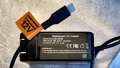
So, my friends, be warned—we are back in the days of the barrel connectors. Check the voltage on the adapter before using it. I didn't' think this was necessary but I was lulled into a false complacency by USB-less-than-C where this just isn't going to happen. The supply in question now has fluorescent Omaha Orange labels on all sides, and as a flag on the end with the connector declaiming:

1662399953050.png

I know this is yellow, but despite the
printer's preview the labels are orange.
 

Attachments

cmartinez

Joined Jan 17, 2007
8,762
That product should've come with said big label included... and with a big bright warning printed on its box "do not use this product with any other usb-c enabled devices such as phones, cameras, etc ... "
 

Thread Starter

Ya’akov

Joined Jan 27, 2019
10,235
I have read the post and seen this picture. But I still cannot understand one thing. Why did this charger damage the lamp? Was 12V too much for the lamp? Or does this adapter supply more than 12V actually?
The was designed for 5V, the default USB voltage. Even if they wanted to only supply 12V for some reason, it shouldn’t supply if the device plugged in negotiates for it.
 

Jon Chandler

Joined Jun 12, 2008
1,596
The USB specification is that chargers put out 5 volts initially until a higher voltage is negotiated.

What a lame charger!

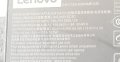
To be safe, I guess we have to read the label to be safe! The picture shows my laptop's USB C PD charger; it explicitly shows the output options.

CM220905-141319002.jpg
 

Thread Starter

Ya’akov

Joined Jan 27, 2019
10,235
The USB specification is that chargers put out 5 volts initially until a higher voltage is negotiated.

What a lame charger!

To be safe, I guess we have to read the label to be safe! The picture shows my laptop's USB C PD charger; it explicitly shows the output options.
Yes, the standard allows of PD negotiation and a good supply will provide 5V to whatever the highest voltage supported is. For example 5V, 9V, and 12V if 12V is the highest. But 5V and 500mA is supposed to have the highest precedence for backwards compatability.
 

Reloadron

Joined Jan 15, 2015
7,889
My condolences on your loss, that sucks. Some time back my wife and I got new phones which came with charger and the new to me USB C ports. First time I saw them I was like what are these? I ordered a few more cables so I could charge in the truck as the phones came with maybe 24" cables.

Ron
 

MisterBill2

Joined Jan 23, 2018
27,520
First, My condolences on your loss, I am sure it was painful and expensive. Possibly repairable, though.
Now, just when I had been thinking that the intentional connector incompatibility fad had finally ended, it seems that some psychopathic degenerates have started shooting into the crowd again. My simple fix would be for that manufacturer to be forbidden from ever selling any product in the USA ever. Some crimes must not be overlooked.
 

Jon Chandler

Joined Jun 12, 2008
1,596
12 volts isn't part of the latest PD standard and it's difficult to find a charger that supports it.

I've done some research and testing to use one USB C PD charger for phone, laptop and CPAP (which is 12 volts) while traveling. The only reliable way to get 12 volts is with a 20 volt "USB PD trigger" and a hefty buck converter to 12v.
 

MisterBill2

Joined Jan 23, 2018
27,520
Why not a 12 volt supply? They wereused with some flat screen monitors, and quite a few other devices, such as sound bars and small flat screen TVs, and some video games.
 

Jon Chandler

Joined Jun 12, 2008
1,596
For my application? For weight and volume reasons, I'd like to cut down on the number of power supplies I need to drag around. A single high power USB PD supply will handle the 20 volts my laptop wants, whatever my phone likes for high rate charging, the 12 volts the CPAP wants (with the help of a 3"×1"×1" adapter) and 5 volts for whatever other USB stuff may be around.

The regular CPAP supply is large and heavy compared to the latest PD chargers, so even just eliminating that one is a nice reduction.
 

MrSalts

Joined Apr 2, 2020
2,767
Why not a 12 volt supply? They wereused with some flat screen monitors, and quite a few other devices, such as sound bars and small flat screen TVs, and some video games.
12v were (are) rare for monitors. Typically 17 to 21v and most common are 19v - same as most laptops.
 

Thread Starter

Ya’akov

Joined Jan 27, 2019
10,235
12 volts isn't part of the latest PD standard and it's difficult to find a charger that supports it.

I've done some research and testing to use one USB C PD charger for phone, laptop and CPAP (which is 12 volts) while traveling. The only reliable way to get 12 volts is with a 20 volt "USB PD trigger" and a hefty buck converter to 12v.
I found this, which might be helpful, also here.
 

MisterBill2

Joined Jan 23, 2018
27,520
Given the worth of some things that I charge, I would never ever choose to have such a power supply.
It will certainly apply the max voltage to an expensive device that requires much less voltage, at least once, but not immediately., and the slight convenience will suddenly have cost a whole lot more than you will be happy to spend.
The entire concept of using a USB connector for voltages over 5 volts is incredibly stupid, almost to the point of deliberately evil.
 

Thread Starter

Ya’akov

Joined Jan 27, 2019
10,235
Given the worth of some things that I charge, I would never ever choose to have such a power supply.
It will certainly apply the max voltage to an expensive device that requires much less voltage, at least once, but not immediately., and the slight convenience will suddenly have cost a whole lot more than you will be happy to spend.
The entire concept of using a USB connector for voltages over 5 volts is incredibly stupid, almost to the point of deliberately evil.
USB Type-C is a standard. It requires negotiation to get any voltage/current above 5V@500mA. The charger that did the damage is not a USB Type-C PD charger, it is a 12V@5A power supply wired to a USB Type-C connector. I have never had a problem with a PD compliant supply, and don’t expect to have one.

On the other hand, PD is a great standard. It lets chargers provide up to 240W by using higher voltages so the relatively high gauge cable can supply the power. This means it can be used to power and charge things ranging from phones to notebook computers with the same supply. This is a good thing.

The problem is that the manufacturer of the supply did the equivalent of connecting a 12V supply to a microUSB connector. Yes, they did it because USB Type-C can (or previously could) supply 12V, but it is stil in complete disregard for the standard. This experience has not convinced me USB Type-C PD is bad, only that for unknown, unnamed adapters I must check the label, or test in the case the label claims PD, test it safely before using.

But, if I am using an adapter from someone like Anker, or RovPower, or Wasabi Power I have no concerns whatever and I get th advantage of the right power for the application.
 
Top