Is it a good idea to put a heat sink and fan on the cement resistors on a battery capacity tester?

Thread Starter

jholmes_gt

Joined Aug 7, 2024
14
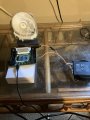
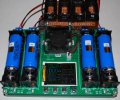
Hi. This is my first time posting to this website, so if I havent chosen the correct category/area to post this thread, then please excuse me. I ordered a rather inexpensive battery capacity tester from temu.com (around $6) and so far i have been using it to test the capacity of 18650 cells and other 3.7v lithium batteries. The module is designed for 18650 cells, but I have also been testing lithium polymer batteries on the module using alligator clips and wires to connect them up. The module has two large resistors labeled 10W8ΩJ that are used for the discharge cycle. I found an aluminium heat sink from a random board i had lying around that fits very well on top of the resistors. I used some thermal paste to place the heat sink on said resistors and have also placed a small fan that I pulled out of an old microwave in front of the resistors while the module is in the discharge cycle. I have been using an infrared thermometer to monitor the temperature of the resistors during disharge, and the temp is usually around 25-27 degrees Celsius. See the attached photo where I am testing a lithium polymer battery that I pulled out of a cell phone. I set up the fan and heat sink thinking that the module would run more efficently if I keep the resistors as as cool as possible. Is my thinking correct here, or should I allow the resistors to get hot in order for discharge to be more efficient?
 

Attachments

dl324

Joined Mar 30, 2015
18,220
Welcome to AAC!
I set up the fan and heat sink thinking that the module would run more efficently if I keep the resistors as as cool as possible. Is my thinking correct here, or should I allow the resistors to get hot in order for discharge to be more efficient?
I have the 4 cell version of that tester and it has a fan over the power resistors. Discharge current is limited to 1A.

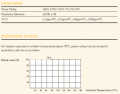
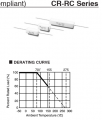
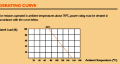
Discharging won't be more efficient, or less efficient, if you don't cool the power resistors. Resistors are rated for their full power specification up to 70C. Then they're derated.

This is from Yaego for resistors up to 3W:
1723058040379.png

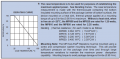
Higher power resistors may start derating earlier. This is for a Caddoc 8W resistor in TO-126:
1723058123925.png

EDIT: 70C for cement power resistors. From Xicon:
1723058307283.png
 

Thread Starter

jholmes_gt

Joined Aug 7, 2024
14
Welcome to AAC!
I have the 4 cell version of that tester and it has a fan over the power resistors. Discharge current is limited to 1A.

Discharging won't be more efficient, or less efficient, if you don't cool the power resistors. Resistors are rated for their full power specification up to 70C. Then they're derated.

This is from Yaego for resistors up to 3W:
View attachment 328760

Higher power resistors may start derating earlier. This is for a Caddoc 8W resistor in TO-126:
View attachment 328761

EDIT: 70C for cement power resistors. From Xicon:
View attachment 328762
that was very informative. thank you
 

dl324

Joined Mar 30, 2015
18,220
that was very informative. thank you
You're welcome.

Note that the middle picture above is for case temperature. The other two are for ambient temperature.

I've used mine to test 18650, 18500, and 16340. For 18500, I used screws/nuts as spacers. For 16340, I added another set of holders.
spacersAndHoldersTester.jpg
I put a shield over the fan because it doesn't like being touched...
 

Thread Starter

jholmes_gt

Joined Aug 7, 2024
14
You're welcome.

Note that the middle picture above is for case temperature. The other two are for ambient temperature.

I've used mine to test 18650, 18500, and 16340. For 18500, I used screws/nuts as spacers. For 16340, I added another set of holders.
View attachment 328779
I put a shield over the fan because it doesn't like being touched...
It sounds like you are an engineer perhaps, or if not, you certainly have more than the layperson's knowledge regarding electronics and their components. I am not an engineer, just a tinkerer who enjoys creating practical things from what others would discard or find little interest in. I had to look up several words and do some reading just to follow along with your comments. But at the end of the day I learned what derating is, what a derating curve is and why it is useful, and what ambient and case temperatures are. Thanks for taking the time to respond to my post. I didnt think I'd be doing any harm by attempting to control how hot the resistors were getting, but its always nice to get confirmation.
 

MrAl

Joined Jun 17, 2014
13,667
Hi. This is my first time posting to this website, so if I havent chosen the correct category/area to post this thread, then please excuse me. I ordered a rather inexpensive battery capacity tester from temu.com (around $6) and so far i have been using it to test the capacity of 18650 cells and other 3.7v lithium batteries. The module is designed for 18650 cells, but I have also been testing lithium polymer batteries on the module using alligator clips and wires to connect them up. The module has two large resistors labeled 10W8ΩJ that are used for the discharge cycle. I found an aluminium heat sink from a random board i had lying around that fits very well on top of the resistors. I used some thermal paste to place the heat sink on said resistors and have also placed a small fan that I pulled out of an old microwave in front of the resistors while the module is in the discharge cycle. I have been using an infrared thermometer to monitor the temperature of the resistors during disharge, and the temp is usually around 25-27 degrees Celsius. See the attached photo where I am testing a lithium polymer battery that I pulled out of a cell phone. I set up the fan and heat sink thinking that the module would run more efficently if I keep the resistors as as cool as possible. Is my thinking correct here, or should I allow the resistors to get hot in order for discharge to be more efficient?
The only difference between hot resistors and cold resistors is their resistance which goes up with temperature.
You can use a heatsink, fan, or both.

You can also replace the resistor(s) with better resistors that actually are made with their own heatsinks. That is, the resistor part is made inside of the heatsink, and all you see on the outside is the heatsink. These come in various power ratings.
The case (heatsink) is usually made out of aluminum. They can be bolted down to a larger heat sink also or a metal chassis.
 

Thread Starter

jholmes_gt

Joined Aug 7, 2024
14
The only difference between hot resistors and cold resistors is their resistance which goes up with temperature.
Hi. Thank you for taking the time to comment on my post. Question for you....it would seem to me that the time required to complete the discharge cycle would vary depending on the amount of resistance. So a resistor with greater resistance (larger ohm value) would discharge a battery more quickly than a resistor with a smaller ohm value. You mentioned above that resistance increases with temperature. Does this mean that the discharge cycle might require less time to complete without the cooling effects of the heat sink and fan, perhaps at the risk of excess heat damaging other components on the board? Also, the module that I am using is designed for 18650 cells which have a max capacity of around 3500 mAh. Do you think I could be running the risk of damaging the board if I tested a parallel battery configuration of 7000 mAh or higher without using the heat sink or fan?
 

dl324

Joined Mar 30, 2015
18,220
it would seem to me that the time required to complete the discharge cycle would vary depending on the amount of resistance
I think you're worrying something that isn't important. My tester uses a 3.9 ohm resistor and the current during a discharge cycle decreases as the battery voltage drops. It starts out at about 1A and decreases until the threshold voltage is reached. With 10 ohm resistors, the discharge current in your tester should be even lower.

The Xicon information I quoted earlier is ambiguous about whether resistance increases or decreases with temperature.
1723150046888.png
These Xicon resistors have a 5% tolerance. That's going to swamp any change due to temperature.
So a resistor with greater resistance (larger ohm value) would discharge a battery more quickly than a resistor with a smaller ohm value
You have that backwards. A smaller value resistor would discharge the battery faster.

The discharge current is determined by Ohm's Law: \( \large I=\frac{V}{R} \)
 

Attachments

dl324

Joined Mar 30, 2015
18,220
And most likely the sensation of a fingertip rubbing against spinning blades is not comfortable either. :p
The fan is very weak and I'm more concerned about it breaking... I had problems with it being flakey and the AliExpress seller insisted on a movie showing the infrequent no-spin failure. Needless to say, I didn't get a replacement.
 

tonyStewart

Joined May 8, 2012
231
Temperature rise reduces the expected lifetime of each part by about 50% for every 10-degree C rise above room temp. This is based on Arrhenius Law. Resistors are perhaps the most reliable components when cool but it is generally a good idea to prevent heating the other parts.

I was once responsible for a design contract from Lucent Telecom HQ (now Avaya). It included an open-frame 180W supply inside a 1U 19" rack which was sealed except for the ends for forced air cooling. At full load, the hottest component rose to 70 'C at the surface. I had chosen twin 1 7/8" H muffin fans, which had good airflow through the rack, but I was not satisfied. After a late night of thermal testing with cigarette smoke (lol) to see the airflow, I discovered a solution using a thin spoiler inside the box.

But why did restricting airflow make it cooler?

I found air speed curves showing the drop in thermal resistance and I imagined the air was fast over the top of the components but below, so my target was not volume flow or CFM here but air velocity in contact with the hot spots.

Laminar flow is more efficient in transporting hot air in large rectangular ducts but turbulent flow is more effective in cooling if the velocity reaches about 3m/s or 10 feet per second.

The thermal resistance for the plot above is based on the typical derating slope shared by @dl324
1723145750467.png

At 70'C the 10W resistor at full load will be 150'C this Rth = 8 'C/W = 80'C/10W .

To lower this requires efficiently increasing the surface area and forcing air speed over the surface much higher than convection air flow or say >=3 m/s so that it won't burn your fingers without heating up nearby capacitors and semi's.

There are heatsinkable resistors with fins and a flat surface.

Cement is normally a thermal insulator, so it must be extremely thin and contain lots of metallic nanoparticles. Perhaps a cheap muffler cement, not the expensive silver particle stuff.

When this works, the heat sink will be hot , not cool yet the resistor will be much cooler than before.

The fan is better positioned over the middle of the board.
If you are happy leaving it open, that's OK and cooler.

Q=mcΔt = heat energy (Joules) for mass kg, and specific heat of mass, c. for temperature t difference in 'C

The energy Q is the total watt-seconds of electricity applied to the kiln, mold plus any losses.
 
Last edited:

Thread Starter

jholmes_gt

Joined Aug 7, 2024
14
...the current during a discharge cycle decreases as the battery voltage drops. It starts out at about 1A and decreases until the threshold voltage is reached.
I did notice that when I was using my tester. The discharge current starts around 1A and decreases over time as the cycle runs its course, although I've never noted the lowest current at the end of the cycle as I am usually not watching the screen at that time.


You have that backwards. A smaller value resistor would discharge the battery faster.

The discharge current is determined by Ohm's Law: \( \large I=\frac{V}{R} \)
Ok. Yes, that makes sense. For some reason I always struggle with the application of Ohm's law. I hadn't thought to apply it when considering that question, but it absolutely makes since to consider the current draw when thinking bout the total time required to discharge the battery. Thanks for clearing that up for me, Dennis.
 

Thread Starter

jholmes_gt

Joined Aug 7, 2024
14
The fan is better positioned over the middle of the board.
If you are happy leaving it open, that's OK and cooler.
Thanks for your insights! I will consider building a small housing unit for the device that would allow me to place the fan directly above the center of the board. I would imagine the direction of air flow should be onto the board, so as to flush it with cooler air, rather than away from the board, so as to suck the warm air away from the board.
 

MrAl

Joined Jun 17, 2014
13,667
Hi. Thank you for taking the time to comment on my post. Question for you....it would seem to me that the time required to complete the discharge cycle would vary depending on the amount of resistance. So a resistor with greater resistance (larger ohm value) would discharge a battery more quickly than a resistor with a smaller ohm value. You mentioned above that resistance increases with temperature. Does this mean that the discharge cycle might require less time to complete without the cooling effects of the heat sink and fan, perhaps at the risk of excess heat damaging other components on the board? Also, the module that I am using is designed for 18650 cells which have a max capacity of around 3500 mAh. Do you think I could be running the risk of damaging the board if I tested a parallel battery configuration of 7000 mAh or higher without using the heat sink or fan?
Yes the time to discharge depends on the value of the resistance. Low resistance means faster discharge, but testing batteries like this also brings in the concept of how battery capacity varies with discharge current. The higher the current, the less the capacity. There's a factor called the "P" factor for batteries. You might want to look into that.
The 'normal' test current is C/20, so if you want your test numbers to match with manufacturers data you will have to use that level or look up other specs on the particular batteries.

Using a resistor, the resistor will get warm or hot and the resistance will go up somewhat, but the biggest factor usually is the voltage profile of the battery. As the voltage goes down, the current drops. That's why battery testers often use constant current loads not resistors. Resistors do work you just have to put up with the variation in current as they discharge.

You only run a risk of burning something out if the parts get too hot. You have to keep an eye on the other parts like transistors and IC chips, as well as the resistor temperatures. Batteries in parallel will generally just increase the discharge time.
 
Last edited:

tonyStewart

Joined May 8, 2012
231
Thanks for your insights! I will consider building a small housing unit for the device that would allow me to place the fan directly above the center of the board. I would imagine the direction of air flow should be onto the board, so as to flush it with cooler air, rather than away from the board, so as to suck the warm air away from the board.
I meant centred on end (below and above board.) not top unless using suction. Enclosing it, increases the local ambient to other parts (not good).

To reduce 8'C/W to say 1~2 'C/W it would take a CPU heatsink which use lots of turbulence and sink attached to these resistors.

Aerodynamics of airflow are critical to cooling with high velocity.

Turbine fans have a smaller area exit with much higher velocity. Rather than have most of the air go high over the parts, it must be deflected down and then flows away from the display

A simpler solution might be to replace the R's with 20W resistors.
 
Top