Info for Lithium battery DIY

Thread Starter

MikeKulls

Joined Apr 4, 2016
60
Hi,

This is a bit of a general question. I have built myself a lithium battery from 12 x 18650 second hand laptop cells. I plan to use this to replace the lead acid battery in my camping lantern. This went well but I would like to go bigger and I'm having a bit of trouble finding parts. As an example, the protection boards on eBay all seem to focus on the cheap end of the market and there doesn't seem to be the next level. Farnell and RS components seem to be a limited or expensive. Ali Express has some stuff but information is pretty lacking. I am in Australia which makes it an added level of difficulty :)

Bits I am after are:
- better quality protection boards
- boards with monitoring
- a charging board so that I can feed in, say, 19V and have it regulate the voltage and current.
- new cells at a reasonable price.
- other bits and pieces such as the holders, nickle strips etc (ebay does have this covered pretty well)

Also, are there good forums specifically for this sort of thing?

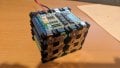
Picture of my battery attached.
 

Attachments

oz93666

Joined Sep 7, 2010
742
I see from your picture the pack is 6p2s (7.2V) ..

You don't say whats wrong with the protection board you have ... you should be able to charge using this board , putting in 12 or 20 V and the board will handle everything ...

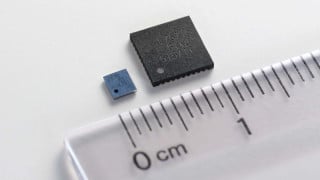
I do a lot of recycling of laptops batteries , have processed about 1,000 cells , I tend not to use protection boards , instead keep an eye on the voltage of each parallel pack with one of these ....


This way you can see if the packs are balanced and if there is any self discharge ....remember they don't need to be balanced ... the objective is to prevent any parallel pack from going over about 4.2 , or below 2.5

I recommend making a spot welder , very easy , just need a car battery ( or 50 18650s) , and a motorbike starter relay ...

here's the forum .... https://secondlifestorage.com/index.php ... beware this forum was established by non electrical types , and has the insane idea that each cell needs it's own fuse.
 

oz93666

Joined Sep 7, 2010
742
I'm not sure you have the correct board ... it looks very large ! .. you need a 2s protection board....

Edit ... my mistake your pack could be 3p 4s ... Can't quiet make it out from the photo.

4s will give rather high voltage to replace 12V ... depending on the lantern 3s might be better ... 3s is perfect for driving 12v led strips , it under-powers them and so they last forever with little noticeable loss in light output.
 
Last edited:

Thread Starter

MikeKulls

Joined Apr 4, 2016
60
Thanks for the replies. The battery is in fact 3P4S. I am running a pair of 12V COB LEDs in series and use a cheapo ebay board to step it up to around 22V. Reason I went with 4S is I thought a 3S would put more strain on the step up circuit as it got flat. With regards to running too big a board you are definitely right :) I didn't have a definite plan in place when I bought it.

The reason I ran 2 LEDs in series is that I wanted a voltage that was different to the supply voltage. If I wanted to run 11.5V into the LED then I think a step down board would start to drop voltage as the battery got flatter.

With regards to second hand laptop batteries, where do you get them? I've found a few in the battery bin at ALDI and Bunnings (if you have those retailers) but I always feel a bit odd riffling through their bins.

With regards my board, my understanding is it will just cut out above 4.25V per cell, it won't regulate the voltage.
 

oz93666

Joined Sep 7, 2010
742
With regards to second hand laptop batteries, where do you get them? I've found a few in the battery bin at ALDI and Bunnings (if you have those retailers) but I always feel a bit odd riffling through their bins.
With regards my board, my understanding is it will just cut out above 4.25V per cell, it won't regulate the voltage.
Getting used laptop batteries is totally dependent on country and contacts ... I live in Thailand and buy them at 1$US each from computer repair shops ... they usually get shipped to China for dismantling , the cells with any life are reused in many products , power-banks, rechargeable lights like this one ....


these lights can run on mains , but also contain one 18650 inside for mains free operation , the one I dismantled had a used 18650 inside , when I measured capacity it only had 400mAhrs ! something most re users on the forum I linked to would throw away.

You're board should stop recharging at 4,25/cell .. but the input usually can be 20V to the board , it will do what is required ....
The trick is to marry your battery voltage ( s number) to the leds without needing regulators ... leds , particularly the common 12v self adhesive strips which contain resisters built in , can operate over a wide voltage range down to 9v.
 
Last edited by a moderator:

Thread Starter

MikeKulls

Joined Apr 4, 2016
60
Getting used laptop batteries is totally dependent on country and contacts ... I live in Thailand and buy them at 1$US each from computer repair shops ... they usually get shipped to China for dismantling , the cells with any life are reused in many products , power-banks, rechargeable lights like this one ....
Thanks for tips. I'll see what I can find locally.

With regards the board, I haven't tested mine but a review I saw on YouTube of a chinese board said that it was pure protection only in that if the input exceeded 4.25V or a certain amps it would simply cut the power. The voltage of the supply would then go up as it would have no load. In order to regulate down to the correct voltage it would need to have a step down circuit which many don't have.

With regards the LEDs the one's I am using are very sensitive to changes in voltage. A 0.2 volt difference will increase amperage by something like 50%. (I don't have exact figures). By using a regulator instead of a resistor it becomes more efficient and also keeps the same brightness no matter what the voltage.
 

Thread Starter

MikeKulls

Joined Apr 4, 2016
60
That is a pic of the LEDs. With the flexible LED strips they have chips to regulate the current. The one's I am using are just plain LEDs. They can run up to 14W each although I have found they get way too hot at that level so I regulate them down to 4W or less. In this case I'm using 4 of them for a total of 8W so hopefully it will run very cool.

BTW, excuse the liquid paper. The kids did that and I haven't got around to cleaning it up :)
 

Attachments

Top