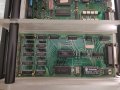
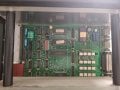
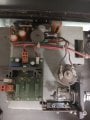
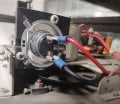
I need help. We want to repair our old test instrument.

Thread Starter

menemenli

Joined Jun 17, 2011
15
Hello to everyone :)
I need help. We want to repair our old test instrument. It measures thickness and dimensional attributes of plastic (PET etc) containers and preforms.
It is a Topwave Gawis. It was made in 1992 by TOPWAVE company. Its manufacturer is already in the dusty pages of history.
There is a few information about it on internet. A video in youtube about it; its title is :"Material Distribution with the Gawis TopWave":

We have only a manual and a few emails about some faults. However not enough.

Also there isn't any user/operator of the instrument.

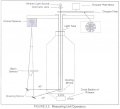
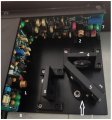
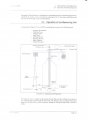
There is a principle of operation sheet attached.
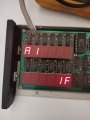
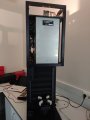
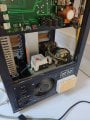
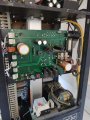
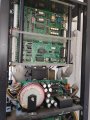
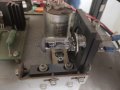
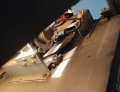
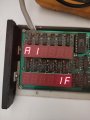
And also photos of the instrument.

Is there anybody who can help me about it?
Any documents, any ideas, whatever.

Thanks so much.principle of operation.jpgIMG_20250627_114603.jpgIMG_20250627_141412.jpg
 

Jerry-Hat-Trick

Joined Aug 31, 2022
803
An interesting concept. May I ask, what is not working? If the electronics is faulty, but the table still moves up and down and rotates, and the light source is still activating the infrared receiver it may be simpler to rebuild the electronics with a processor board like an Arduino or Raspberry PI. It may be possible to replace the light source with an infrared laser LED which could be pulsed electronically making the chopper plate redundant. What is the purpose of the beam splitting, 90 and 45 degrees?
 

Thread Starter

menemenli

Joined Jun 17, 2011
15
Thanks for quick response. And sorry for my poor English. I hope, i can explain well.

The purpose of the beam splitting is to be able to measure the wall and the rounded edge of the bottle with the same light source.

Well. It has not been using for a long time.
Here some details about where we are:

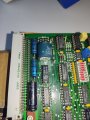
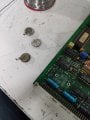
-First problem was about the battery of the mainboard. There were some green dusts around it. We renewed it. Electronic components seem fine (I hope so).
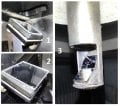
-There are some small, thin mirrors: 2 piece of 5mmX5mmX1mm and 2 piece 20mmX20mmX1mm. They were not in good condition; bad spots on surfaces. We only found and changed 20mmX20mm mirrors. and still searching replacement for other tiny mirrors.

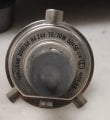
-There is a IR light source. The Light source is very popular halogen one (H4 24V 75/70W 50450). Renewed.
- 2 IR receiver cards. The light has 2 way to travel from source to receiver through lenses and mirrors (you can see in the attached figure. We try to set the optical parts, however; we still need procedure steps that may help to set the mirrors and lenses.

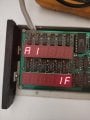
-When we turn it on, the instrument immediately repeats some steps. Something like a bootloop. We could'nt understand what it means.
may be, it is trying to find a home position etc.

There are many more unkown things...

We really need someone who know this instrument.
 

Attachments

Jerry-Hat-Trick

Joined Aug 31, 2022
803
Thanks for sharing this detail. I wonder if you have approached the company for assistance - although they may not be able to help with a device over 30 years old. Maybe you'll get lucky on this site if a retired service engineer spots your thread. It sounds like you are on top of the electromechanical detail but it's the electronics which is not happy.

It it were me, I'd salvage what I can from the hardware and re-engineer the control and measurement electronics. The halogen lamp could be replaced by an IR laser diode, something like Osram SFH 4783. They are small, so two of them could go down through the neck of the bottle/preform, one pointing sideways, one at 45 degrees, each with their respective IR sensor on the outside, doing away with mirrors altogether. You probably won't need lenses if the distance between LED and receiver is less than around 5mm as the beam spread of the LED is around +/- 10 degreess. Instead of the chopper plate, just turn them on and off electronically (although I don't understand why that's necessary). Attenuation of IR by PET and other plastics is not linear, it's exponential but you should be able to calibrate from known thicknesses. If you are looking for just pass/fail an Arduino could do the control, for mapping the full data consider a Raspberry PI. Rotation of the table with a stepper motor - 200 steps per rotation should be fine. The light source and receivers could go up and down rather than the bottle, but if the up/down motor and platform rotation still function mechanically and electrically, stay with it. A great project for engineering students? Sorry if that isn't much help
 

panic mode

Joined Oct 10, 2011
4,933
battery is dead and was (possibly still is) leaking. if you are lucky, it did not corrode PCB tracks. it need to be removed immediately. while at it, i would also replace all the electrolytic capacitors. they don't age gracefully and look really old (1970?)
 

dl324

Joined Mar 30, 2015
18,268
First problem was about the battery of the mainboard. There were some green dusts around it. We renewed it. Electronic components seem fine (I hope so).
The battery definitely needs to be replaced.

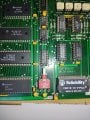
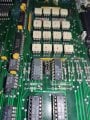
I see they're mixing TTL with CMOS. That usually works, but TTL outputs aren't guaranteed to drive CMOS inputs...
 

Werecow

Joined Aug 4, 2025
37
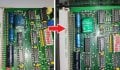
There's some corrosion from the defective battery underneath the DIP relay (part marked AX 131A-13). If possible, verify continuity of those PCB traces that go underneath it, but even if they're good, I'd still remove the relay, and clean and inspect the PCB. Also inspect the two traces and vias just above and to the right of the relay in your photo. (A ring can corrode around the via hole and open the connection.) The one to the right looks suspect, as does the via next to pin 11 of the relay.
 

Thread Starter

menemenli

Joined Jun 17, 2011
15
Thanks for sharing this detail. I wonder if you have approached the company for assistance - although they may not be able to help with a device over 30 years old. Maybe you'll get lucky on this site if a retired service engineer spots your thread. It sounds like you are on top of the electromechanical detail but it's the electronics which is not happy.

It it were me, I'd salvage what I can from the hardware and re-engineer the control and measurement electronics. The halogen lamp could be replaced by an IR laser diode, something like Osram SFH 4783. They are small, so two of them could go down through the neck of the bottle/preform, one pointing sideways, one at 45 degrees, each with their respective IR sensor on the outside, doing away with mirrors altogether. You probably won't need lenses if the distance between LED and receiver is less than around 5mm as the beam spread of the LED is around +/- 10 degreess. Instead of the chopper plate, just turn them on and off electronically (although I don't understand why that's necessary). Attenuation of IR by PET and other plastics is not linear, it's exponential but you should be able to calibrate from known thicknesses. If you are looking for just pass/fail an Arduino could do the control, for mapping the full data consider a Raspberry PI. Rotation of the table with a stepper motor - 200 steps per rotation should be fine. The light source and receivers could go up and down rather than the bottle, but if the up/down motor and platform rotation still function mechanically and electrically, stay with it. A great project for engineering students? Sorry if that isn't much help
Thanks so much for your concern.
You have plenty of information about what we need. :)
Every suggestion will be welcome.

-Yes, we contacted with them : The instrument was produced in 1992. Its manufacturer was TOPWAVE in Finland. And in the fall of 2000, AGR International and TopWave Industries announced the merger of the two businesses into one company, AgrTopWave. Today, in 2025, the company is AGR international. However they can't help.

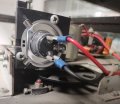
-The lamp surprised me, because it is a very well-known one (you can see in attached photo). And we replaced with new one, however it doesnt make much positive. Unfortunately, there isn't any information about the original lamp model. I hope, the one installed is the original. If we can't have more progress about the light, we will plan changing the light source (IR lasers or OSRAM SFH4783 etc... Besides, as you said, we may not need the lenses. Thanks so much for the advice)

Step by step. We will go.

I attached more photos and a small information sheet about the instrument.

Thanks so much again.
We will learn new things and also, we will try to make it functioning.
 

Attachments

Thread Starter

menemenli

Joined Jun 17, 2011
15
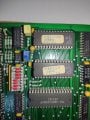
Looks very interesting. Can you post sharp, well focused photos of all the boards so that we are able to read part numbers of all ICs?
Thanks so much for your interest.
Sure, i can add more photos.
 

Attachments

Thread Starter

menemenli

Joined Jun 17, 2011
15
battery is dead and was (possibly still is) leaking. if you are lucky, it did not corrode PCB tracks. it need to be removed immediately. while at it, i would also replace all the electrolytic capacitors. they don't age gracefully and look really old (1970?)
Thanks so much for your reply.
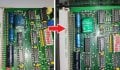
Yes, the battery was dead. Fortunately the pcb is fine. The battery was VARTA Ni-Cd 3,6V. I replaced it with a new Ni-Cd 3,6V battery.

Yes really old. It was produced in 1992.
Very good idea, we will renew the electrolytic capcitors.

Thanks so much
 

Attachments

Thread Starter

menemenli

Joined Jun 17, 2011
15
There's some corrosion from the defective battery underneath the DIP relay (part marked AX 131A-13). If possible, verify continuity of those PCB traces that go underneath it, but even if they're good, I'd still remove the relay, and clean and inspect the PCB. Also inspect the two traces and vias just above and to the right of the relay in your photo. (A ring can corrode around the via hole and open the connection.) The one to the right looks suspect, as does the via next to pin 11 of the relay.
Thanks so much for useful ideas.
We checked ths pcb and pads, fortunately, the everything is fine.
 

Attachments

Thread Starter

menemenli

Joined Jun 17, 2011
15
The battery definitely needs to be replaced.

I see they're mixing TTL with CMOS. That usually works, but TTL outputs aren't guaranteed to drive CMOS inputs...
Yes you are right. :)
I think, there are many awesome engineering details about it in the circuit design. :)
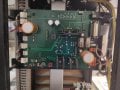
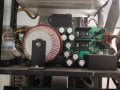
For example, I saw a DC-DC converter and some isolated power supplies.

Besides, it was already working instrument in 1990s.

It is really beautiful, isn't it?
 

dl324

Joined Mar 30, 2015
18,268
Yes you are right. :)
I think, there are many awesome engineering details about it in the circuit design. :)

It is really beautiful, isn't it?
It's neither awesome nor beautiful. What it means is that if any of the chips are replaced, the device might not work. Doing a comprehensive test like the manufacturer likely did before shipping would likely not be possible for you.
 

Thread Starter

menemenli

Joined Jun 17, 2011
15
It's neither awesome nor beautiful. What it means is that if any of the chips are replaced, the device might not work. Doing a comprehensive test like the manufacturer likely did before shipping would likely not be possible for you.
I just wanted to be positive about it :(

I hope, none of them were replaced. If yes, all for nothing.
 

Jerry-Hat-Trick

Joined Aug 31, 2022
803
"Beauty is in the eye of the beholder"!:)Seriously, it may have been cutting edge in 1992 but without schematics it'll be well-nigh impossible to fault find. I'll bet that all the electromechanical components still work so maybe replacing the electronics is a possible, if not better, approach. I may have missed something, but I would first check:
Details of the motor which raises the platform
Details of the motor which rotates the the platform
Can you power the lamp (directly) and check if the sensor has an output you can measure

Maybe the motors can be dis-connected and powered directly?

I genuinely believe, if the measurement principle can be verified, processor control is the way forward
 

dl324

Joined Mar 30, 2015
18,268
I hope, none of them were replaced. If yes, all for nothing.
I noticed that some of the CMOS chips are in sockets. I wonder if that might have been so the manufacturer could cherry pick parts to make the system work.

Interestingly, they used MC14503 parts when there was a 74LS367 part with the same functionality and pinout. That's one of the rare cases where there were TTL and CMOS parts with the same functionality and pinout...
 
Top