I am working on a project to make an digital thermometer without using microcontroller

Thread Starter

vijayabharathi

Joined Aug 18, 2026
1
hello everyone,

i am working on a project to make an digital thermometer without using microcontroller . But i don't have any idea ,for where should i start .Can someone help me
 

bertus

Joined Apr 5, 2008
22,989
Hello,

Is this a school project?
What parts are you allowed to use?
Can a voltmeter chip be used?
Can a temperature sensor chip be used?
How should the temperature be displayed, as bargraph or in numbers?
What range of temperature should be measured?

Bertus
 

MrChips

Joined Oct 2, 2009
35,021
This is a classic school exercise in introductory electronics.
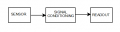
Begin with a block diagram that shows the flow of data.

1787058810033.png

Next, make a list of all the requirements of the project.
 

panic mode

Joined Oct 10, 2011
5,175
hello everyone,

i am working on a project to make an digital thermometer without using microcontroller . But i don't have any idea ,for where should i start .Can someone help me
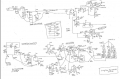
traditional way to display digital value is to use counter. so number of counted pulses equals displayed value. for more details lookup retro frequency counters.

if you want value to update dynamically, you need to periodically reset counter and let it count again. to avoid flicker, keep old value displayed until count is complete and then transfer new value in an instant.

the next part is to generate pulses - you need something that counter can count. that means you need clock oscillator (OSC1).

the next part is gate. it is allowing you to control when pulses from oscillator can reach counter, basically when to count and when to do something else (transfer value and reset counter). the longer gate is open, more pulses get through it and displayed value is larger. if gate is always closed, counter will periodically get reset and when that value is transferred to display, you will see zero.

congratulation, you (almost) have digital readout. just need transfer (latch) and reset counter signals.

now you need to get data from some sensor and use it to control the gate. suppose you measure temperature using thermistor. suppose this thermistor is part of (another) oscillator, then temperature change will affect frequency of this oscillator (OSC2).

so when OSC2 output is high:
display should be frozen (no value changes, avoid flicker).
counter should run and count pulses

when OSC2 output changes to low:
generate pulses to
a) transfer counted value and latch it
b) reset counter (ready for next operation).

that was for analog sensors...

and... if the sensor itself is digital, you need to build circuitry that will generate necessary signals to get the value out.

as already stated, you need to narrow down things considerably.
 

Wendy

Joined Mar 24, 2008
23,805
There is a link in this site that accesses the old popular site that accesses the old popular electronics magazines. They have had more than one digital thermometer in their projects list. A lot of them used a thermistor or a diode as the sensor. Diodes change their knees slightly according to their temperature, which is used to measure the temperature.
 

MrAl

Joined Jun 17, 2014
13,765
hello everyone,

i am working on a project to make an digital thermometer without using microcontroller . But i don't have any idea ,for where should i start .Can someone help me
Hi,

The approach depends HIGHLY on what you want to be able to measure with the "digital thermometer" and how accurate it has to be.

A simple example is the old school way of doing it: Measure the voltage of a DC biased diode with an op amp and amplify it, then use an A to D converter. For low accuracy you can even make your own A to D converter using comparators. If you use a standard A to D converter you have to add some diode break points, but if you make your own custom A to D converter you can scale it to reflect the right temperatures without needing to scale the voltage measurements.

An even simpler example is to use a thermistor and measure the voltage using an op amp and amplifier, add some diode break points, then A to D converter. Again a custom A to D converter helps a bit if you can stand doing that.

It also depends HIGHLY on what other components you are allowed to use. For example, if you can use a digital voltmeter you can simply scale the voltage from a biased thermistor, or a biased diode or set of diodes. The meter will provide the temperature readings.

There are also analog version IC chips made for measuring temperature and output linear voltages in proportion to temperature. That makes the measurement simpler and linear, then you just have to add a display system if you really need that too. You could look up those chips on the web. Check out the TMP36 for one example. It's old school, but it worked for years.
 
Without a detailed requirement specification (range, resolution, accuracy etc) I'd suggest assuming it's to display ambient temperature with a resolution of 0.1 degrees, either Celsius or Fahrenheit. Consider using a silicon diode as a temperature sensor as it's nicely linear over a wide range. Consider using an old school dual slope A/D converter IC. Google the rest
 
A simple temperature sensor can be easily made from a coil of copper wire. It does not react very quickly to temperature changes but its change in resistance is quite linear: 0.393% per degree Celsius at room temperature. I have used a 100 Ohm coil from an old relay to sense the temperature on a couple of occasions.
 
Top