Hysteresis On Infared Detection.

Thread Starter

Kim Sleep

Joined Nov 6, 2014
391
I have a infared emitter detector circuit that is built into a ready made board.
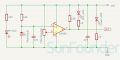
Here is a schematic that I THINK is used on this board (I cannot find the actual original schematic):

https://elonics.org/infrared-ir-proximity-obstacle-sensor-using-lm-358/

Im using this for liquid level detection.
How can I build into this hysteresis to accommodate occasional sloshing of the liquid, and time this out to only detect when the liquid surface is calm?
Thanks
 

WBahn

Joined Mar 31, 2012
32,703
I have a infared emitter detector circuit that is built into a ready made board.
Here is a schematic that I THINK is used on this board (I cannot find the actual original schematic):

https://elonics.org/infrared-ir-proximity-obstacle-sensor-using-lm-358/

Im using this for liquid level detection.
How can I build into this hysteresis to accommodate occasional sloshing of the liquid, and time this out to only detect when the liquid surface is calm?
Thanks
You are going to need to characterize your signal so that you can effectively filter it. Essentially, you need a low pass filter. This filtering and any hysteresis you include serve different purposes. You may find that one or the other is sufficient or that you need to utilize both. It depends on the characteristics of your signal and the needs of your system. Neither can be ignored.
 

KeithWalker

Joined Jul 10, 2017
3,603
If you want hysteresis in that circuit, add a resistor between pins 1 and 3 of the LM358. Try a high value (1 Megohm?) for a start. decrease the value for more hysteresis. NOTE: Too much feedback may cause instability!
 

MisterBill2

Joined Jan 23, 2018
27,164
A proto-board arrangement is not a circuit schematic. It is speaking to me i an entirely different language.
BUT the method of getting hysteresis on a comparator circuit is to add some positive feedback. Not much, start with one megohm from the amplifier output to the non-inverting input. That should add a bit of hysteresis, UNLESS the positive input, which I am guessing is yor reference set point voltage, is a very low impedance source. THISis the reason I asked for an actual circuit schematic.
 
Top