HV DC to AC conversion

Thread Starter

crazedtech85

Joined Dec 10, 2022
12
I'll explain in a minute but first. I need to design or find a circuit that can convert 150-230v DC power to AC 60hz power unregulated voltage. Just a raw conversion. it would be nice if it doesn't kick in until 150v give or take a few but not required. This would allow me to design the rest of the circuit to be useful power for me. Should be a fairly simple circuit for that portion of it I hope.

Why would I need such a circuit.
I have basic electronics knowledge but DC/ac conversion knowledge is lacking. I only play with basic DC stuff as a hobby at times. This is a bit different though. I need to take a 230v open circuit solar panel optimum output of 188v and convert it to DC voltage that is much lower at about 60v I have a mppt charger that can control it from there. So that's why this DC/ac converter needs no voltage control. Just needs to convert the voltage I have. I will then feed the AC to a transformer then rectify and add small capacitor to smooth. From there my mppt device should maximize the current to make the panel run at 188v naturally. I have searched high and low for a mppt controller that can use such a high voltage to charge only 12v, but it doesn't exist. I bought these panels for the future but it would be nice if I can use a couple now with my existing system until I upgrade later next year. I am going to be going to a 48v system with built in mppt that is capable of 500v later so this is only a temporary solution for me. Doesn't need to be engineered or built to perfection just work good enough to get me a smidge more for 6-9mo until I can afford the $9k sol-ark I want.

Thanks in advance for any help.
 

Papabravo

Joined Feb 24, 2006
22,065
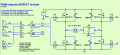
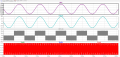
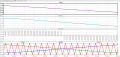
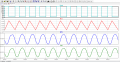
What you want is an inverter. IMHO you will be way better off finding one to buy. The design, part selection, and testing involve some circuits which are challenging for a hobbyist. The basic circuit is called an H-bridge and you should familiarize yourself with this circuit regardless of your decision to build or buy. The second circuit you should be familiar with is the sinewave pulse width modulation (SPWM) circuit. In this circuit you use a low voltage reference sinewave, e.g. 1V P-P which is sampled by a higher frequency sawtooth to create a pulse train which represents the reference sinewave. This pulse train is used to drive the H-bridge to create the higher voltage sinewave at the reference frequency.

On the theory that you should learn to crawl and walk before trying to run a marathon, buy one, learn it inside and out, then design and build a better one.

Here is a conceptual design that I used to understand the basic operation.
1670684980093.png

1670685083001.png

1670685155996.png

N-Period=all
Fourier components of V(of)
DC component:18.855

Harmonic Frequency Fourier Normalized Phase Normalized
Number [Hz] Component Component [degree] Phase [deg]
1 6.000e+01 1.962e+01 1.000e+00 177.12° 0.00°
2 1.200e+02 7.612e-01 3.880e-02 84.32° -92.80°
3 1.800e+02 4.499e-02 2.293e-03 18.03° -159.09°
4 2.400e+02 1.510e-01 7.699e-03 78.49° -98.64°
5 3.000e+02 1.315e-02 6.702e-04 25.55° -151.57°
6 3.600e+02 6.173e-02 3.147e-03 73.92° -103.20°
7 4.200e+02 1.630e-02 8.308e-04 -159.74° -336.86°
8 4.800e+02 3.938e-02 2.008e-03 90.65° -86.47°
9 5.400e+02 2.183e-02 1.113e-03 113.13° -63.99°
10 6.000e+02 3.110e-02 1.585e-03 69.40° -107.72°
11 6.600e+02 3.812e-03 1.943e-04 91.93° -85.19°
12 7.200e+02 2.167e-02 1.105e-03 61.85° -115.27°
13 7.800e+02 9.068e-04 4.623e-05 11.56° -165.56°
14 8.400e+02 1.638e-02 8.348e-04 60.01° -117.11°
15 9.000e+02 9.312e-04 4.747e-05 -19.12° -196.24°
16 9.600e+02 1.309e-02 6.672e-04 53.85° -123.27°
17 1.020e+03 9.481e-04 4.833e-05 137.44° -39.68°
18 1.080e+03 1.039e-02 5.295e-04 48.24° -128.88°
19 1.140e+03 3.861e-03 1.968e-04 164.86° -12.26°
20 1.200e+03 8.963e-03 4.569e-04 47.87° -129.25°
21 1.260e+03 6.252e-03 3.187e-04 171.09° -6.04°
22 1.320e+03 7.718e-03 3.934e-04 47.08° -130.04°
23 1.380e+03 7.986e-03 4.071e-04 174.61° -2.51°
24 1.440e+03 7.085e-03 3.612e-04 39.15° -137.97°
25 1.500e+03 1.010e-02 5.148e-04 174.72° -2.40°
Total Harmonic Distortion: 3.990954%(106.472461%)
 
Last edited:

Thread Starter

crazedtech85

Joined Dec 10, 2022
12
Thanks.

Would love to buy one if I could find one. I can't seem to find anything capable of maintaining hv just converting it. Seems that all that comes up when I search is inverters that step up the voltage to make ac for household use from a battery. I'm totally open to suggestions if anyone knows what I could buy to achieve this. I did find one think but that $1200 price tag scared me away. Some sort af mil-spec item.

I don't need a perfect sign wave like you have set up with that circuit. I was thinking in lines of I could just build a timed MOSFET circuit to create a 60hz square wave to send through transformer. I'll loose efficiency but it should do the job. How do I regulate the large voltage variable of a solar panel like that though? It will start at zero and and work all the way up to over 200+v. I'm not sure how to control such a range to regulate the switched side of the MOSFET. Finding the higher voltage parts will be interesting too but points in general direction are hugely helpful. I already have the higher voltage MOSFET but need to regulate somehow I don't just mean head to digikey or something either.

I can sorta crawl at my skill level and just looking to walk a short distance ...
 

Thread Starter

crazedtech85

Joined Dec 10, 2022
12
At your skill level you shouldn't be working with lethal voltages.

I work with high voltages all the time when I fix hybrid vehicles. I'm an auto tech with enough electrical knowledge to be dangerous. But I know how to safely operate with HV. Most hybrid vehicles are over 250v DC. What I don't know is how to create a circuit to operate them. I assume there is differences that involves more then just the parts abilities to handle hv.
 

dl324

Joined Mar 30, 2015
18,264
I work with high voltages all the time when I fix hybrid vehicles. I'm an auto tech with enough electrical knowledge to be dangerous. But I know how to safely operate with HV. Most hybrid vehicles are over 250v DC. What I don't know is how to create a circuit to operate them. I assume there is differences that involves more then just the parts abilities to handle hv.
High voltage AC has different risks than DC.
 

Thread Starter

crazedtech85

Joined Dec 10, 2022
12
High voltage AC has different risks than DC.
I am fully aware of the dangers. Vehicles use DC in most circuits including the batteries in ev and hybrid unit's. It gets converted to ac only for the ones like Tesla to drive the what I understand is basically 3 phase motors. Have yet to tamper with Tesla though. I also do household wiring. So that makes me well aware of the risk involved with ac circuits. I'm a man of all trades but a master of only one. Started in the circuit world as a kid but became an advanced auto tech later because of my electronics knowledge. Your comment isn't helping me.
 

Papabravo

Joined Feb 24, 2006
22,065
Well, the only way you are likely to get an AC waveform from a DC source is with an H-bridge. You're welcome to try whatever you think might work. While you are at it you might want to check these out.


There are additional videos on the subject if those two prove difficult to follow.
 

Ya’akov

Joined Jan 27, 2019
10,226
Sounds like you need a buck converter. It doesn't really seem to make sense to do most of what a buck converter does, just to put it into a transformer and suffer the losses from that that.
 

Papabravo

Joined Feb 24, 2006
22,065
Sounds like you need a buck converter. It doesn't really seem to make sense to do most of what a buck converter does, just to put it into a transformer and suffer the losses from that that.
A buck converter won't get you an AC output, unless you know something that I missed.
 

Thread Starter

crazedtech85

Joined Dec 10, 2022
12
Sounds like you need a buck converter. It doesn't really seem to make sense to do most of what a buck converter does, just to put it into a transformer and suffer the losses from that that.
A buck converter would work if any of them went high enough voltage and current. This is a 2 amp at 188v panel for each panel. I haven't found any buck converter's over 60v input unfortunately. Like I said previously, if you have any product suggestions I'm totally listening.
 

Ya’akov

Joined Jan 27, 2019
10,226
A buck converter won't get you an AC output, unless you know something that I missed.
He wants to take a high DC voltage and make it a lower DC voltage. His plan is to use an inverter, then a transformer, then a rectifier. Since the inverter is as complicated as a buck converter, he might as well build a buck converter and eliminate the transformer and rectifier.
 

Papabravo

Joined Feb 24, 2006
22,065
He wants to take a high DC voltage and make it a lower DC voltage. His plan is to use an inverter, then a transformer, then a rectifier. Since the inverter is as complicated as a buck converter, he might as well build a buck converter and eliminate the transformer and rectifier.
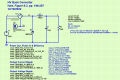
OK. So component selection may be a challenge, but the basic open loop power section of a buck converter looks like this:

1670722054392.png

1670722095473.png

Finding a MOSFET to use in place of U1 will be a challenge and finding a diode that can withstand a reverse voltage of V1's output will be a similar challenge. The rest of the buck converter should be straightforward. This starts out simple but gets complicated quickly.
 
Last edited:

Thread Starter

crazedtech85

Joined Dec 10, 2022
12
Well I found this site product https://www.dwe-oss.eu/product/dc-dc-converter-250v-to-15v-750w/ for an option. It's still a bit more pricey than I want but it also would work better than I really need... I may have an idea that could work on the cheap I can bench test but its a sketchy circuit. I think I have the needed parts from my 150v coil gun project I did a while back. I think the mosfets I ordered are 350v capable if I recall from 2 years ago. Better wear all the safety gear in case I blow something up haha. Wouldn't be the first time and I'm sure it won't be the last.
 

Thread Starter

crazedtech85

Joined Dec 10, 2022
12
How about a synchronous buck converter?
I like that idea, I'll start doing some more research. Took a quick look at the definition and basic design, it sounds doable. Never heard of one before now. I have a 350v high current MOSFET (multiple) all ready. Ordered some higher voltage diods last night my supply was short. If this circuit ends up needing something specific I don't have I'll just order it. Nice thing about electrical components is they are relatively cheap and if I don't use them now I'm sure I'll find a use later... I'm also going to see if there is any prebuilt options out there.

Thanks guys, any more good ideas like that and I'm listening.
 

Ya’akov

Joined Jan 27, 2019
10,226
I like that idea, I'll start doing some more research. Took a quick look at the definition and basic design, it sounds doable. Never heard of one before now. I have a 350v high current MOSFET (multiple) all ready. Ordered some higher voltage diods last night my supply was short. If this circuit ends up needing something specific I don't have I'll just order it. Nice thing about electrical components is they are relatively cheap and if I don't use them now I'm sure I'll find a use later... I'm also going to see if there is any prebuilt options out there.

Thanks guys, any more good ideas like that and I'm listening.
Do take care with these voltages. Pay particular attention to any warnings on application notes or datasheets. I know you said you are familiar with HV, but you don’t necessarily get a second chance to be more familiar.
 

Thread Starter

crazedtech85

Joined Dec 10, 2022
12
Do take care with these voltages. Pay particular attention to any warnings on application notes or datasheets. I know you said you are familiar with HV, but you don’t necessarily get a second chance to be more familiar.
I 100% agree HV DC can be some dangerous ish to deal with!!
 

Thread Starter

crazedtech85

Joined Dec 10, 2022
12
After looking into to synchronous buck converter it sure gets complex in a hurry when dealing with high voltages. Especially since I would have to give it a set output. Now that wouldn't be a problem to have the set voltage if it wasn't for the amount of change needed. I'd being going from 188v down to 13.9v. that 188v is at about 2.4 amp max. Now imagine that at 13.9 volt. thats 30+amps. The circuit would have to be really robust. Being its a set output I can't use my mppt to control voltages. because of that It also won't target that optimal 188v automatically. so even more complications. I could do 2 step buck converters to step down twice but that seems a bit ridiculous... Being its a set output I can't use my mppt to control voltages.

So looks like I'm back to a dc square wave into a transformer like I was thinking as a simple way to step it down then rectify it and run it to mppt. I would loose a lot of watts to inefficiencies but at least it would control it automatically. I will have 10 of these panels and only need 400 watts to max out my mppt controller. If I loose over 60 watts form inefficientcies it wouldn't be the end of the world. I could always add more panel and just make sure to aim them in a way that it keeps my mppt at close to max throughout the entire day rather then shy of max of 400 watts just at high noon like it is now.

Still fun to learn more about buck converters.
 
Top