Jerry Jones team is in Arlington Texas, not Houston.
The houston team was suppose to play the cowboys last night, but, once the Houston airport opened, the NFL cancelled the game so the players could get back home. It was the right thing to do.
Dallas cowboys had a fund raiser that raised. Over two million in two hours ... And Jerry Jones call was 1 million.
So, how much money did Jerry suck out of the city of Houston?
Oh c'mon. No demonic actors are needed to explain this. (I despise the two you named, but on this matter cannot blame them.)
With a fungible commodity like gasoline, a 20% contraction of supply is huge and WILL always cause a price spike to keep supply and demand in balance. There are no exceptions to this fundamental rule of economics. I predict prices will have to go a lot higher to get people to cut consumption by 20%. That's not a risky prediction.
Consider also that this is Labor Day weekend. Half the price increase is probably due to that alone.
I've been told that there's quite a bit of reserves and idle refinery capacity in the market, so that may help suck up the 20% shortfall.
Oh c'mon. No demonic actors are needed to explain this. (I despise the two you named, but on this matter cannot blame them.)
With a fungible commodity like gasoline, a 20% contraction of supply is huge and WILL always cause a price spike to keep supply and demand in balance. There are no exceptions to this fundamental rule of economics. I predict prices will have to go a lot higher to get people to cut consumption by 20%. That's not a risky prediction.
Consider also that this is Labor Day weekend. Half the price increase is probably due to that alone.
I've been told that there's quite a bit of reserves and idle refinery capacity in the market, so that may help suck up the 20% shortfall.
I never understood the whole supply and demand thing when it comes to something like gasoline. Do people really use less when the price goes up 40 cents? Do people actually cancel their pans because their drive might cost them and extra $10 or $20?
I never understood the whole supply and demand thing when it comes to something like gasoline. Do people really use less when the price goes up 40 cents? Do people actually cancel their pans because their drive might cost them and extra $10 or $20?
Yes, they do. Or it may be better to say the market in aggregate does. You might find that vacationers make less adjustment than, say, commuters who can easily hop on a train instead of drive in to work. But there's no question that a higher price for any good depresses the demand for that good. The degree of change in demand with price is called the price elasticity. Something that's not a necessary commodity is typically more elastic than things like corn or gasoline. As you note, people want to keep using these at essentially the same level. It takes bigger price changes to change their behavior.
Yes, they do. Or it may be better to say the market in aggregate does. You might find that vacationers make less adjustment than, say, commuters who can easily hop on a train instead of drive in to work. But there's no question that a higher price for any good depresses the demand for that good. The degree of change in demand with price is called the price elasticity. Something that's not a necessary commodity is typically more elastic than things like corn or gasoline. As you note, people want to keep using these at essentially the same level. It takes bigger price changes to change their behavior.
I understand the theroy but just seems to me that at $1 or $4 a gallon I am stuck behind just as many cars when I am taking the bus home from work. and I am just as pissed off seeing one person in each car while I am on a crowded bus.
I understand the theroy but just seems to me that at $1 or $4 a gallon I am stuck behind just as many cars when I am taking the bus home from work. and I am just as pissed off seeing one person in each car while I am on a crowded bus.
Few products are as inelastic as gasoline. It takes a big price change to change demand. That's why I'm predicting still higher prices while that 20% capacity stays offline.
I understand the theroy but just seems to me that at $1 or $4 a gallon I am stuck behind just as many cars when I am taking the bus home from work. and I am just as pissed off seeing one person in each car while I am on a crowded bus.
But the nature of the cars you are stuck behind is different. In 1970 you were stuck behind cars very few of which got more than 10 or 15 mpg, today you are stuck behind cars very few of which get less than 20 or 25 mpg. In 1970 no one even asked how much the mileage was on a car they were thinking of buying and if they were told it was 6 mpg they wouldn't care and probably couldn't have told you how it compared to what they were driving. Today, that's one of the first questions out of a potential buyer's mouth. Try selling a 6 mpg car to someone today -- while there are a few buyers, the number is quite small.
Even in the short term, people do adjust plans. They choose a different vacation destination. They look for ways to combine trips, such as stopping at the grocery store on the way home instead of making a separate dedicated trip on the weekend. But they have two kinds of driving -- "necessary" (at least in their view) and "optional". Most people (and it certainly varies depending on where you live) have a fairly high ratio of necessary to optional, and so they have a limited ability to make significant short-term cutbacks. But when they think that the prices will be higher over the long haul, they factor those things into their longer-term decisions in order to reduce their necessary driving costs, such as what their next car is going to be or whether they want to move closer to work.
The very fact that gasoline prices at the pump are so volatile are a big indicator of how sensitive the market is to supply and demand. Yes, they spike rapidly and people really notice that. But they also fall rapidly and people seldom notice that. I recall one day, when driving around town doing a lot of errands, seeing one station drop their price by 5 cents a gallon each of the four times I drove past the station over the course of about five hours. I went in and talk to the manager and he said that he had to drop the price every time either he or the station across the street got a delivery, so 20 cents a gallon in just one working day.
People always talk about how the big oil companies are fixing the prices. Well, if that's true they have done a pretty lousy job of it. You would think that the very least they could have accomplished would have been to keep the cost of gasoline in line with inflation, yet they haven't come close.
When gasoline peaked at about $4.00 a gallon I was still working and it was costing me about $100.00 a week to go to and from work. My wife came in at less as her daily commute was short. Since we are both now retired I can fill both her and my trucks and weeks later they are still sitting here with full tanks. We never really gave much thought to gasoline when we retired but between quitting smoking and not really using much fuel it has been a bonanza for us. I had just filled both trucks before all this happened fortunately.
There are commodities which are volatile and petroleum is one of them. Then there is about an $00.184 Federal Tax plus the state tax on each gallon. Here in Ohio the state tax is about $00.28 per gallon. Again, petroleum is just one of those commodities that can be very volatile.
When gasoline peaked at about $4.00 a gallon I was still working and it was costing me about $100.00 a week to go to and from work. My wife came in at less as her daily commute was short. Since we are both now retired I can fill both her and my trucks and weeks later they are still sitting here with full tanks. We never really gave much thought to gasoline when we retired but between quitting smoking and not really using much fuel it has been a bonanza for us. I had just filled both trucks before all this happened fortunately.
There are commodities which are volatile and petroleum is one of them. Then there is about an $00.184 Federal Tax plus the state tax on each gallon. Here in Ohio the state tax is about $00.28 per gallon. Again, petroleum is just one of those commodities that can be very volatile.
The average state tax is about 31 cents/gal and the peak (Pennsylvania) is over 58 cents a gallon. We are a bit lower than you since Colorado is currently 22 cents/gal. So the average government tax is right at 50 cents/gal. By comparison, oil companies average a profit of about 7 cents/gal (according to Forbes, but it's pretty hard to tell what a true, meaningful number is for most of the large industry sectors), which is another reason that the prices are very volatile. The competition is strong enough to push profit margins into the 3% range. Markets that operate at that slim of a margin have little choice but to quickly pass increases on to customers, but also to pass on savings pretty quickly in order to retain market share. There's obviously huge profits to be made, but only if you have enough market share. In the gasoline market, brand loyalty is largely nonexistent as people fill up at the nearest station with a decent price without caring too much about the name on the sign.
In the gasoline market, brand loyalty is largely nonexistent as people fill up at the nearest station with a decent price without caring too much about the name on the sign.
When I need it I just buy it and exactly as you mentioned, I seldom look at brand or price since all the gas stations around me are within a few cents of each other. Yes, I read that also that the profit is around five to seven cents on a gallon.
I believe what it comes down to is humanitarian caring and aid. There is a time when politics need set aside, especially during times of disaster. I believe that is what we see here and that is, as I see it, a good thing.
Well something good came out of Harvey for me. My parents '94 Celica GT got flooded and they were going to have it hauled off for scrap because my stepfather didn't want to spend the time on it; he has other projects ongoing. I told them I would give them scrap value for it and see if I can restore it. They said I could just have it. It just had the engine rebuilt, as in 0 miles on it. It was at my mechanic friend's house waiting for them to pick it up when it flooded. So I went to help my friend and came home with this car. Stayed up late last night ripping the interior out. It starts and runs (well), no water in the engine, but the transmission was full of water and some of the electronic modules including dash climate controls were submerged. Drained/Refilled the transmission (5spd stick) today. Hopefully I got the interior out in time to prevent mold. Hopefully I get a couple years out of it before he flood gremlins consume it.
I want your opinion on this; tell me if this unfair or a bad idea... My stepfather loves that car. It was the first brand new car he ever bought. It hasn't ran in 3 years and he was just now looking forward to driving it again before it flooded. He didn't want to see the pictures of the interior removed; he said it was like a "tease." I would really like to see him have it again. I owe home $1,500 that I have been paying down over time. So my idea is, if I get it running and everything is ok, no mold, no gremlins, maybe I would approach him about trading the car for my debt. One could look at it 2 different ways: 1. I'm trying to sell him a car that he just gave to me, or 2. He's paying $1,500 for restoration. I'm afraid though that if he accepts the offer, he might regret it a year or 2 down the road when it starts doing wacky stuff from the flood damage.
Should I drop that idea and just keep the car? Or should I just give him back the car because I know how bad he loves it? Or should I go with my idea? Or something else? (No, I'm not selling it to a stranger for profit; doesn't seem right)
My $0.02. If I could afford the eat the restoration costs, I would restore it, letting him think that you were doing it for yourself, and then when it is done drive over to his place for dinner or something and then ask if he can give you a ride home. When he asks why, tell him it's because your car is at home. When he gets a puzzled look and mentions that your car is out front, tell him that, no, that's his car and that you hope he enjoys it for as long as he can until any hidden flood damage rears its head.
Now, it could be that he really won't want the car, restored or not, because it might not ever be the same car, as far as he's concerned.
Back after I sold my first home (a townhome) I had about $32k profit. I used right at half of it to put siding and windows on my house and the other half was just enough to pay of my parent's mortgage. So a few days before Christmas I went to their bank, paid it off, and got a letter from the bank certifying that it was paid in full. I put that into an envelope and put it under the tree. They expected a couple hundred dollars in Home Depot and, I think, Hobby Lobby gift cards, since that was what I had been getting them for a few years and which they always had a use for. It will always be one of my fondest memories watching them open that envelope and discover their house was free and clear. At the time I owed them several thousand dollars (maybe $8k) and had been paying them here and there. I'm sure if I had said that it was a combination of paying what I owed them with the rest being their Christmas present they would have been just as ecstatic, but I sure felt so much better that I never mentioned a word about it, and neither did they. It was a straight up gift, unsullied in any way by trying to gain some benefit for me -- that was MY present to ME that year.
My plan was to start paying them off aggressively after I took care of a couple of other needs and so about six months later I asked them how much I owed them (my stepmom used to work Accounts Payable and Receivable at a small company so she had it recorded down to the penny). They said they couldn't remember. So I told them that I'd start paying them $1000 a month until they told me it was taken care of and they both looked at each other, turned to me, and said almost in perfect unison, "It's taken care of." Turns out they had thrown out the ledger on New Year's Eve and decided not to say anything unless and until I brought it up.
I agree... I think it's better to stick to the Harvey subject.
My personal question now is: Is this worse than Katrina? I'm under the impression that fatalities are not as high as they were back then, but the economic impact is going to be much, much worse.

 Facebook
 Google
 GitHub
 Linkedin

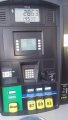 126.3 KB Views: 3