Humming wall wart

Thread Starter

cmartinez

Joined Jan 17, 2007
8,762
I have this wall wart adapter that I use to charge my phone with. In fact, I own several of them.
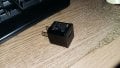

xx.jpg


Recently, I noticed an unusual, high-pitch hum in my room, and I traced it to this adapter.
The noise is of such a high frequency that I'm sure it's spreading sound in the ultrasonic range too. Even my son has a hard time hearing it... which makes me feel good, since at my age some hearing problems usually begin to develop... :D

Anyway, I was wondering why is this thing vibrating, and how is it built inside? I don't want to tear one apart since I'd have to break it...
Does it have a tiny transformer in it? or (God forbid) is it a transformerless supply?
 

ian field

Joined Oct 27, 2012
6,536
I have this wall wart adapter that I use to charge my phone with. In fact, I own several of them.


View attachment 84647


Recently, I noticed an unusual, high-pitch hum in my room, and I traced it to this adapter.
The noise is of such a high frequency that I'm sure it's spreading sound in the ultrasonic range too. Even my son has a hard time hearing it... which makes me feel good, since at my age some hearing problems usually begin to develop... :D

Anyway, I was wondering why is this thing vibrating, and how is it built inside? I don't want to tear one apart since I'd have to break it...
Does it have a tiny transformer in it? or (God forbid) is it a transformerless supply?
The switch mode type still have a transformer - but its a tiny ferrite cored type that only works at high frequency. It should have a rectifier/reservoir and a chip or a few transistors to "chop" the current in the primary. 20kHz is a common switching frequency although some go as high as 50kHz - in the quest for small size/high efficiency, some specialised types run at nearly a couple of MHz.
 

Thread Starter

cmartinez

Joined Jan 17, 2007
8,762
The switch mode type still have a transformer - but its a tiny ferrite cored type that only works at high frequency. It should have a rectifier/reservoir and a chip or a few transistors to "chop" the current in the primary. 20kHz is a common switching frequency although some go as high as 50kHz - in the quest for small size/high efficiency, some specialised types run at nearly a couple of MHz.
There you go... it's a switch mode power supply... I didn't know that... I like to use these for my projects, they're somewhat expensive, but worth every penny.

@shortbus, for a moment there I took your question seriously... then I started to laugh like an idiot... thanks for the comic relief...
 

AnalogKid

Joined Aug 1, 2013
12,130
It is switching at an ultrasonic rate which you cannot hear. What you are hearing is a the transformer windings rattling with each power pulse. You are hearing a sub-harmonic of the primary switching frequency.

ak
 

Thread Starter

cmartinez

Joined Jan 17, 2007
8,762
It is switching at an ultrasonic rate which you cannot hear. What you are hearing is a the transformer windings rattling with each power pulse. You are hearing a sub-harmonic of the primary switching frequency.

ak
Which would mean that the windings are not properly "glued" or "bonded" together... and that's why it's rattling?
 

Thread Starter

cmartinez

Joined Jan 17, 2007
8,762
Mostly, yes, but there is a thing about metals actually changing size when magnetized.
Google: "magnetostriction".
That's an interesting observation... it means that if the material used to bond the coils together doesn't have enough resiliency and elasticity to allow for the wire's dimensional fluctuations, then it will fracture and cause the windings to come loose, and hence there will be play between them and allow for vibration... and the production of sound at resonant frequencies...
Ain't that right? o_O
 

jpanhalt

Joined Jan 18, 2008
11,087
I agree, a buzzing is neither normal nor good for the device in the long run. How long is long? The 24V transformer in my bandsaw has buzzed almost from day one, 40 years ago. I just don't leave it plugged in when not being used for extended periods. For a wall wart powering something sensitive, I would probably just get another one to avoid the irritation and use the buzzing one -- or its case -- for something else.

John
 

Wendy

Joined Mar 24, 2008
23,798
I've been tempted to disassemble one to see if it was a switcher or <gasp> a transformerless power supply. Shades of my childhood come to mind.

They are cheap enough it would be worth it.
 

Reloadron

Joined Jan 15, 2015
7,889
I've been tempted to disassemble one to see if it was a switcher or <gasp> a transformerless power supply. Shades of my childhood come to mind.

They are cheap enough it would be worth it.
You are not alone, the thought has crossed my mind. They are small and inexpensive so if I see one on a store shelf it will become sacrificial. Last week in was out of state visiting friends. Rather than break out my laptop to charge my phone my friends loaned me one of those little things. Worked fine but looking at size and weight I was curious as to what was in that little sucker. :)

Ron
 

ian field

Joined Oct 27, 2012
6,536
There you go... it's a switch mode power supply... I didn't know that... I like to use these for my projects, they're somewhat expensive, but worth every penny.

@shortbus, for a moment there I took your question seriously... then I started to laugh like an idiot... thanks for the comic relief...
For 5V, USB wall-warts are generally plentiful in the shops. The official specification calls for 5V 500mA, but some can deliver about 2A.
 

RichardO

Joined May 4, 2013
2,270
That's an interesting observation... it means that if the material used to bond the coils together doesn't have enough resiliency and elasticity to allow for the wire's dimensional fluctuations, then it will fracture and cause the windings to come loose, and hence there will be play between them and allow for vibration... and the production of sound at resonant frequencies...
Ain't that right? o_O
Maybe it was dropped and the transformer core is cracked...
 

Thread Starter

cmartinez

Joined Jan 17, 2007
8,762
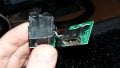
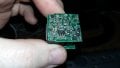
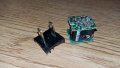
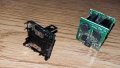
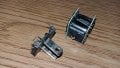
Ok, here it is... I can clearly see a 4-diode rectifier, and on the other side a large diode and a tantalum cap.

Also a couple of medium-sized electrolytic caps, and possibly a small winding (or transformer) sandwiched between the two PCB's. But what draws my attention is the 8-pin SMT chip... that I unfortunately scratched too much when I cracked the thing open and won't let me read the whole label anymore.
 

Attachments

Top