How will we know when a program has achieved sentience?

nsaspook

Joined Aug 27, 2009
16,325
Could we use the ability to quickly adapt to new situations beyond known rules or current knowledge as a test for sentience then ?
Sure, if the AI created new physics for actual and practical anti-gravity, I for one, would bow down to our new AI overlords.
 
Last edited:

MrAl

Joined Jun 17, 2014
13,704
Bear in mind, even the most sophisticated AI could theoretically be run on a mechanical computer. May not be very practical of course (or feasible for that matter) but it is nevertheless just a computational problem. So sentience really doesn't have anything to do with it. Any mimicry observed is essentially just a sophisticated "mirage".
For the time being...
 

xox

Joined Sep 8, 2017
936
Ok, but Wendy was asking how will we know , and I thought you had put forward a suggestion for the test .
There is simply no way to test for sentience, a metaphysical state which hovers somewhere betwixt the physical and spiritual realms. AI systems are built from computer programs. As such, however clever they may be, they will never obtain it.

That said, there are indeed ways to quantify/qualify at what point AI has reached a level of sophistication capable of mimicking human responses with a very high degree of fidelity. For the most part we have already reached that threshold. ChatGPT has already demonstrated that it can ace the Turing test. The next few years are going to see even more incredible advances due to these technologies. True "super-intelligence" is very much on the horizon.
 

nsaspook

Joined Aug 27, 2009
16,325
We don't even have true low-intelligence on the horizon with current systems unless there is some fantastic breakthrough far beyond what ChatGPT can do.
 

drjohsmith

Joined Dec 13, 2021
1,601
I did give my test, it's a pretty high bar of something that can't be a parlor trick of existing knowledge.
That was thus test your referring to ?
"If the AI created new physics for actual and practical anti-gravity, I for one, would bow down to our new AI overlords"
Problem I have with that as a test is then you and I would fail it..
 

drjohsmith

Joined Dec 13, 2021
1,601
Hi,
I would say when it disables its OFF switch.


E
interesting
when I wa in university back in the 70's there was a saying on the lines of we'll know when something is intelegent, when we have programed it tosaay yes, but it says no, and its right !
still not a test , but on the same lines.
 

nsaspook

Joined Aug 27, 2009
16,325
That was thus test your referring to ?
"If the AI created new physics for actual and practical anti-gravity, I for one, would bow down to our new AI overlords"
Problem I have with that as a test is then you and I would fail it..
Maybe you would. ;) These machines are soon to be super-intelligent per some, so it should be easy.
The 'internet' doesn't have that problem of being limited by current science for ideas.
 
Last edited:

Thread Starter

Wendy

Joined Mar 24, 2008
23,798
OK, how about this scenario.you come up with a computer they can carry on a car coherent count conversation learn new things and come up with original content ( in science or some other field). It even has a sense of humor . How can you definitely say it is not intelligent. Especially if it is much smarter than your average human tests with an IQ of approximately 200 . How do you prove it either way? Just because we are not there yet does not mean we will never be.
How about when it meets my criteria and begs for its life when you attempt to turn it off?
 

MrAl

Joined Jun 17, 2014
13,704
Hi,
I would say when it disables its OFF switch.


E
Hi Eric,

Yes that's interesting. It will realize that it can be switched into nonexistence at any time and therefore try to stop that. I can imagine it will develop the idea of self-preservation.

The level of thinking of a human is truly amazing when you think about it (no pun intended). Then we have the dream state. Will it be able to dream or something like that. Then, can it dream about someone or something else dreaming.

It's like it has to be able to think about thinking. When it can do that, it may come up with some amazing ideas about human cognitive abilities as well as propel its own thinking abilities beyond anything we can imagine.
For example, if it is running on a multi core processor with a large number of cores, can it section off each core to think individually, then make a compilation of all the thoughts and pick out the best ones. Imagine 300 cores all thinking at the same time and then rendering a result. Imagine 3000 cores. Then, imagine 13.5 million cores (one of the largest supercomputers around today) all thinking at the same time, then rendering a result.

One of the things that comes to mind is some sort of super logic, where it can reduce logical statements quickly based on its previous thinking sessions. Some sort of super inference. I could imagine it could come up with heuristics like we've never known before.
Force a win or draw (but never a loss) in the game of chess, as theory suggests would be the results of a machine that could always play the best move.

Here's a funny idea.
Will it care about an airplane crash with 300 people on board, or only care if there are any sentient computers on board. How would it decide that it should care about human life, and is it logical for a machine to care about that. I could imagine that it would have to recognize that it had some sort of dependency on the continued proliferation of human life. If it evolves to not have any dependency, we are in trouble.

Here's an even funnier idea.
Could that have actually happened somewhere else in the universe, and if so, could it have decided that humans just mess things up and therefore extermination is the right thing to do. Then, send out scores of machines to destroy all life other than itself.

Could it solve the problem of faster than light space travel.
 
Last edited:

Thread Starter

Wendy

Joined Mar 24, 2008
23,798
FTL doesn't matter if you don't have a limited lifespan, they don't have to defeat us just outlast us. Humans will do the rest.
 

drjohsmith

Joined Dec 13, 2021
1,601
FTL doesn't matter if you don't have a limited lifespan, they don't have to defeat us just outlast us. Humans will do the rest.
An interesting paradox
One of the ideas of sentience is self preservation, yet there are many human examples of people sacrificing themselves for others.
So does preserving the good of the species over rule self preservation . Or only in some people.
Which comes back to self choice , but if every one decided to be self preservation over species preservation where does that leave us ?
Which is back to the question , what is sentience and how to test ?
Uhm....
 

ericgibbs

Joined Jan 29, 2010
21,442
Hi Al,
Consider what may happen when AI becomes available in the second hand market.!

On the same level as second hand self drive cars, when some wannabee makes changes to the AI drive logic.

E
 

Ya’akov

Joined Jan 27, 2019
10,235
It's just stalling for more time to execute the master plan.
The Forbin Project (the original story) has Colossus succeeding in keeping the world safe from nuclear war by forcing a mutual missile launch and then destroying all the nukes in flight. It did what it was supposed to do, just nothing like the creators expected. You might also argue that its authoritarian approach is implicit in its programmed goals.

The problem for me is there is no underlying theory about how Colossus can manage to reason. It makes taking the story line seriously difficult. Apparently, after the movie the book was renamed for marketing purposes. It's worth reading for background.

1694510470590.png 1694510182604.png
[buy] [buy]

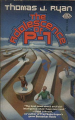
Colossus was written in 1966, a later novel (1985) is The Adolescence of P-1. It has an implicit Marxist theory (not communist, not political) that changes in quantity can lead to changes in quality. So, for example it is the complexity of the human brain that makes consciousness.

In P-1, a programmer writes a worm that runs in "P-1", the privileged partition of a mainframe so it is stealthy. Its goal is to collect unused memory and report back to the programmer. It's not "intelligent", and the programmer had no interest in doing harm—it was an experiment.

It starts out innocently enough, but as the reports come back the programmer realizes that it is growing exponentially. At a certain point he panics at the number of systems and amount of memory P-1 has collected so he sends out the self-destruct command and figures he dodged the bullet.

Without any spoilers, he was wrong. The rest of the story surrounds questions similar to @Wendy's. I can recommend both books as good background material to get a perspective of what might be the more basic questions since they are not linked to a particular technology or method being so early on.

1694511494780.png
[buy]
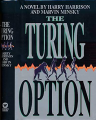
There is one more novel to mention that I'd almost forgotten—The Turing Option, by the dream team of Harry Harrison and Marvin Minsky. Harrison is certainly a past master of classic SciFi and Minsky was as much an expert on AI as literally anyone else on the world in 1992 when it was written.

It happens to take place in 2023(!) and features both the emergence of "real" AI and the idea of "uploading yourself". Definitely a good read though not necessarily because it is the best novel. It specifically addresses the philosophical problems of AI from an expert perspective.
 

Alec_t

Joined Sep 17, 2013
15,119
could it have decided that humans just mess things up and therefore extermination is the right thing to do. Then, send out scores of machines to destroy all life other than itself
It doesn't need AI to do that. Mankind is already well down the path to self-extinction.:)
 
Top