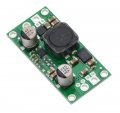
USB3 or earlier were only 5V. USB C will likely be 20V, so you might be able to get one that could provide more than 35W and add two step down voltage regulators.
hi 2P,
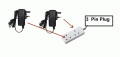
If you can get these two wall wart power plugs into a UK dual extension socket that's OK, if not get a UK 4 way extension block, that's what I do if the two Wall warts are too big to sit side by side, in dual extension.
I don't know enough about USB-C to say. I suspect there may be some communicating between the device and the port to determine voltage and current requirements.
The USB-C ports on electrical outlets will likely be a stripped-down version of USB-C.
Correct, to you it may seem I am repeating myself, sorry, but I just want to make sure due to the multitude in jargon/terms in this field
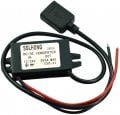
How about somthing like this? -
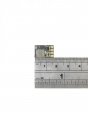
Or even smaller still -
Either would be a real space saver, although the comment section of the resistor converter idea has alot of users complaining about it burning after a while, so that method seems a bit hacky?
Guys, am I correct in saying, to achieve the most smallest/compact AC to DC conversion, for my two devices, would be to have one 12V AC to DC converter, and then spur off it for the 5V device? so that I am saving technically 50% on some components(would the bulkly bit be a transformer?)
What was the circuit they proposed? I'm not a big fan of watching YouTube videos from so-called electronics experts. That video was only 3 minutes long, but it didn't tell me anything in the first few seconds, so I lost interest.
This one is just a zener diode. It's the second voltage regulator they taught me in school and the only purpose was to show how inefficient it was before we moved to something that could really be called a voltage regulator. It's okay for low power, but you need 5V at 1A and that's far too much for a zener regulator. That 1A has to go through the resistor and that's extremely inefficient.
Just get a 12V adapter that can provide enough current for both of your devices and add a 5V switching regulator. Using a linear regulator would also be inefficient because your load needs 5W, but the regulator would have to dissipate 7W, i.e. more power than the load.

 Facebook
 Google
 GitHub
 Linkedin