Facebook
 Google
 GitHub
 Linkedin

Hi everyone,
This is my first post, please let me know if I post in the right place.
I have a circuit that consists of one voltage source with function of SINE(0 1 2.4e9) + parallel LC representing a coil(plus a resistor) + LC for impedance matching(C in series with load, L connected to the ground) + voltage multiplier with 4 diodes and 4 capacitors + a resistor.
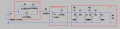
I want to use this circuit to represent a coil that will harvest energy, after matching and multiplication, sufficient voltage and power will be delivered to the R4. It should be a LED at the output but during impedance calculation, I replace it with an equivalent resistor R4. the file is attached.
Now what I want to do is to see if the impedance matching part is doing its job. I checked the total impedance by doing ac analysis and seeing an almost zero imaginary part at around 2.4GHz, so I think at least I've cancelled out the reactance at this frequency.
I want to see its behaviour by transient analysis.The method I can think of is to measure and compare the power on the coil and the power on the load(voltage multiplier+resistor).
I hope so far I've been doing it correctly, if not please let me know, thanks!
Here are my questions:
1. when I check the power by having the product of V and I, these pictures show what I got. How can I use them to conclude that whether the source power has been divided by 2? should I look at the average power or is there a way to check active power? I don't know how to verify impedance matching in an AC circuit,.

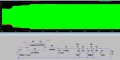
2. if I remove the Impedance matching part, and do the same analysis again, all the power goes to the coil, nearly nothing on the load. But at the same time, the source power is also reduced dramatically, I'm wondering should I use a constant power source to do the comparison ( comparison of power division with and without impedance matching), if so, how can i do it?
3. I see that V(n003) is higher than V(n001), and the voltage at R4 is much smaller than V(n003) which suggest that the voltage has not been added up by the multipliers. I don't understand why will this happen?
Sorry that this is a bit long to read, but I want to give as much information as I can. Let me know if you need more information to help me.
Thanks a lot in advance!
This is my first post, please let me know if I post in the right place.
I have a circuit that consists of one voltage source with function of SINE(0 1 2.4e9) + parallel LC representing a coil(plus a resistor) + LC for impedance matching(C in series with load, L connected to the ground) + voltage multiplier with 4 diodes and 4 capacitors + a resistor.
I want to use this circuit to represent a coil that will harvest energy, after matching and multiplication, sufficient voltage and power will be delivered to the R4. It should be a LED at the output but during impedance calculation, I replace it with an equivalent resistor R4. the file is attached.
Now what I want to do is to see if the impedance matching part is doing its job. I checked the total impedance by doing ac analysis and seeing an almost zero imaginary part at around 2.4GHz, so I think at least I've cancelled out the reactance at this frequency.
I want to see its behaviour by transient analysis.The method I can think of is to measure and compare the power on the coil and the power on the load(voltage multiplier+resistor).
I hope so far I've been doing it correctly, if not please let me know, thanks!
Here are my questions:
1. when I check the power by having the product of V and I, these pictures show what I got. How can I use them to conclude that whether the source power has been divided by 2? should I look at the average power or is there a way to check active power? I don't know how to verify impedance matching in an AC circuit,.
2. if I remove the Impedance matching part, and do the same analysis again, all the power goes to the coil, nearly nothing on the load. But at the same time, the source power is also reduced dramatically, I'm wondering should I use a constant power source to do the comparison ( comparison of power division with and without impedance matching), if so, how can i do it?
3. I see that V(n003) is higher than V(n001), and the voltage at R4 is much smaller than V(n003) which suggest that the voltage has not been added up by the multipliers. I don't understand why will this happen?
Sorry that this is a bit long to read, but I want to give as much information as I can. Let me know if you need more information to help me.
Thanks a lot in advance!
Attachments
-
2.9 KB Views: 20