How to precisely (or almost) sense current in ferrite beads

Thread Starter

bravia

Joined Dec 1, 2017
2
I am working with many computer mainboards and looking at their schematics i have been found details of power consumption for each chipset internal block.
Some blocks are powered through a frecuency filter ferrite bead.
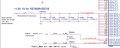
Capture.PNG

As we know, ferrite beads have some DC resistance that causes a voltage drop. The problem is that my voltage drop is not acording ohm's law.

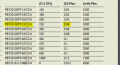
L19 is a ferrite bead with 0.08 Ohm DC resistance and when the block consumption is about 0.350mA the voltage drop is about 7mV.
Capture.PNG

Looking at "Max" description on datasheet, i though that the internal resistance may change from one part to other with same part number. Is that possible ?

How could i take advantage of these ferrite beads to calculate current consumption with some kind of precision ?

Thanks in advance
 

Reloadron

Joined Jan 15, 2015
7,868
Choosing and Using Ferrite Beads is a good forum read on the subject. You may also want to note that the DC resistance of these little chokes is in the neighborhood of +/- 25%. Trying to measure a voltage drop across a ferrite bead choke is not a very good or practical means of measuring current. The actual voltage drop will be way down in the dirt (noise).
Looking at "Max" description on datasheet, i though that the internal resistance may change from one part to other with same part number. Is that possible ?
Yes, it is possible. A ferrite bead choke is not a precision component, not even close. They are little more than small inductors used to oppose current flow, much as the capacitors oppose voltage changes. They are not made or designed as a precision current shunt.
How could i take advantage of these ferrite beads to calculate current consumption with some kind of precision ?
In my opinion you can't. That is not their purpose nor what they were designed to do.

Ron
 

crutschow

Joined Mar 14, 2008
38,389
i though that the internal resistance may change from one part to other with same part number. Is that possible ?
Yes, that's a maximum resistance and the typical resistance is likely less than that.
Normally all your are concerned about is its maximum resistance so the value is not controlled.
How could i take advantage of these ferrite beads to calculate current consumption with some kind of precision ?
Only if you can accurately measure their resistance.
You may be able to do that by putting a known current through them (a current-limit power supply can be used) and measuring their voltage drop.
From that you can calculate their resistance.
 

GopherT

Joined Nov 23, 2012
8,009
How could i take advantage of these ferrite beads to calculate current consumption with some kind of precision ?

Thanks in advance
Your ferrite bead is not consuming any current. The ferrite bead inductor is in series with all of your other components. All the supply current is passing through it.

Now, are you looking for power loss? Or what exactly do you want to measure?
 

Thread Starter

bravia

Joined Dec 1, 2017
2
First of all, thank you so much for your help.

You may be able to do that by putting a known current through them (a current-limit power supply can be used) and measuring their voltage drop.
From that you can calculate their resistance.
Is a good idea and could be usefull. Thank you.

Your ferrite bead is not consuming any current. The ferrite bead inductor is in series with all of your other components. All the supply current is passing through it.

Now, are you looking for power loss? Or what exactly do you want to measure?
Sure. I am thinking about chipset power consumption.

Once we know that each block have your own power consumption (and schematic especifies the value), we can measure a determinated block current to check if it is faulty or not.

For example: If a mainboard work fine but dont detect the hard disk drive, we can check if the current consumption is above the estimated (internal short maybe) or if there is no current flowing (faulty SATA block).
If there is no current flowing on the inductor, maybe we have some BGA solder problem too, but if the current is too high, everithing leave us to replace the chipset for a new one without much more measurement.
Besides that, chipsets have your own initialization, so, in a hipotetic mainboard with the famous black screen, we can check wich block are "working" (at least parcially) and wich block are still sleeping. And once again, if in that stage the block must work and we have no current flow, we can detect chip failure.

Obviously, is not that simple, there are too many others things to keep in mind to determinate a faulty chipset block, but every information is a piece of puzzle and if we put everything togheter we can analyze much better any problem.

In every schematic we found the current value for each block, so... it must be there to be usefull in repair right ?
A friend told me to replace every inductor (related to the mainboard fault) and put precision resistors in place, but i though that not much practical.

Another important detail is that in few blocks we found 0 Ohm resistors. As far i know 0 ohms resistors used in these projects have some tolerance, in many cases around 5% and they could help too in this current measurement task.
But looking at your answers i could expect any resistance from 50m Ohm from bellow right ?

Capture.PNG

Once again thanks for everyone that are trying to help me, and sorry for my bad english.
 
Top