How to make a signal generator with adjustable frequency and amplitude

Thread Starter

ahsananwar102

Joined Oct 26, 2024
5
Could somebody please walk me through the process of making the circuit for the following signal generator. I don't want to use a microcontroller.

Through analysis, devise your own signal generator, capable of generating following waveforms of
desirable amplitude and frequency:
1. Square wave (bonus for varying duty cycle)
2. Sine Wave
3. Sawtooth Wave
The signal generator design should include the capability to adjust signal frequency and amplitude.
Moreover, devise and develop a frequency counter capable of displaying frequency of the signal being
generated.
 

Thread Starter

ahsananwar102

Joined Oct 26, 2024
5
This sounds like a homework project.
What have you come up with by yourself so far?
You're right. It is a homework project. I know how to generate all these waveforms (sine, square and sawtooth) using oscillators and different configurations of op-amps. But i can't seem to find a way to integrate all of them in a single circuit where i can control their frequency with a single potentiometer.
 
What frequency range?
Hz, kHz, MHz?
It is very hard to cover all with single circuit.
It needs to change the capacitors with rotary switch at least.

Btw, I recall there exists a single chip that outputs all waveforms you mention. (ICL8038, or AD9833)
 
Last edited:
Frequency range should be from a few Hertz to a few kiloHertz
Then I would go to two capacitor Wien bridge oscillator. It’s most suitable for this freq. range. The LC oscillators are more suitable for kHz and MHz since in Hz the L would be too big with too many turns.

The Wien bridge produce a sine wave, from sine zero cross you can obtain a square, and from square by charging the capacitor with two current sources (positive & negative side) you get a triangle.
 

dendad

Joined Feb 20, 2016
4,635
I think it would be a good idea for the TS to now have a look at that Wein Bridge suggestion above and post his efforts at a circuit.
The whole point of a homework/school project is for the student to try to do it, not just get others to do it for you. So, post your attempt at solving this and then we can help steer you in the required direction. Note, this "help", not do it for you.
 

sparky 1

Joined Nov 3, 2018
1,218
There used to be an LM324 Sine generator, not sure what happened to it?
If someone has that LM324 Sinewave generator schematic, please post it.
Instead of converting square to sine Why not start with a sine wave?
The conversion from sine to square will work over a wide range of frequency, selecting capacitor for ranges improves the frequency selection.
The adjustable frequency sinewave uses an op amp and can produce a fair sinewave.

It is from a Chinese educational kit (very practical) It is called simulation test 411. The kit is fairly straight forward.
I have seen Student simulations from India and China. Some are reworking schematics and making improvements.
As a forum we try to encourage Simulation along with building it and testing it.
Another audio sine wave that needs a simulation see fig 4
Electronic Components Distributor | Pinout, Circuit, Datasheets - Apogeeweb


All the suggestions above are good. Why the ICL8038 has spikes was mentioned.
Building the different ICL8038 kits one will be better in some way than another. Remember with simulation you don't take a chance.

Taking advantage of LM324 having 4 op amps.
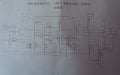
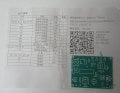
The component labeled S are jumpers. I took a chance and ordered the kit, did not have time to review it.

lm324 sine generator.jpg


lm324 pcb bom vendor.jpg
 
Last edited:

MrAl

Joined Jun 17, 2014
13,667
Could somebody please walk me through the process of making the circuit for the following signal generator. I don't want to use a microcontroller.

Through analysis, devise your own signal generator, capable of generating following waveforms of
desirable amplitude and frequency:
1. Square wave (bonus for varying duty cycle)
2. Sine Wave
3. Sawtooth Wave
The signal generator design should include the capability to adjust signal frequency and amplitude.
Moreover, devise and develop a frequency counter capable of displaying frequency of the signal being
generated.
For the frequency counter part of it, do you know how to use binary or BCD counters like the TTL part 7490 or 74LS90 or similar?
Those could be used for the heart of a frequency counter.
 
Top