How to find R2 in a circuit when given R1, R3, R4 & R5?

Thread Starter

Shredtown410

Joined Sep 15, 2024
3
Hello everyone I’m currently enrolled at my local community college for automotive technology and right now I’m taking a basic electrical class. We’re currently working on series circuits & parallel circuits.

I can easily solve these when I’m given the resistance but when one is missing I’m lost. My teacher isn’t too good about explaining things so I’ve had to teach myself and now I’m stuck whenever I’m missing a number for resistance.

Could someone please show me how I would calculate R2 for this circuit. I have attached my cheat sheet to the bottom so maybe someone could show me how to solve this in a way that I’d be able to understand. Thank you!
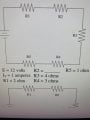
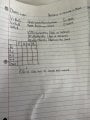
image.jpg

image.jpg
 

crutschow

Joined Mar 14, 2008
38,326
All resistors in a series circuit carry the same current, and all the resistors add to give the total resistance.
So you just have to determine the missing resistance value to give the total resistance that will carry 1A of current with 12V applied, as ron noted.

Make sense?
 

Thread Starter

Shredtown410

Joined Sep 15, 2024
3
All resistors in a series circuit carry the same current, and all the resistors add to give the total resistance.
So you just have to determine the missing resistance value to give the total resistance that will carry 1A of current with 12V applied, as ron noted.

Make sense?
Yes it does thank you!
 

MrAl

Joined Jun 17, 2014
13,667
Hello everyone I’m currently enrolled at my local community college for automotive technology and right now I’m taking a basic electrical class. We’re currently working on series circuits & parallel circuits.

I can easily solve these when I’m given the resistance but when one is missing I’m lost. My teacher isn’t too good about explaining things so I’ve had to teach myself and now I’m stuck whenever I’m missing a number for resistance.

Could someone please show me how I would calculate R2 for this circuit. I have attached my cheat sheet to the bottom so maybe someone could show me how to solve this in a way that I’d be able to understand. Thank you!

View attachment 331689

View attachment 331690
Hi,

The general idea for problems like this is to just reverse the procedure that you would normally use to analyze the problem knowing all the component values. That's actually part of designing circuits but can be used for troubleshooting as well.

For example, an analysis would go like this...

[1] RT=RTotal=R1+R2+R3+R4
[2] i=v/RT

#2 is just Ohm's Law, and we can rearrange this as:
RT=v/i

Combining with #1 we have:
R1+R2+R3+R4=v/i

Now if we do not know what R2 is, we just solve that for R2, it's that simple. We end up with:
R2=v/i-R1-R3-R4

and that's the solution for R2, although we could have done this for any of those resistors.

Maybe you did this already just messed up the numbers a little?
 
Last edited:

Ian0

Joined Aug 7, 2020
13,097
Now if we do not know what R2 is, we just solve that for R2, it's that simple. We end up with:
R1+R3+R4=v/i-R2

then:
R1+R3+R4-v/i=R2

swap left and right for clarity:
R2=R1+R3+R4-v/i

and that's the solution.

Maybe you did this already just messed up the numbers a little?
R1+R3+R4-v/i= - R2

swap left and right for clarity:
-R2=R1+R3+R4-v/i

and that's the solution.

Maybe you did this already just messed up the numbers a little?

R2=v/i-R1-R3-R4
 

MrAl

Joined Jun 17, 2014
13,667
R1+R3+R4-v/i= - R2

swap left and right for clarity:
-R2=R1+R3+R4-v/i

and that's the solution.

Maybe you did this already just messed up the numbers a little?

R2=v/i-R1-R3-R4
Obviously I meant to write it differently but was in too much of a hurry at the time. I'll update the original post.
 
Top