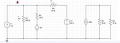
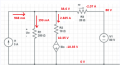
Circuit Analysis Problem: find and Any help would be highly appreciated.

Thread Starter

mariosbiancos

Joined Aug 18, 2025
4
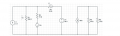
]also i do not seem to understand what happens in the single line that connects the two circuits .
1755527311130.png
 
Last edited by a moderator:

ericgibbs

Joined Jan 29, 2010
21,420
hi mario,
Welcome to AAC.
It often called the Common line or connection.

Sometimes it is marked with a Ground/Common symbol.
E
EG 1681.png
 

Alec_t

Joined Sep 17, 2013
15,112
Welcome.
You are expected to show your best effort at doing this task, then we can give guidance where necessary. We don't do homework for you.
 

MrChips

Joined Oct 2, 2009
34,714
The circuit shown is taken out of context. You have to show us the entire exercise.

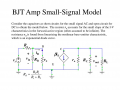
What is shown is similar to analysis of a BJT amplifier small signal model.

1755531643027.png
 

Thread Starter

mariosbiancos

Joined Aug 18, 2025
4
Welcome.
You are expected to show your best effort at doing this task, then we can give guidance where necessary. We don't do homework for you.
Hello,
Well firstly i never asked you to do my homework i just needed assistance with the grounding .Anyways here is my solution , i would appreciate if you could just check my answers:

uo/200+(uo-5io)/10+(uo-80)/20=3 (1) also : io = uo-80/20(2)
600= uo+20uo-100io-800 (replace io)
26uo = 1000
uo = 38,46V
from (2) io = 2,07A
 

MrAl

Joined Jun 17, 2014
13,686
Hello,
Well firstly i never asked you to do my homework i just needed assistance with the grounding .Anyways here is my solution , i would appreciate if you could just check my answers:

uo/200+(uo-5io)/10+(uo-80)/20=3 (1) also : io = uo-80/20(2)
600= uo+20uo-100io-800 (replace io)
26uo = 1000
uo = 38,46V
from (2) io = 2,07A
Hi,

Are you sure it is close to 2.07 amps or could it be -2.07 amps?
You may be right, but check your math over.

Actually, that does not look right at all. You have to make sure you get ALL your source polarities correct. Check that over once more and be careful to observe the polarities indicated on the schematic. You should get a different result than either of those above.
 
Last edited:

WBahn

Joined Mar 31, 2012
32,777
]also i do not seem to understand what happens in the single line that connects the two circuits .
View attachment 354403
The single line connecting the two does nothing except establish a common reference for the two circuits. It may or may not be needed for a given problem. In the real world, most (not all) circuits that need to interact need a common reference connection. There are also noise and safety reasons that might dictate either that there be such a connection, or that such a connection be avoided. It all depends on what is important for the particular application.

Note that the dependent voltage source in this circuit is improperly specified. As stated, it is outputting a current, and not a voltage, since 5 multiplied by the current Io yields a current that is five times the magnitude. The gain needs to have units of voltage divided by current, which happen to also be units of resistance. So this is a transimpedance amplifier. It is likely that the author intended (though possibly without even thinking about it) the gain to be 5 Ω,
 

WBahn

Joined Mar 31, 2012
32,777
Hello,
Well firstly i never asked you to do my homework i just needed assistance with the grounding .Anyways here is my solution , i would appreciate if you could just check my answers:

uo/200+(uo-5io)/10+(uo-80)/20=3 (1) also : io = uo-80/20(2)
600= uo+20uo-100io-800 (replace io)
26uo = 1000
uo = 38,46V
from (2) io = 2,07A
You need to develop the ability to check your own answers. One of the beautiful things about most engineering problems, including in the real world, is that the correctness of the answer can usually be determined from the answer itself -- you simply see if it actually solves the problem.

You are claiming that Io = 2.07 A.

So let's see if that current is consistent with the problem.

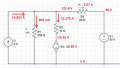
1755633472400.png

First, let's define the voltage of the bottom node to be our 0 V reference (a.k.a., 'ground').

The voltage of the top right node is therefore 80 V. Given your answer, the voltage across R3 is 41.4 V, making the voltage on the top right node 121.4 V.

That makes the current in R1 equal to 607 mA.

The voltage across the dependent source is (5 Ω)(2.07 A) = 10.35 V, which makes the voltage at it's negative terminal -10.35 V, which places 131.75 V across R2, making that current 13.175 A.

Since these three currents are all leaving the top node, that means that the sum of them must be coming in from the current source, requiring it to be 15.852 A. But the problem specifies that it is 3 A.

So the claim that Io is 2.07 A must be incorrect.

You should virtually never turn in work that has incorrect answers since you can usually verify that the answers you got are correct. And you are going to make mistakes, so isn't it better that YOU catch them and correct them before you submit your work instead of the grader finding them? The same applies in the real world -- far, far better for you to develop the habit of always checking your work before you hand it off to someone and risk them discovering that you messed up, especially if your mistake ends up resulting in damage or injury. This is not something that you can forego once you are "good enough", either. I made a mistake working this problem just now and got an answer of 1.479 A for Io, but caught it when I checked whether or not it was actually correct. A quick review revealed that I made a common mistake of not flipping the sign on a term as I brought it over to the other side of an equation. Easily caught, easily fixed, easily re-verified as now being correct.
 

Attachments

Thread Starter

mariosbiancos

Joined Aug 18, 2025
4
Hi,

Are you sure it is close to 2.07 amps or could it be -2.07 amps?
You may be right, but check your math over.

Actually, that does not look right at all. You have to make sure you get ALL your source polarities correct. Check that over once more and be careful to observe the polarities indicated on the schematic. You should get a different result than either of those above.
it is negative 2.07 i forgot to put the sign when posting
 

WBahn

Joined Mar 31, 2012
32,777
it is negative 2.07 i forgot to put the sign when posting
And have you verified that -2.07 A is the correct solution?

I've given you a blueprint for how to do it and it shouldn't take more than a couple minutes to go through the same steps using your new answer.

I can't stress enough the importance and value of getting in the habit of checking your own work.
 

Thread Starter

mariosbiancos

Joined Aug 18, 2025
4
And have you verified that -2.07 A is the correct solution?

I've given you a blueprint for how to do it and it shouldn't take more than a couple minutes to go through the same steps using your new answer.

I can't stress enough the importance and value of getting in the habit of checking your own work.
Hi,
Yes i checked the math. Thank you very much for sharing your knowledge as it helped me understand the topic in more depth
 

WBahn

Joined Mar 31, 2012
32,777
Hi,
Yes i checked the math. Thank you very much for sharing your knowledge as it helped me understand the topic in more depth
Please show your check, since your answer is wrong.

Remember, the purpose of the check isn't to confirm that your math is right, the purpose of the check is to verify that the answer is correct. If you set up your initial equations incorrectly, you are virtually guaranteed to get an answer that is wrong, even if every bit of the math is correct. This is because your equations are for some other problem, not the problem you are solving.

I gave you a template and set of steps to follow to check your answer. Let's use it.

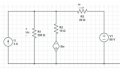
First, let's define the voltage of the bottom node to be our 0 V reference (a.k.a., 'ground').

The voltage of the top right node is therefore 80 V. Given your answer, the voltage across R3 is 41.4 V, making the voltage on the top right node 38.6 V.

That makes the current in R1 equal to 193 mA.

The voltage across the dependent source is (5 Ω)(-2.07 A) = -10.35 V, which makes the voltage at it's negative terminal +10.35 V, which places 28.25 V across R2, making that current 2.825 A.

Since these three currents are all leaving the top node, that means that the sum of them must be coming in from the current source, requiring it to be -2.07A + 193 mA + 2.825 A, which is 948 mA. But the problem specifies that it is 3 A.

So the claim that Io is -2.07 A must be incorrect.

1755720088194.png

If all you did was check that you did the math correctly -- and assuming that you did -- then the problem is likely with your set up of the equations. This is where ALL of the EE comes into play, converting the problem at hand into a set of equations. Once that is done, all the math in the world can't fix or catch a mistake in those equations. You MUST reference back to the actual problem. This is why it is extremely valuable to take that setup step seriously and deliberately. Keep the math manipulations to an absolute minimum and make those equations match the actual problem as closely as possible. Then double check that the equations actually match the problem and do that check very deliberately, considering each term in each equation consciously. Mistakes not caught at this point are virtually impossible to catch later. Only when you are satisfied that you have done the EE translation from circuit to equation set correctly, should you proceed to solve the equations, which should involve nothing but math -- anyone that has the math background should be able to take it from here even if they have never heard of an electron. I recommend having two clearly distinct sections of your work. The first is labeled "EE" and has ALL of the application of the EE principles related to the problem. Then draw a line under this and label the next section "MATH". No EE principles are allowed below this line. None. They belong above the line. Mixing the two together is a recipe for mistakes that will be hard to catch and fix.
 
Last edited:

MrAl

Joined Jun 17, 2014
13,686
it is negative 2.07 i forgot to put the sign when posting
Hi,

Sorry but that is not correct either. If you read the replies here you will learn how to prevent this from happening in the future. I know it sounds like more work, and it is, but once you assume a current flow direction and level it's easier to verify. You can sometimes tell pretty quick.

I suggest that you completely rework the problem making SURE you have all the source polarities correct. You will never get the right answer if you don't do this. I'd like to see you get this right and once you check your new solution, you'll know whether it is right or wrong. Everything has to work out with all the currents and node voltages.
 
Top