If you want a quick charge you need a charge controller. Trickle charging takes much less attention.
In the lighthouse system I mentioned we're only pumping a max of 7 or 8 amps into batteries rated for 200 AH. That keeps us topped off for the few days we actually load the system outside of a few spotlight every night.
The USCG has a separate very sophisticated system to keep their batteries charged to run the light itself. We just use ours for some housekeeping when we are there a few days a year.
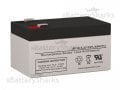
OK. I am using a 12/24 V, 10A solar charge controller (without MPPT) to charge a lead acid battery of 12V, 1.2 Ah battery from a 12V, 20 W solar panel on a bright sunny day with outside temperature ranging from of 31 degree Celsius to 37 degree Celsius. I hope the specifications are right and everything goes on smoothly.
You don't get free power out of thin air - if you're converting to 4x the voltage; the 12V part will draw at least 4x the current you're taking at 48V.
Charging a lead acid battery from a solar is actually quite simple when the system is balanced. Just get a solar panel with a low output, say 100 mA max, and connect it thru a diode to the battery. The diode may already be in the panel too.
We do this on a lighthouse I volunteer at charging two deep cycle marine batteries directly off about 100 watts from the panels. No monitor, no limited, nothin. They chug along for several years like this
Yes, quite simple if you dont mind doing it not exactly right. Connecting a solar array directly to a battery will charge it, but without specifying the voltages there will always be energy lost because the array wont be running at it's max power point. The max power point is the operating condition of the solar array when the maximum input power is transferred to the output so we get the maximum power out of the array and thus the maximum energy for a given insolation.
Yes, quite simple if you dont mind doing it not exactly right. Connecting a solar array directly to a battery will charge it, but without specifying the voltages there will always be energy lost because the array wont be running at it's max power point. The max power point is the operating condition of the solar array when the maximum input power is transferred to the output so we get the maximum power out of the array and thus the maximum energy for a given insolation.
Do you know what max power tracking is?
I worked in the industry and if it is good enough for Sandia Labs then it is good enough for me. Besides, anyone who truly understands solar power understands max power tracking. It doesnt matter if 100 million devices are made wrong, they are still made wrong. Light duty devices will suffer less, but the main point is if you want the maximum energy that is available from the sun at that point in time you have to find the max power point of the array. The deeper point yet is the theory behind this and understanding when it matters most. Calling theory gibberish (with spelling correction that is) does not promote further understanding either.
A million garden lights that waste 1 watt each waste a total of 24 million watt hours per day.
24 gazillion watt hours wasted? So what? Did they go off to Jupiter or something? I'd point out your estimate of waste has an error of 24 in it but that would be cruel.
MPPP tracking has it place but charging a battery is not one of them, because what happens to all your maximum power once the battery is fully charged?
Hint: the power gets wasted. MPPP only makes sense where there is always a load greater than the panel can produce.
In a garden light you would never get better efficiency with a switching power supply to track max power over a single reverse bias diode to charge a single AA Ni-Cad battery, and besides, it's unnecessary as the battery gets fully charged each day.
Your argument is similar to the one (perhaps not quite true) of the physicist hired by Edison to determine how to get the maximum power to his customers. The physicists answer was technically correct but missed what question he should have been answering all along.
So then you agree with my original post where i said:
"Charging from a solar panel is a whole subject in itself".
You dont have to try to tell me "what my argument is" when you dont see it yourself
Just because we may find one or a hundred applications that may not require max power tracking doesnt mean we never talk about it.
But now i pose a question for you based on what you said about the battery always charging fully and thus wasting energy that could have been used otherwise. I'll make it multiple choice
The scenario is you are working for a company and the head engineer comes over and describes a system that is working but they would like to see the total cost reduced. He says that the solar array used with the battery is max power tracking but the battery keeps charging up fully and so the array is only being used about 1/2 of the time (because of the battery being charged a lot). The cost of the array is 1000 dollars and the cost of the circuit is 10 dollars, and the cost of the battery is 100 dollars.
Do you:
1. Eliminate the circuit and replace it with a diode (save about 8 dollars).
2. Reduce the battery size to 1/2 it's size now (save about 50 dollars).
3. Reduce the size of the array to about 1/2 it's size now (save about 400 dollars).
4. Do 1 and 2 above.
Keep in mind that if you eliminate the circuit charging efficiency goes down so you cant do both 1 and 3 above because then you still need a bigger array.
The point here is that if you match all components of the system you can get away with a smaller array if you can get max energy out of it whenever possible.
The bigger point though is that we are now talking about it, when before we were not. So that means the bigger point is about discovering what is best for a given system setup, and that was the main point of my original post which i repeat here again:
"Charging from a solar panel is a whole subject in itself".
But simply put, if it was always simple then we would NEVER need max power tracking, and that seems to be what you are trying to imply here.
How would i do it myself? I actually do have a solar array panel myself and am trying to find out the best place for it's location.
Originally i will set it up with just the panel and a diode, EXACTLY how you stated it MIGHT be done.
After some time i will set up a circuit to extract the maximum energy out of the panel. Now if i were to use a tiny battery it might charge up in 30 minutes and so i might miss out on some 6 hours per day of sunlight energy. That would be stupid right? So if the battery charges up too soon THEN i will use a bigger battery.
So from the above you will note that we brought out certain points about charging with a solar panel that we did not discuss earlier, and that is mainly why i replied in the first place. Discussion through dialogue is always good because it brings out the finer points in a matter. If you dont have the time, that's one thing, but if you do, then it's usually good to talk about it at least a little. Forums like this make that possible.
I also dont think it is good manner to put someone else's information down with words like "that's a ridiculous claim" or the like because you dont really know WHO you are talking to and what their background experience is. It's better to simply inquire for more information about why they might be stating such a seemingly outrageous claim so you can see what they are basing it on.

 Facebook
 Google
 GitHub
 Linkedin