Facebook
 Google
 GitHub
 Linkedin

Hello to everyone.
I'm trying to create a phone or maybe a handheld based on FreeBSD. I'm not sure what the final form is. I would like it to be something like this,more or less :
https://ibb.co/99J6VrWv
The approach that I want to take is to use as many USB and HDMI peripherals as I can,so : a) HDMI screen is easily interchangeable. b) USB keyboard and touchpad (circle glidepoint touchpad :
https://www.cirque.com/glidepoint-circle-trackpads
)
c) portable battery
Now. What I want to do now is to convert the circle glidepoint touchpad into one USB device that can be recognized by any operating system,such as FreeBSD. Yes,because natively it is an I2C device.
I'm reading this guide to understand how to implement that layout.
https://beekeeb.com/cirque-trackpad-i2c-on-corne-keyboard/
At some point,he told :
5V
If you can power it with 2.5-3.6V, you can skip this section. The type-c breakout board runs at 5V. So we cannot directly power it directly. We can probably use a logic level shifter and voltage regulator to provide 3.3V. Alternatively, according to the post on Cirque Forum, the trackpad can run at 5V when R7 and R8 are removed.
Let's start saying that I won't remove any resistors,but I want to "a logic level shifter and voltage regulator to provide 3.3V"
With the help of some users of the various forums where usually I ask questions,I ended up creating this layout :
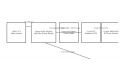
Radxa Zero-3W / USB-C 5 V ─usb- Seeed XIAO RP2040 (3 V3 MCU) ─ TXB0108/TCA9517
│ ▲ (shifts I²C or SPI lines to 5 V)
└─ 3 V3 REF ───────────────────┘
│
Molex 15164-0123 FFC │ 4-wire header
│ ▼
12-pin FFC Break-out PCB ───────── Cirque TM016016 (Ø 23 mm sensor)
Connection Cable / Board Notes
XIAO Shifter Dupont or Grove leads Lines at 3 V3 on MCU side
Shifter Break-out 4-wire header strip Lines now at 5 V
Break-out Sensor 30 mm 0.5 mm-pitch FFC Blue-latch socket already soldered
What I don't understand is how to connect the TXB0108 or the TCA9517 to the Seeed XIAO RP2040. I need to see it clearly and physically under my eyes. It's not enough for me to guess or try to understand it by reading some good sentences. Unfortunately I'm still a beginner.
I don't understand when the voltage regulator is needed and when it is not. For sure I don't want to shut it down or turn it up manually. My will is to keep attached and let it decide when it should be turned on or not.
Can the TXB0108 or the TCA9517 decide automatically when it is needed or not to run ? Can you suggest a regulator that decides by itself when it is needed or not ?
I'm trying to create a phone or maybe a handheld based on FreeBSD. I'm not sure what the final form is. I would like it to be something like this,more or less :
https://ibb.co/99J6VrWv
The approach that I want to take is to use as many USB and HDMI peripherals as I can,so : a) HDMI screen is easily interchangeable. b) USB keyboard and touchpad (circle glidepoint touchpad :
https://www.cirque.com/glidepoint-circle-trackpads
)
c) portable battery
Now. What I want to do now is to convert the circle glidepoint touchpad into one USB device that can be recognized by any operating system,such as FreeBSD. Yes,because natively it is an I2C device.
I'm reading this guide to understand how to implement that layout.
https://beekeeb.com/cirque-trackpad-i2c-on-corne-keyboard/
At some point,he told :
5V
If you can power it with 2.5-3.6V, you can skip this section. The type-c breakout board runs at 5V. So we cannot directly power it directly. We can probably use a logic level shifter and voltage regulator to provide 3.3V. Alternatively, according to the post on Cirque Forum, the trackpad can run at 5V when R7 and R8 are removed.
Let's start saying that I won't remove any resistors,but I want to "a logic level shifter and voltage regulator to provide 3.3V"
With the help of some users of the various forums where usually I ask questions,I ended up creating this layout :
Radxa Zero-3W / USB-C 5 V ─usb- Seeed XIAO RP2040 (3 V3 MCU) ─ TXB0108/TCA9517
│ ▲ (shifts I²C or SPI lines to 5 V)
└─ 3 V3 REF ───────────────────┘
│
Molex 15164-0123 FFC │ 4-wire header
│ ▼
12-pin FFC Break-out PCB ───────── Cirque TM016016 (Ø 23 mm sensor)
Connection Cable / Board Notes
XIAO Shifter Dupont or Grove leads Lines at 3 V3 on MCU side
Shifter Break-out 4-wire header strip Lines now at 5 V
Break-out Sensor 30 mm 0.5 mm-pitch FFC Blue-latch socket already soldered
What I don't understand is how to connect the TXB0108 or the TCA9517 to the Seeed XIAO RP2040. I need to see it clearly and physically under my eyes. It's not enough for me to guess or try to understand it by reading some good sentences. Unfortunately I'm still a beginner.
I don't understand when the voltage regulator is needed and when it is not. For sure I don't want to shut it down or turn it up manually. My will is to keep attached and let it decide when it should be turned on or not.
Can the TXB0108 or the TCA9517 decide automatically when it is needed or not to run ? Can you suggest a regulator that decides by itself when it is needed or not ?