Facebook
 Google
 GitHub
 Linkedin
This is meant to be a battery cut-off switch. Due to certain design constraints, the low side needs to be switched instead of the high side.
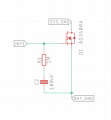
The switching circuit is permanently connected to the battery (3V and BAT_GND). SYS_GND is the GND of the secondary circuit, which is permanently connected only to 3V. The goal is to switch the secondary circuit's GND to preserve battery life.
The secondary circuit's maximum constant current is 20-30mA with the possibility of short spikes <50mA.
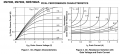
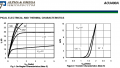
INT1 is an interrupt that will be set to be high under certain conditions. The IC has a guaranteed INT high voltage of 0.8xVsup. Battery voltage is 2.0-3.0V, so 1.6V to 2.4V to drive the gate. The transistor used is an AO3400A.
The INT pin is configured as Push-pull, so I do not believe it can ever float. The configuration is such that there can likely never be any frequent switching. There will always be hours, minutes, seconds between switching, never ms or ns.
I have already omitted a gate series resistor, as the secondary circuit should not be able to compromise the switching side and if there is a failure catastrophic enough in the secondary circuit, saving the switch isn't important.
There are no other connections or signals between the two circuits.
Disconnecting ground from the secondary circuit will likely only ever happen when the secondary circuit is idle (very low ±1mA current).
Taking that into consideration, how useful would R1 and C2 be (if at all)? The benefit of removing them would be some space savings and lower BOM. Is the AO3400A a better choice than a 2N7002?
The switching circuit is permanently connected to the battery (3V and BAT_GND). SYS_GND is the GND of the secondary circuit, which is permanently connected only to 3V. The goal is to switch the secondary circuit's GND to preserve battery life.
The secondary circuit's maximum constant current is 20-30mA with the possibility of short spikes <50mA.
INT1 is an interrupt that will be set to be high under certain conditions. The IC has a guaranteed INT high voltage of 0.8xVsup. Battery voltage is 2.0-3.0V, so 1.6V to 2.4V to drive the gate. The transistor used is an AO3400A.
The INT pin is configured as Push-pull, so I do not believe it can ever float. The configuration is such that there can likely never be any frequent switching. There will always be hours, minutes, seconds between switching, never ms or ns.
I have already omitted a gate series resistor, as the secondary circuit should not be able to compromise the switching side and if there is a failure catastrophic enough in the secondary circuit, saving the switch isn't important.
There are no other connections or signals between the two circuits.
Disconnecting ground from the secondary circuit will likely only ever happen when the secondary circuit is idle (very low ±1mA current).
Taking that into consideration, how useful would R1 and C2 be (if at all)? The benefit of removing them would be some space savings and lower BOM. Is the AO3400A a better choice than a 2N7002?