How does the operational amplifier work with two feedback?

AnalogKid

Joined Aug 1, 2013
12,135
This circuit from the beggining has a positive feedback that is DC feedback and negative feedback that is not DC feedback.
Actually, the first circuit has 100% negative feedback through the 1 K resistor. Not that resistor, the other one. (Reference Designators - !)

The problem is that while negative feedback can work to keep the circuit operating in its linear region, positive feedback creates a latch that almost nothing can overcome. In general, positive feedback does not work in linear amplifier circuits. It has a place in some active filter circuits, and bootstrapping the input to increase the input impedance, but usually it causes oscillation and latchup.

As everyone has explained, what you are trying to do won't work. Why is it important to you to have "both kinds" of feedback in one circuit?

ak
 

Thread Starter

Xenon02

Joined Feb 24, 2021
504
As everyone has explained, what you are trying to do won't work. Why is it important to you to have "both kinds" of feedback in one circuit?
I'm having both feedbacks because it is for educational purpose. I just want to understand the thing about DC feedback, and why those feedbacks works this way and not another.
 

Thread Starter

Xenon02

Joined Feb 24, 2021
504
Ok I'll maybe start this topic with why I was considering two feedbacks.

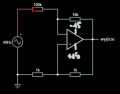
At first I have seen this circuit :

1647384671809.png


If I want to define which feedback is "stronger" than the other then I can get an information if I have a strong positive feedback that will occure in saturation, or stronger negative feedback that will occure in typical work of op amp.

There was equation for that and it was R1/(R1+R2) > R4/(R3+R4) - this stands for stronger negative feedback.

So when I saw this circuit:

1647384853558.png

I was wondering : Can I use a similar equation to find out which feedback is "Stronger" ?

I found out that it is imposible, but why? I've heard about DC point but I don't get it to be honest. As well I've heard something about DC feedback from positive feedback is stronger than DC feedback from negative feedback, but how that person know that.

My problem is why I can't get the result where negative feedback is stronger than positive feedback and I won't have the saturation form the feedback but a "normal" functioning op amp.
 
Last edited:

LvW

Joined Jun 13, 2013
2,029
If I want to define which feedback is "stronger" than the other then I can get an information if I have a strong positive feedback that will occure in saturation, or stronger negative feedback that will occure in typical work of op amp.

There was equation for that and it was R1/(R1+R2) > R4/(R3+R4) - this stands for stronger negative feedback.
:::::::::::::::::::::::::::::::::::::
:::::::::::::::::::::::::::::::::::::
I was wondering : Can I use a similar equation to find out which feedback is "Stronger" ?

I found out that it is imposible, but why? I've heard about DC point but I don't get it to be honest. As well I've heard something about DC feedback from positive feedback is stronger than DC feedback from negative feedback, but how that person know that.

My problem is why I can't get the result where negative feedback is stronger than positive feedback and I won't have the saturation form the feedback but a "normal" functioning op amp.
Xenon02 - You clearly must distinguish between (a) DC feedback (important for the DC bias point within the linear transfer region) and (b) AC feeback (important for dynamic stability against oscillation).

* In your last circuit (capacitor in the feedback loop) , the requirement (a) is fulfilled because we have 100% negative feedback.
* Regarding dynamic stability, you must analyze the Bode diagram for the loop gain which includes the REAL (frequency-dependent) gain properties of the used opamp. There is a well-known stability criterion (Nyquist) which tells you if the system will be stable. More than that, this criterion gives you some information about the stability margin-
 

Thread Starter

Xenon02

Joined Feb 24, 2021
504
Xenon02 - You clearly must distinguish between (a) DC feedback (important for the DC bias point within the linear transfer region) and (b) AC feeback (important for dynamic stability against oscillation).

* In your last circuit (capacitor in the feedback loop) , the requirement (a) is fulfilled because we have 100% negative feedback.
* Regarding dynamic stability, you must analyze the Bode diagram for the loop gain which includes the REAL (frequency-dependent) gain properties of the used opamp. There is a well-known stability criterion (Nyquist) which tells you if the system will be stable. More than that, this criterion gives you some information about the stability margin-
So why the feedback with capacitor cannon provide with stable output. Stable output I mean not a saturated output but sinusoidal.
Why the positive feedback changes it.
 

LvW

Joined Jun 13, 2013
2,029
So why the feedback with capacitor cannon provide with stable output. Stable output I mean not a saturated output but sinusoidal.
Why the positive feedback changes it.
The complete (net) feedback loop contains both parts (negative and positive).
The negative feedback alone (with the capacitor) would bring the circuit to the stability limit (phase shift of the opamp adds to the RC-lowpass in the feedback loop).
The influence of the additional pos. feedback can be analyzed in the bode diagram (loop gain)-
 
Last edited:

Thread Starter

Xenon02

Joined Feb 24, 2021
504
The complete (net) feedback loop contains both parts (negative and positive).
The negative feedback alone (with the capacitor) would bring the circuit to the stability limit (phase shift of the opamp adds to the RC-lowpass in the feedback loop).
The positive feeback path can stabilize the whole circuit. This can be verified using the Bode diagram for the loop gain.
Ok but the Negative feedback (instead od capacitor i have resistor) can bring the whole Circuit to stability when the Negative feedback doesn't have the capacitor, as well as positive feedback.
And it depends if I want a saturated Op Amp or "normal" Working op Amp.

But why positive feedback is so strong in this Circuit with capacitor I want to know why positive feedback is stronger than Negative feedback
 

AnalogKid

Joined Aug 1, 2013
12,135
Is it really important where I've found this Circuit?
Yes.

There is a lot of garbage on the innergoogle. It is entirely possible that your circuit was posted by an idiot, has a known error, is intentionally wrong just to waste your time, etc.

Forums like this one are essentially a peer-reviewed advice column. If someone posts something functionally incorrect, it gets called out very quickly. Note that this forum is much better behaved than some others; personal attacks are dealt with. One long-time member, an acknowledged expert and prolific poster, was banned for several years because of the way he treated newbies.

ak
 

Thread Starter

Xenon02

Joined Feb 24, 2021
504
Yes.

There is a lot of garbage on the innergoogle. It is entirely possible that your circuit was posted by an idiot, has a known error, is intentionally wrong just to waste your time, etc.

Forums like this one are essentially a peer-reviewed advice column. If someone posts something functionally incorrect, it gets called out very quickly. Note that this forum is much better behaved than some others; personal attacks are dealt with. One long-time member, an acknowledged expert and prolific poster, was banned for several years because of the way he treated newbies.

ak
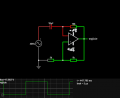
Ok so the first Circuit with both feedback but Negative feedback was with resistors and not with capacitor is from my School.
Second Circuit is a modyfied version, from falstad simulator, the exact not modified Circuit with capacitor is this

1647435500741.png

I've just modified the input to have a AC source to make a capacitor as a reactation element.

When I knew i could "pick" Which feedback was stronger depending on the resistors then I thought i could do the same with capacitor.
 

LvW

Joined Jun 13, 2013
2,029
Ok but the Negative feedback (instead od capacitor i have resistor) can bring the whole Circuit to stability when the Negative feedback doesn't have the capacitor, as well as positive feedback.
And it depends if I want a saturated Op Amp or "normal" Working op Amp.

But why positive feedback is so strong in this Circuit with capacitor I want to know why positive feedback is stronger than Negative feedback
Xenon - the situation is as follows:
(1) Resistive feedback.
A large feedback factor like unity (100% negative feedback) gives a relatively small stability margin (closed loop) and can cause instability (oscillations) when the opamp is not unity-gain-compensated.
In such a case, additional positive feedback can improve the stability of the closed-loop amplifier - however, the negative feedback must still dominate (stable DC operational point).

(2) Negative feedback factor with lowpass behaviour (as in one of your cases):
For w=0 we have 100% negative feedback and the closed-loop circuit will be DC stable. However, for rising frequencies the negative feedback factor reduces and causes additional negative phase shift within the loop. This effect will degrade dynamic stability and will bring the closed loop to the stability limit.
Now - when there is an additional resistive positive feedback, there will be a frequency where the pos. feedback dominates over the negative feedback (which reduces with rising frequencies) - and the circuit will come to the stability limit even at a lower frequency. It will oscillate with a lot of excess loop gain which leads to an relaxation behaviour.
 
Last edited:

AnalogKid

Joined Aug 1, 2013
12,135
Ok so the first Circuit with both feedback but Negative feedback was with resistors and not with capacitor is from my School.
Second Circuit is a modyfied version, from falstad simulator, the exact not modified Circuit with capacitor is this
That is not an amplifier.

If you had shared that image 30 posts ago, this would have been a much shorter thread.

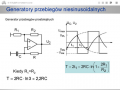
The circuit in the image is a square wave oscillator based on a circuit topology called a Schmitt trigger.

https://en.wikipedia.org/wiki/Schmitt_trigger

In your image, it uses hysteresis created by positive feedback (R1 and R2) to control the timing components (R and C). This is not a linear amplifier, and changing around the inputs will not make it into one.

ak
 

Ian0

Joined Aug 7, 2020
13,132
I'm having both feedbacks because it is for educational purpose. I just want to understand the thing about DC feedback, and why those feedbacks works this way and not another.
If you want a circuit that has both negative and positive feedback in the same circuit look at the Wien bridge
https://en.wikipedia.org/wiki/Wien_bridge_oscillator
The negative feedback gives the amplifier a gain of 3.
The positive feedback has a gain of 1/3 at a specific frequency and much less than this at any other frequency.
 

crutschow

Joined Mar 14, 2008
38,512
In general if you want a linear response, then the negative feedback needs to be greater than the positive.
If the positive feedback is greater, than the response will be non-linear with the output going to the max or min value.
 

Thread Starter

Xenon02

Joined Feb 24, 2021
504
That is not an amplifier.

If you had shared that image 30 posts ago, this would have been a much shorter thread.

The circuit in the image is a square wave oscillator based on a circuit topology called a Schmitt trigger.

https://en.wikipedia.org/wiki/Schmitt_trigger

In your image, it uses hysteresis created by positive feedback (R1 and R2) to control the timing components (R and C). This is not a linear amplifier, and changing around the inputs will not make it into one.

ak
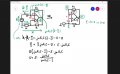
Me and my teacher made some calculations and it turned out like this :

275681079_362723582527763_8268891443953464090_n.jpg

I don't know where we made an error here.
Because it shows that the Op amp is linear. But of course we know it's not but where is the error?

I want to show that the positive feedback is stronger and nothing can change it.
 

Thread Starter

Xenon02

Joined Feb 24, 2021
504
In general if you want a linear response, then the negative feedback needs to be greater than the positive.
If the positive feedback is greater, than the response will be non-linear with the output going to the max or min value.
I'm fully aware of that if I want a linear response then a negative feedback needs to be greater but I just don't know why positive feedback in this circuit is far greater than negative.
 

crutschow

Joined Mar 14, 2008
38,512
I just don't know why positive feedback in this circuit is far greater than negative.
I thought is was explained that the circuit apparently does not perform a linear function, but is a relaxation oscillator, which uses a large amount of positive feedback?
 
Top