Thanks MrChips, I didn't know. I know that others bicycle light diy dudes (and dudettes?) on the mtbr forum have had quick postage from digikey to UK. I used www.cutter.com.au located in Australia with good service, and also this shop http://www.led-tech.de/en/index.html located in Europe. Both shops have leds on their own made mcpcb stars and also optics to choose from so you don't have to source that from other shops.
Not all of the buck's have dimming control. Some of them have pwm input. Some of the BuckPucks from Luxdrive come with or without dimming. BuckPuck with dimming capability can be either dimmed by pwm or simly attaching a pot to it controlling the voltage on the ctrl pin. See datasheet page 5-8 for more info and for examples of configurations/use. Do also check the "Part Number Identification" Table on page 2 to ensure that you order the correct device with dimming/cntrl capability.
I see now that the buckpuck has a minimum 5V input voltage requirement. Isn't your battery 4.8V ? Try find something else, maybe from luxdrive, my internetconnection is bad now i cant see.
The drivers at taskled have a microcontroller on them with bike programs (flash mode, mode switch). http://www.taskled.com/
I mentioned the drop-out voltage (input margin voltage) earlier. Do also consider this.
Absolutely not!
A "4.8V" Ni-Cad or Ni-MH battery is 6.0V when fully charged.
LEDs have a range of voltages so some "2.4V" Leds might actually be 2.2V. Then the LEDs will burn out very quickly since there is NOTHING to limit the current.
Yeah, you're absolutely correct. I just tested a red LED and it acts like a zener clamping the voltage at 2.00V +/-0.05V. You need a constant current circuit or a current limiting resistor. Thanks for correcting me.
Yeah, you're absolutely correct. I just tested a red LED and it acts like a zener clamping the voltage at 2.00V +/-0.05V. You need a constant current circuit or a current limiting resistor. Thanks for correcting me.
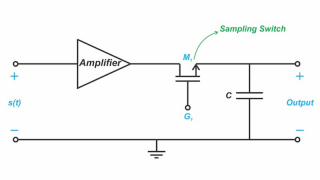
Some BEAM Robots use property that as a way to flash LED and control the motor. In a circuit with only a solar cell, LED, and capacitor, a reference voltage is needed to know when there's enough power to move the motor. When the LED lights, it moves.
Hang on, my cells say 1.2V on them, but from what I've been told on here, they go up to 1.5 volts when they're fully charged. Roughly how far will the batteries have to discharge before they genuinely are producing 4.8V? And will they drop to substantially below that voltage at any point?
Hang on, my cells say 1.2V on them, but from what I've been told on here, they go up to 1.5 volts when they're fully charged. Roughly how far will the batteries have to discharge before they genuinely are producing 4.8V? And will they drop to substantially below that voltage at any point?
Why don't you look at the detailed datasheet of the battery cell on the manufacturer's website?? It shows voltage, current and time.
But if the manufacturer is Chinese and does not have a datasheet then you are simply hoping and gambling. The same with the LEDs since Maplin does not make anything. Does Maplin have a detailed datasheet for the LEDs that shows the range of forward voltages?
Right, I've got a 700mA CC1W driver from TaskLED and a Cree XM-L LED. I connected everything up and powered it off a variable-voltage power supply, and the LED lights fine. I do have one potential problem though: The mains supply was producing about 4V (I measured it while the LED was lit), and the voltage across the LED terminals was 2.6V. If I put 6 volts across the CC1W from the battery pack on the bike, will the voltage across the LED increase proportionally? I'm a little worried I'll exceed the maximum voltage of the LED, which is 3.5V.
Happy New Year!
I am still laughing more than 1 month later at the Maplin ad for their overpriced 3W LED. No manufacturer's name, no detailed datasheet and no range of forward voltage.
It is like the spec's at RadioShack for their overpriced (Chinese?) no-namebrand LEDs. They show only the weight.
Nobody makes a 3V LED. The voltage of an LED is a range. Some are maybe 2.2V and others are maybe 3.6V. Maybe none are 3.0V.
Unless you measure each LED then your circuit must ignore the forward voltage and supply a constant current with adequate voltage.
..... the voltage across the LED terminals was 2.6V.
If I put 6 volts across the CC1W from the battery pack on the bike, will the voltage across the LED increase proportionally? I'm a little worried I'll exceed the maximum voltage of the LED, which is 3.5V.
The LED sets its own forward voltage like a diode (it is a diode but its voltage is a little higher than an ordinary diode). Your LED was 2.6V but some might be 2.2V and others might be 3.5V or anything in between.
Right, I've got a 700mA CC1W driver from TaskLED and a Cree XM-L LED. I connected everything up and powered it off a variable-voltage power supply, and the LED lights fine. I do have one potential problem though: The mains supply was producing about 4V (I measured it while the LED was lit), and the voltage across the LED terminals was 2.6V. If I put 6 volts across the CC1W from the battery pack on the bike, will the voltage across the LED increase proportionally? I'm a little worried I'll exceed the maximum voltage of the LED, which is 3.5V.
Manufacturer's data on the TaskLED CC1W driver http://www.taskled.com/ccxw.html shows that it has a regulated current output, nominally 350mA, but adjustable up to 500mA. Apparently the CC5W model is rated at 700mA.
These are current regulators, rated for up to 16V input, so as long as nothing is faulty or incorrectly connected a 6V input should be OK.
Most have allready been said about the driver current/model mixup.
When that is said I wonder what driver you use, it 2.6V I'm taking a wild guess and it is the 350mA one. Looking at the datasheet for the XM-L on page. 4 http://www.cree.com/products/pdf/XLampXM-L.pdf 2.6V is almost off the scale. At page.1 you see that this device is rated for max 3000mA.
Manufacturer's data on the TaskLED CC1W driver http://www.taskled.com/ccxw.html shows that it has a regulated current output, nominally 350mA, but adjustable up to 500mA. Apparently the CC5W model is rated at 700mA.
These are current regulators, rated for up to 16V input, so as long as nothing is faulty or incorrectly connected a 6V input should be OK.
Definetly they need a heatsink, or a housing as heatsink. There are many ways of doing this. Mounting on a computer heatsink, mounting on a copper slug in a copper tube, an alu electronic project box + L-profile between led and box.
There is one very easy method that came up lately for 20mm mcpcb star leds called easy2led. here is a light-build thread using this housing. http://forums.mtbr.com/lights-diy-do-yourself/another-easy2led-xm-l-build-758740.html
Yes, like nearly all really high power LEDs, they require cooling. If in doubt, check the manufacturer's data! This shows a thermal design chart on page 4. http://www.cree.com/products/pdf/XLampXM-L.pdf
Admittedly this is a big (~750M) .pdf which the Cree site seems a bit reluctant to download - I had to try four times before it came up.
At 700mA you are running this device well below its maximum current; from the graph it would seem that a 15°C/W heat-sink would do, obviously lower is better. This probably will be a lot easier to achieve if you use a metal housing for your project.

 Facebook
 Google
 GitHub
 Linkedin