Hi. Needing help badly please....

Thread Starter

BLMagic

Joined Aug 17, 2020
37
honestly thanks from the reply. Did a reconstruction, using a 1/2 " faris iron core yet aghh lol no difference/ .
Lol looking possible some thing like this, But not at that magnitude LOL. guess be bank of supe of super compositors.
this t effect a match bx jumps..
 

Thread Starter

BLMagic

Joined Aug 17, 2020
37
honestly thanks from the reply. Did a reconstruction, using a 1/2 " faris iron core yet aghh lol no difference/ .
Lol looking possible some thing like this, But not at that magnitude LOL. guess be bank of supe of super compositors.
this t effect a match bx jumps..
So what 1 guess, is using compositors to give current, as mosfet to relay current to electro magiomagnet ?
so you have a coil, without iron core. it will be able to produce magnetic field but question is what do you want to do with that field and for how long. the more current, the stronger the field. but without ferrous core, this is not going to be strong. and 9V batteries are not a great source. they can supply some 100mA short term but that is pushing it. you may use it to make a Thomson coil ring experiment if the ring is really light and good conductivity. you can add some capacitors in parallel with the battery to act as temporary storage. but if you want to have a levitate cast iron frying pan that makes an omelet, you will need to use way more power and and much more refined coil/driver arrangement.
Appreciate the reply.. The coil works fine on other effects wit the 9v`s.. Just cant afford the thickness, as hidden.. Its just a flick of a switch, then done. Have been looking up for the last week lol, heads busted :) So hats off to you guys serious :) Have seen people use super capacitors, giving mor power, but then its the switching mode, guess hence the photo showing a mosfet for this? LOL, no way as powerful but lines of this link :)
 

MisterBill2

Joined Jan 23, 2018
27,528
I have seen that induced field magnetic repulsion before, and it seems to depend on a fast rise time, although I am not certain about that part. And the sketch shows a second battery, six volts, which might have a lot more current capability. The one photo shown was probably a very quick phone-snap of a different assembly, which the TS wants to copy. (That is my guess)
So on a remote command an inverter charges a capacitor bank to some fairly high power level, and then on some second remote command that charge is dumped to a coil, which produces a short burst ringing of at least two magnetic cycles from the coil. Then the system switches off until next time. (This is my second guess).
 

BobTPH

Joined Jun 5, 2013
11,516
I have seen that induced field magnetic repulsion before, and it seems to depend on a fast rise time, although I am not certain about that part.
I agree, and this is important for the design. To rapidly increase the current in an inductor, you need a high voltage. Charging capacitors to 9V can help supply a larger current, but it does not help with the rise time. Hundreds of volts may be required.
 

Thread Starter

BLMagic

Joined Aug 17, 2020
37
I have seen that induced field magnetic repulsion before, and it seems to depend on a fast rise time, although I am not certain about that part. And the sketch shows a second battery, six volts, which might have a lot more current capability. The one photo shown was probably a very quick phone-snap of a different assembly, which the TS wants to copy. (That is my guess)
So on a remote command an inverter charges a capacitor bank to some fairly high power level, and then on some second remote command that charge is dumped to a coil, which produces a short burst ringing of at least two magnetic cycles from the coil. Then the system switches off until next time. (This is my second guess).
Thanks for the reply. The 6v is just to pawer the RF receiver. Its sounding like a capacitor route, to give a quick boost of power...

Thanks
 

MisterBill2

Joined Jan 23, 2018
27,528
Certainly there will need to be a much higher voltage to charge the capacitors. So there will need to be an inverter to provide that much higher voltage. What is totally amazing is that the circuit in the rather excellent photo does not appear to have any source of voltage boost circuit for that bank of three rather small capacitors. The only circuit board module is obviously a receiver for the trigger command. I do see the bare wires that go to the top of the board to the hidden coil. So it brings up the question of just what does that assembly in the photo actually do?
 
Last edited:

Ya’akov

Joined Jan 27, 2019
10,235
The important number will be the Ws (Watt seconds). Where the Watt is a measure of power, the Ws is a measure of energy.

First, you don’t want super- or ultracapacitors, you want photoflash caps. This merits a strong warning, though—while supercaps tend to be rated at 3.3V, or 5V, or even 12V, a photoflash capacitor will be rated in hundreds of volts. This means there is a non-zero chance of a sudden departure from this mortal coil—and more like rocketing than shuffling.

To be crystal clear, the energy stored in a photoflash cap, or a bank of them, can be enough to kill you—then resuscitate you, then kill you again. Please treat them with great respect and make sure you have proper discharge resistors in place, or that you store them shorted.

Having said this, the reason you need the photoflash caps is to get the higher voltage they can store, and take advantage of the low ESR (Equivalent Series Resistance) that allows them to dump what they have stored in a very short time.

This is where Ws come in. A typical camera flash that goes on a hot shoe is powered by 4 AA/R6 cells. The battery made of these cells is 6V, yet they fire a flash that uses many hundred. This is done by trading time for energy. It’s like filling a bucket with a spoon so you can dump it on your friend all at once instead of trying to soak him a spoon at a time. (I don’t know why you want to soak your friend, but that’s your business.)

So, once again, you can’t fool physics. First, you will always have losses any time you try to move energy from one form to another. The actual efficiency of the system can vary, but a rule of thumb that works pretty well for SWAGs is 80% as best case and 50% as realistic in the absence of more data.

Recall that power (in Watts) is a product of voltage (V) and current (A). Ws takes power and adds time to get energy. You have to have the W to put in, then you can worry about how many seconds it will take to get out. That makes step one working out how much energy in Ws you need to cause the effect you want.

You can also call 1Ws, 1J—the J is for Joule which is the International System of Units (called “SI”—don’t ask, it’s a French thing*) standard unit for work, heat, and energy. So, as you do the research you might find your answer in Joules but now you know you don’t have to panic that’s just a different name for the Ws.**

So, once you have the Ws/J worked out, simple math will tell you how long your power supply will take to get that much energy into the photoflash caps—then you just have to have a circuit that switches it into the coil and—blam. Hopefully of the good kind.

For example, let’s say your battery can provide 6V at 2A, and you need 50Ws of power in the caps. First you are going to have to convert that 6V to something a lot higher. The same circuit used in flashes is perfect for this, and there are many examples online. You can even salvage the circuit out of a cheap flash to save trouble. (Keep in mind touching the wrong thing might hurt a lot.)

But this conversion is going to have a loss, let’s say 20%. So if you start with 12W, you will be down to ~10W to put into the cap bank. You will also need to know the total amount of energy in the battery if you want to know how many times you can do the trick before it is flat. In any case, 50Ws of energy with take at least 5s of the flat out 10W power from your battery, since 50W in 1s is the same as 10W in 5s. Get it?

Now 50Ws is a complete fabrication and I suspect it will take more, not less, to run your gimmick. So, once you work out the approximate charge time you can make sure you‘ve got that many seconds of patter to cover a repeat of the trick. But there you go—you need to think in terms of energy needed, and in terms of conversion from the energy stored in the battery with its spoonful-at-a-time delivery to energy stored in the cap with its turn-the-bucket-over delivery.

*OK, OK—Système International d'Unités is the French name and since the SI system comes from the metric system, using the French abbreviation is a hat tip.

**Look, Watt is already an arbitrary name—well, a person’s name. It was named for James Watt, the Brit who worked out the math for steam power among other things. The Joule is named after another limey geezer—James Prescott Joule—who was a physicist or some kind of boffin in the energy line.
 

Thread Starter

BLMagic

Joined Aug 17, 2020
37
Certainly there will need to be a much higher voltage to charge the capacitors. So there will need to be aninverter to provide that much higher voltage.
Hmm thanks for reply. the circuit needing needs to be relatively small, no more than 1" in depth...Thanks
 

BobTPH

Joined Jun 5, 2013
11,516
High school physics is enough to calculate the energy needed to make the jump to the desired height and the acceleration required to do that.
 

MisterBill2

Joined Jan 23, 2018
27,528
Certainly the comments by "Y" in post #27 are correct. And I am not able to correlate that description with what is shown in the photo of post #1. The description is closer to that picture in post #22. Certainly a thin package can be built, with an inverter as "Y" described to charge the capacitor bank. But the only similarity to the post #1 picture will be the trigger receiver and the battery pack. And really, there will need to be a scheme to switch on the inverter a fair while before the trigger is delivered.
Really, now wonder if the picture in post #1 was ever observed to actually work, or is it another cartoon channel fake??
 

Thread Starter

BLMagic

Joined Aug 17, 2020
37
The important number will be the Ws (Watt seconds). Where the Watt is a measure of power, the Ws is a measure of energy.

First, you don’t want super- or ultracapacitors, you want photoflash caps. This merits a strong warning, though—while supercaps tend to be rated at 3.3V, or 5V, or even 12V, a photoflash capacitor will be rated in hundreds of volts. This means there is a non-zero chance of a sudden departure from this mortal coil—and more like rocketing than shuffling.

To be crystal clear, the energy stored in a photoflash cap, or a bank of them, can be enough to kill you—then resuscitate you, then kill you again. Please treated them with great respect and make sure you have proper discharge resistors in place, or that you store them shorted.

Having said this, the reason you need the photoflash caps is to get the higher voltage they can store, and take advantage of the low ESR (Equivalent Series Resistance) that allows them to dump what they have stored in a very short time.

This is where Ws come in. A typical camera flash that goes on a hot shoe is powered by 4 AA/R6 cells. The battery made of these cells is 6V, yet they fire a flash that uses many hundred. This is done by trading time for energy. It’s like filling a bucket with a spoon so you can dump it on your friend all at once instead of trying to soak him a spoon at a time. (I don’t know why you want to soak your friend, but that’s your business.)

So, once again, you can’t fool physics. First, you will always have losses any time you try to move energy from one form to another. The actual efficiency of the system can vary, but a rule of thumb that works pretty well for SWAGs is 80% as best case and 50% as realistic in the absence of more data.

Recall that power (in Watts) is a product of voltage (V) and current (A). Ws takes power and adds time to get energy. You have to have the W to put in, then you can worry about how many seconds it will take to get out. That makes step one working out how much energy in Ws you need to cause the effect you want.

You can also call 1Ws, 1J—the J is for Joule which is the International System of Units (called “SI”—don’t ask, it’s a French thing*) standard unit for work, heat, and energy. So, as you do the research you might find your answer in Joules but now you know you don’t have to panic that’s just a different name for the Ws.**

So, once you have the Ws/J worked out, simple math will tell you how long your power supply will take to get that much energy into the photoflash caps—then you just have to have a circuit that switches it into the coil and—blam. Hopefully of the good kind.

For example, let’s say your battery can provide 6V at 2A, and you need 50Ws of power in the caps. First you are going to have to convert that 6V to something a lot higher. The same circuit used in flashes is perfect for this, and there are many examples online. You can even salvage the circuit out of a cheap flash to save trouble. (Keep in mind touching the wrong thing might hurt a lot.)

But this conversion is going to have a loss, let’s say 20%. So if you start with 12W, you will be down to ~10W to put into the cap bank. You will also need to know the total amount of energy in the battery if you want to know how many times you can do the trick before it is flat. In any case, 50Ws of energy with take at least 5s of the flat out 10W power from your battery, since 50W in 1s is the same as 10W in 5s. Get it?

Now 50Ws is a complete fabrication and I suspect it will take more, not less, to run your gimmick. So, once you work out the approximate charge time you can make sure you‘ve got that many seconds of patter to cover a repeat of the trick. But there you go—you need to think in terms of energy needed, and in terms of conversion from the energy stored in the battery with its spoonful-at-a-time delivery to energy stored in the cap with its turn-the-bucket-over delivery.

*OK, OK—Système International d'Unités is the French name and since the SI system comes from the metric system, using the French abbreviation is a hat tip.

**Look, Watt is already an arbitrary name—well, a person’s name. It was named for James Watt, the Brit who worked out the math for steam power among other things. The Joule is named after another limey geezer—James Prescott Joule—who was a physicist or some kind of boffin in the energy line.
Wow thank so much for the time out. Head is absolute in bits lol. Photoflash caps, something else to read upon. Thank you...
 

Irving

Joined Jan 30, 2016
5,126
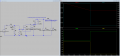
Here is a simulation which shows a pair of PP3 batteries can produce a current of 4A for a short while at least. That coil will produce a theoretical magnetic field of \( 4\pi 10^{-7}NI/(2R) = 4\pi10^{-7} . 200 . 4/(2 . 0.0175) = 0.29T \) or 290Gauss, which is approx 23% of the field of a N52 20mm dia x 1.5mm thick magnet, which has a pull strength of around 4kg or 40N. So, on that basis, the coil will have a pull strength of around 10N. Of course, to make something jump, it needs to be repelled not attracted, implying it needs to be magnetic. The alternative is a non-ferrous eg aluminium or copper disc in which eddy currents are induced, but that only happens in a changing field, ie switch on or off and that's not easy to work out. Assuming, for now, a magnet, as previously mentioned it will experience a repelling force of around 10N and weighing in at roughly 0.3g (20m dia x 1.5mm thick @ 7.5gm/cm^3) that's some serious acceleration a = F/m = 10/.0003 = 33000m/s^2 which seems excessive, but I can't see where my math has gone wrong! Can you?

A 10000u capacitor charged to 24v will give a pulse of 16A or 1140 Gauss lasting around 30mS

1717001791331.png
 
Last edited:

Thread Starter

BLMagic

Joined Aug 17, 2020
37
The important number will be the Ws (Watt seconds). Where the Watt is a measure of power, the Ws is a measure of energy.

First, you don’t want super- or ultracapacitors, you want photoflash caps. This merits a strong warning, though—while supercaps tend to be rated at 3.3V, or 5V, or even 12V, a photoflash capacitor will be rated in hundreds of volts. This means there is a non-zero chance of a sudden departure from this mortal coil—and more like rocketing than shuffling.

To be crystal clear, the energy stored in a photoflash cap, or a bank of them, can be enough to kill you—then resuscitate you, then kill you again. Please treated them with great respect and make sure you have proper discharge resistors in place, or that you store them shorted.

Having said this, the reason you need the photoflash caps is to get the higher voltage they can store, and take advantage of the low ESR (Equivalent Series Resistance) that allows them to dump what they have stored in a very short time.

This is where Ws come in. A typical camera flash that goes on a hot shoe is powered by 4 AA/R6 cells. The battery made of these cells is 6V, yet they fire a flash that uses many hundred. This is done by trading time for energy. It’s like filling a bucket with a spoon so you can dump it on your friend all at once instead of trying to soak him a spoon at a time. (I don’t know why you want to soak your friend, but that’s your business.)

So, once again, you can’t fool physics. First, you will always have losses any time you try to move energy from one form to another. The actual efficiency of the system can vary, but a rule of thumb that works pretty well for SWAGs is 80% as best case and 50% as realistic in the absence of more data.

Recall that power (in Watts) is a product of voltage (V) and current (A). Ws takes power and adds time to get energy. You have to have the W to put in, then you can worry about how many seconds it will take to get out. That makes step one working out how much energy in Ws you need to cause the effect you want.

You can also call 1Ws, 1J—the J is for Joule which is the International System of Units (called “SI”—don’t ask, it’s a French thing*) standard unit for work, heat, and energy. So, as you do the research you might find your answer in Joules but now you know you don’t have to panic that’s just a different name for the Ws.**

So, once you have the Ws/J worked out, simple math will tell you how long your power supply will take to get that much energy into the photoflash caps—then you just have to have a circuit that switches it into the coil and—blam. Hopefully of the good kind.

For example, let’s say your battery can provide 6V at 2A, and you need 50Ws of power in the caps. First you are going to have to convert that 6V to something a lot higher. The same circuit used in flashes is perfect for this, and there are many examples online. You can even salvage the circuit out of a cheap flash to save trouble. (Keep in mind touching the wrong thing might hurt a lot.)

But this conversion is going to have a loss, let’s say 20%. So if you start with 12W, you will be down to ~10W to put into the cap bank. You will also need to know the total amount of energy in the battery if you want to know how many times you can do the trick before it is flat. In any case, 50Ws of energy with take at least 5s of the flat out 10W power from your battery, since 50W in 1s is the same as 10W in 5s. Get it?

Now 50Ws is a complete fabrication and I suspect it will take more, not less, to run your gimmick. So, once you work out the approximate charge time you can make sure you‘ve got that many seconds of patter to cover a repeat of the trick. But there you go—you need to think in terms of energy needed, and in terms of conversion from the energy stored in the battery with its spoonful-at-a-time delivery to energy stored in the cap with its turn-the-bucket-over delivery.

*OK, OK—Système International d'Unités is the French name and since the SI system comes from the metric system, using the French abbreviation is a hat tip.

**Look, Watt is already an arbitrary name—well, a person’s name. It was named for James Watt, the Brit who worked out the math for steam power among other things. The Joule is named after another limey geezer—James Prescott Joule—who was a physicist or some kind of boffin in the energy line.
Hmm thought the
Certainly the comments by "Y" in post #27 are correct. And I am not able to correlate that description with what is shown in the photo of post #1. The description is closer to that picture in post #22. Certainly a thin package can be built, with an inverter as "Y" described to charge the capacitor bank. But the only similarity to the post #1 picture will be the trigger receiver and the battery pack. And really, there will need to be a scheme to switch on the inverter a fair while before the trigger is delivered.
Really, now wonder if the picture in post #1 was ever observed to actually work, or is it another cartoon channel fake??
Thanks for the reply. Yes it does work and works well :)
 

Irving

Joined Jan 30, 2016
5,126
Simulation with Vishay photoflash cap charged to 360v - not sure the coil is safe for this... but shed loads of mag field - 10500 Gauss!

1717010072468.png
 

Thread Starter

BLMagic

Joined Aug 17, 2020
37
Irving, thank you for the time to do this, it is greatly appreciated. Also to the others that have contributed. Assume then thicker wire needed....
Thanks
 

Thread Starter

BLMagic

Joined Aug 17, 2020
37
Simulation with Vishay photoflash cap charged to 360v - not sure the coil is safe for this... but shed loads of mag field - 10500 Gauss!

View attachment 323414
Irving, Here is a youtube clip.
Forward to 5:51, exactly sort of thing, but not as powerful. He mentions uses as you said previous, Inverter. Again appreciate the help you and others given...
 

Thread Starter

BLMagic

Joined Aug 17, 2020
37
Simulation with Vishay photoflash cap charged to 360v - not sure the coil is safe for this... but shed loads of mag field - 10500 Gauss!

View attachment 323414
Irving, As said a total noob, could you be so kind to do this in idiot form please? As i did with my sketch? Dont know using flash or inverter, 1 be in ya 1`s dept. Was another 2 projects i done, taken 4 mths to sort on own but got there, this 1 way beyond me knowledge and £££, buying this and that regards
 

Irving

Joined Jan 30, 2016
5,126
Irving, thank you for the time to do this, it is greatly appreciated. Also to the others that have contributed. Assume then thicker wire needed....
Thanks
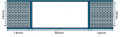
Not necessarily, but a better form of construction, yes. Remember we are delivering a very short pulse - fusing is about how much heat is generated over how long - Watts x seconds. 20awg will fuse at approx 58A (for >10s in free air), but 186A for 1s and 882A for 32mS. So clearly its somewhere between the latter for your coil. Kinks and sharp bends where cross-sectional area is compromised will have significantly reduced ampacity. The other issue is voltage between turns and the insulation effectiveness. If your coil was neatly wound on a 3D-printed former like below, 16 turns across 16 layers, 256 turns total, then the voltage between turns vertically is approx 1.5v and between layers horizontally is maximum 48v. The insulation will easily cope with that if not damaged.

1717167505368.png

could you be so kind to do this in idiot form please? As i did with my sketch?
Better that you learn correct electronic symbols and to draw schematics. Much easier to communicate with, more easily translates to a physical wiring diagram, and, when things don't work, makes it easier to work out where you've gone wrong!
 
Top