Help with Manual/Auto Resetable Change-over Circuit

crutschow

Joined Mar 14, 2008
38,526
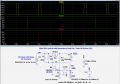
Okay, I forgot that you wanted to be able to turn the inverter Fridge connection ON or OFF when the Grid is off, so here's the LTspice sim of a common latch circuit using one N-MOSFET, one P-MOSFET, one diode, and six passive parts, that is alternately turned on and off by a single NO push-button (S1) to drive the DPDT Fridge relay:
(The one in Post #20 can only be turned on, not off with a single PB).

It is energized by the NC contacts form the Grid powered relay, when the Grid goes off,
C2 insures that the circuit powers up with the output low (Fridge relay off and Fridge still connected to the Grid).

So when the circuit is energized by the Grid power loss (green trace), the Fridge relay can be turned ON and OFF (red trace) by the PB (yellow trace), where ON is Inverter power to the Fridge.
When Grid power returns, the 12V power is removed, and the Fridge Relay is deenergized, returning the Fridge to Grid power.

The MOSFETs can be just about any devices that are readily available to you.
1766687878682.png
 
Last edited:

whsh93a

Joined Jan 1, 2021
18
Good day all,

Any one with idea on how to achieve this Changeover I would like to make.

I want to manually switch my Refrigerator to Inverter AC power using a simple Switch + 12v DPDT Relay on NO. But when Grid power is restored, the Relay should automatically be switched back to Grid on NC so the Refrigerator continues on Grid power but when the Grid goes off, theRefrigerator goes off. So to use the Refrigerator on Inverter, I need to use the switch again.

I hope the explanation does it.

Thanks
Dont
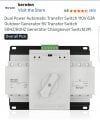
Don't bother (unless you like reinventing the wheel). Just buy an ATS -Automatic Transfer Switch - off Amazon - about $40. Boats and home systems use these all the time (including me). Priority is grid or inverter. Switches back when lost power comes back on.
I like this one...I use it when charging my car. Get it for any configuration - 2 pole, 3 pole, etc.

I like this one...
 

Attachments

OK. I think we are all making this way more complicated than it need to be.

It took me a few reads of some of the posts, and a reading of all the posts to finally figure out what is wanted here. What is needed here is a simple parts list of 2 components and some wire. An AC powered DPDT relay and a Push ON/Push OFF switch (or even a plain toggle switch which will easily give a visual indication of the status).

For the relay....

Coil is powered by the AC Grid. When Grid power is available, the relay is energized, feeding Grid power to the fridge.

Comm feeds the power to the fridge.

NO Contacts will feed the Grid to the fridge when the relay is engaged (when Grid power is available).

NC Contacts will feed the Inverter power to the fridge when the Grid is off.

For the Latching Switch (or toggle)...

Connect it inline with the hot leg of the Inverter output. Being a Push ON/Push OFF or Latching switch, it is pressed once to complete the curcuit and again to break the curuit. Just a different mechanical version of a toggle switch.

Overall this allows the fridge to be powered by the grid whenever it is available. However; if you are not there and the Grid goes down (and you have not engaged the Inverter switch) the fridge will receive no power. Maybe you would want to keep the Inverter switch engaged and only opening the switch when you don't want the Inverter able to power the fridge.

Also, this can be done with a SPDT relay since you don't need to switch the Grid and Inverter Neutrals. They actually should be tied together anyway. This would mean that the only switching concerns the Hot legs of the power sources.

Archie Stulc
Former Broadcast Engineer
 

crutschow

Joined Mar 14, 2008
38,526
a Push ON/Push OFF switch
Using such a switch doesn't guarantee what he wants to happen in the last sentence below (automatically go to the Fridge off state if the grid goes off again).
The latch circuit I proposed does that.
During when the Fridge is running on the inverter, if the Grid power is restored, without pushing a button or been present, the relay should be de-energized (Like another separate circuit taking off power from the relay) so the fridge continues work on the Grid which is now available on the NC. If the Grid is then taken off again, the Fridge goes off until I wish the continue the fridge on the inverter.
 

whsh93a

Joined Jan 1, 2021
18
Using such a switch doesn't guarantee what he wants to happen in the last sentence below (automatically go to the Fridge off state if the grid goes off again).
The latch circuit I proposed does that.
Ok - so back to the last part. I'm pretty sure he just doesn't want to deplete his battery bank.
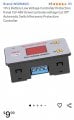
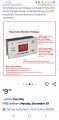
Me - too, so I set up the ATS so that I monitor the battery voltage. If the voltage drops below a certain level, the inverter line is "off." Once the battery voltage rises high enough, the ATS is allowed to switch back to the inverter.
Costs about ten bucks from Amazon...
 

Attachments

Thread Starter

Khaleef

Joined Mar 22, 2017
120
so here's the LTspice sim of a common latch circuit using one N-MOSFET, one P-MOSFET, one diode, and six passive parts, that is alternately turned on and off by a single NO push-button (S1) to drive the DPDT Fridge relay:
Thanks.

I would try out this circuit and revert.
 

Thread Starter

Khaleef

Joined Mar 22, 2017
120
OK. I think we are all making this way more complicated than it need to be.

Also, this can be done with a SPDT relay since you don't need to switch the Grid and Inverter Neutrals. They actually should be tied together anyway.
Thanks @Bulldoggie63

Yes, you got the design but unfortunately, I need to switch both arms of power (Live & Neutral). I could make use of 4PDT Relay if there's need for that.
 
Thanks @Bulldoggie63

Yes, you got the design but unfortunately, I need to switch both arms of power (Live & Neutral). I could make use of 4PDT Relay if there's need for that.
Well, that too is an option. Then you still will only need to lift the hot leg of the Inverter power to engage/disengage the Inverter feed. But, if you want to fully isolate the lines, go for a DPST switch.

Archie Stulc
 

MisterBill2

Joined Jan 23, 2018
27,571
The simple scheme will use a four pole double throw relay with a mains voltage coil! The Mains voltage will be applied to the first two NO contacts, and the first two commons will power the refrigerator while the mains power is present and those contacts are closed. If the mains power fails then the inverter must power the first two NC contacts, which close when the relay releases. Thus the transfer to inverter power does not require the relay to operate, but rather to release. Then the third set of contacts will start the inverter when the NC contact closes due to mains power loss. The fourth contact will enable a notification that mains power has failed, if that function is desireed.
 

whsh93a

Joined Jan 1, 2021
18
The simple scheme will use a four pole double throw relay with a mains voltage coil! The Mains voltage will be applied to the first two NO contacts, and the first two commons will power the refrigerator while the mains power is present and those contacts are closed. If the mains power fails then the inverter must power the first two NC contacts, which close when the relay releases. Thus the transfer to inverter power does not require the relay to operate, but rather to release. Then the third set of contacts will start the inverter when the NC contact closes due to mains power loss. The fourth contact will enable a notification that mains power has failed, if that function is desireed.
In other words, a standard ATS (Automatic Transfer Switch). Used on boats and for alt. energy. Buy one designed for 60 to 100 A for forty bucks off Amazon and you'll have it maybe tomorrow.
 

whsh93a

Joined Jan 1, 2021
18
In other words, a standard ATS (Automatic Transfer Switch). Used on boats and for alt. energy. Buy one designed for 60 to 100 A for forty bucks off Amazon and you'll have it maybe tomorrow.
He still needs to address his small battery bank situation. If I read his original post correctly, he wants to keep his small battery bank from over discharging. So, add a "Battery Control Module" in series with the ATM. Good for about 30 A and costs about ten bucks from Amazon.
I understand the < hard to control> need to DIY this, but, why?? Oh, yes, engineering. It's fun for me, too.
 

MisterBill2

Joined Jan 23, 2018
27,571
I neglected to add that there would still need to be a manual cutoff switch for the battery feed to the inverter.. The primary benefits from this alternative-logic scheme are avoiding a lot of extra circuitry and eliminating the battery draw of the 12 volt power transfer relay required for other schemes.
The benefit of D.I.Y. construction is usually getting a system designed for better performance instead of being designed for minimum cost and maximum profit. AND the packaging scheme arranged just the way you want it, instead of being the cheapest possible arrangement.
 

whsh93a

Joined Jan 1, 2021
18
I neglected to add that there would still need to be a manual cutoff switch for the battery feed to the inverter.. The primary benefits from this alternative-logic scheme are avoiding a lot of extra circuitry and eliminating the battery draw of the 12 volt power transfer relay required for other schemes.
The benefit of D.I.Y. construction is usually getting a system designed for better performance instead of being designed for minimum cost and maximum profit. AND the packaging scheme arranged just the way you want it, instead of being the cheapest possible arrangement.
This whole project comes down to one thing - it's just a switch. A better performing switch that doesn't draw any battery current is a manual transfer switch. That's just a big switch that has three positions - inverter, off and grid.
I use that for my system and, not surprisingly, you can buy one off of Amazon expressly designed for the purpose because lots of other people have the exact same need for the device.
 

whsh93a

Joined Jan 1, 2021
18
In fact, since this is just to run the fridge, you can probably just use a 3 position, 25 A toggle switch with the appropriate number of poles. I likely have one sitting around in my workbench parts. You can have it if you want it.
 

crutschow

Joined Mar 14, 2008
38,526
This whole project comes down to one thing - it's just a switch.
That's over simplification.
Yes it's a switch, but it requires some automatic features.

You are ignoring his requirements that the fridge automatically go back to the Grid connection when the Grid power returns, and not automatically connect to the inverter when the Grid fails.
 
Last edited:

whsh93a

Joined Jan 1, 2021
18
That's over simplification.
Yes it's a switch, but it requires some automatic features.

You are ignoring his requirements that the fridge automatically go back to the Grid connection when the Grid power returns, and not automatically connect to the inverter when the Grid fails.
I am doing that here (although the manual switch satisfies all the criteria except automatic switching) but I didn't in my previous posts. Use an ATS and after it switches flip the "auto-manual" switch to "manual.". Or, since he's actually interested in conserving battery, add a "battery control module" that will monitor charge level and not allow the batteries to discharge below a certain user set level. Then, when the bank reaches a certain user set level of charge, turns back on.
This is a very, very common routine for sailors that use shipboard and shore power. Also, for RV users and alternate home energy systems. I also simular for charging my EV (only opposite).
 
Last edited:

MisterBill2

Joined Jan 23, 2018
27,571
OK, it does say, back in post#1, manual switch to inverter , BUT automatic switch back to the grid. Manually starting the inverter can be just leave the manual series switch off, instead of on. And my suggested scheme will switch back to the grid and switch off the inverter when the grid returns. So it is close to the specification.
 

gaber2611

Joined Mar 14, 2013
324
Good day all,

Any one with idea on how to achieve this Changeover I would like to make.

I want to manually switch my Refrigerator to Inverter AC power using a simple Switch + 12v DPDT Relay on NO. But when Grid power is restored, the Relay should automatically be switched back to Grid on NC so the Refrigerator continues on Grid power but when the Grid goes off, theRefrigerator goes off. So to use the Refrigerator on Inverter, I need to use the switch again.

I hope the explanation does it.

Thanks
Can you simple draw the idea?
 

whsh93a

Joined Jan 1, 2021
18
OK, it does say, back in post#1, manual switch to inverter , BUT automatic switch back to the grid. Manually starting the inverter can be just leave the manual series switch off, instead of on. And my suggested scheme will switch back to the grid and switch off the inverter when the grid returns. So it is close to the specification.
I use a reed relay across the inverter switch to turn it off and on by the battery control module.
 
Top