Help on RC Differentiating circuit

Thread Starter

Vihaan@123

Joined Oct 7, 2025
222
1765808125236.png

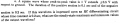
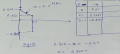
As per the theory of the textbook the RC differentiating circuit is the high pass RC circuit, but the RC time constant is very small, and the output is the differential of the input, but in the question the RC is very high of 0.2sec, why?
1765808038888.png

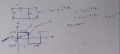
I have calculated only for the ON duration and the voltage comes to 0.303V. Am i doing correct?
Thank you in advance.
 

MrChips

Joined Oct 2, 2009
34,656
You need to know the value of the RC time constant in order to do the calculation. Why does it matter if it is short or long?
You are making the assumption that the starting voltage is zero. Is this true?
 

WBahn

Joined Mar 31, 2012
32,732
You are making a number of mistakes.

Don't forget the fundamentals.

Can the voltage across a capacitor change instantaneously?

If your solution is correct, what is the voltage across the capacitor at t=0- (i.e., just before the input voltage transitions instantly from 0 V to +0.5 V)? What is it at t=0+ (i.e., just after the input voltage transitions instantly from 0 V to +0.5 V)?

Is that consistent with what you know about whether the voltage across a capacitor can change instantly?

Your starting equation for v_0 is a decaying exponential, which means that it starts of v_i and then decays toward zero. But your drawing shows it starting at 0 and rising toward some final value. Does that make sense?

You are just grabbing whatever equation comes to mind, throwing some numbers at it, and then drawing whatever waveform comes to mind and forcing whatever number comes out of the equation onto it. That's analysis by happening, meaning that you are throwing random stuff at the problem hoping that, somehow, someway, something right just happens to result.
 

Thread Starter

Vihaan@123

Joined Oct 7, 2025
222
1765811200780.png
Sorry my mistake this is only partial solution (electronics is very tough for me), i am working on the complete solution and then update.
 

WBahn

Joined Mar 31, 2012
32,732
View attachment 360563
Sorry my mistake this is only partial solution (electronics is very tough for me), i am working on the complete solution and then update.
The approach you are taking, if done correctly, will eventually lead you to a correct solution. But it will take a very long time and you won't know for sure when you get there.

One thing I find interesting is that, in previous problems, you've insisted on throwing Laplace Transforms at circuits that were non-linear instead of using a piecewise approach in the time domain, but here, where you have a linear circuit, you are using a piecewise linear approach when Laplace Transforms are perfectly valid.

Keep in mind that the problem is asking for the min/max voltages in steady state. You don't need to worry about the initial transient response or how long it takes to reach steady state.

So, start from the assumption that the circuit is in steady state going between Vmin and Vmax each cycle. What to Vmin and Vmax have to be in order for the circuit to return to the same state at the end of each cycle that it started at? That is what steady state means.

You also need to stop being so sloppy with your units. It's going to come back and bite you.
 

WBahn

Joined Mar 31, 2012
32,732
Sketch out a detailed timing diagram that is scaled correctly and show the transition times and changes that occur. For each exponential, identify the initial and final voltages that the waveform, if allowed to settle, is going between. If you do this, the solution, and how to get there analytically, should become reasonably obvious. You are jumping in and throwing equations around much too soon -- step back and look at the problem from the big picture, first.
 

Thread Starter

Vihaan@123

Joined Oct 7, 2025
222
Why did you start at V0 = 0.5 V?
I was thinking about it writing the equation V0=Vie^-t/tau; since the input voltage starts from -0.5 and goes upto +0.5V, i was not sure which value of vi to be considered is it -0.5V or 1V (peak)? I thought, on power on the voltage can only start from 0V and go from there, so considered 0.5V. t=0; V0 = Vi;
 

MrChips

Joined Oct 2, 2009
34,656
I was thinking about it writing the equation V0=Vie^-t/tau; since the input voltage starts from -0.5 and goes upto +0.5V, i was not sure which value of vi to be considered is it -0.5V or 1V (peak)? I thought, on power on the voltage can only start from 0V and go from there, so considered 0.5V. t=0; V0 = Vi;
It does not matter at what voltage you start.

V(t) = V0 + Vie^-t/tau

If your step voltage Vi is 1 V, what is the change in voltage after one RC time constant?
 

WBahn

Joined Mar 31, 2012
32,732
I was thinking about it writing the equation V0=Vie^-t/tau; since the input voltage starts from -0.5 and goes upto +0.5V, i was not sure which value of vi to be considered is it -0.5V or 1V (peak)? I thought, on power on the voltage can only start from 0V and go from there, so considered 0.5V. t=0; V0 = Vi;
You are making your life much harder than it needs to be by trying to walk things through starting from power on. Remember, the problem is ONLY asking about the min and max voltages in steady state.
 

WBahn

Joined Mar 31, 2012
32,732
Initial voltage V0 on the capacitor is 0,
V0=0; V(t) = 0 + 1*e-1; V(t) = 0.36V
So, change in voltage is 1 - 0.36 = 0.632V.
I have given you a roadmap for solving the problem.

Draw what the waveform looks like for one complete cycle of the input in steady state!

Start from just before the rising edge and stop just before the next rising edge.

That is your starting point. Do that, and then everything you need is staring you in the face.
 

Thread Starter

Vihaan@123

Joined Oct 7, 2025
222
You are making your life much harder than it needs to be by trying to walk things through starting from power on. Remember, the problem is ONLY asking about the min and max voltages in steady state.
I want to understand why a system goes to transient and then to steady state, why does it happen and how long it will take? why can't it go to steady state directly?
 

Thread Starter

Vihaan@123

Joined Oct 7, 2025
222
I have given you a roadmap for solving the problem.

Draw what the waveform looks like for one complete cycle of the input in steady state!

Start from just before the rising edge and stop just before the next rising edge.

That is your starting point. Do that, and then everything you need is staring you in the face.
Yes i will do it and post it.
 

MrChips

Joined Oct 2, 2009
34,656
I have to be away from the computer for awhile. This is actually more complicated than I first thought.
You cannot solve this easily.
 

WBahn

Joined Mar 31, 2012
32,732
I want to understand why a system goes to transient and then to steady state, why does it happen and how long it will take? why can't it go to steady state directly?
Because the initial conditions are not the same as when the system finally settles down into a stable condition.

If you drop a basketball from some height, eventually it will settle out and just be sitting on the floor looking stupid. But it doesn't go there directly, does it? It bounces for a while, each bounce getting smaller and smaller. That bouncing is the transient response that has to die out.
 

WBahn

Joined Mar 31, 2012
32,732
I have to be away from the computer for awhile. This is actually more complicated than I first thought.
You cannot solve this easily.
It can be solved very easily with just a few simple lines of algebra. This is an extremely easy problem!

The key is to forget about the transient response and focus solely on the steady state.

Sketch the voltage as a function of time and walk it through step by step over one cycle, imposing the requirement that, in steady state, it must end up at exactly the same voltage it started with.

Just before the input voltage rises, the output voltage is at some voltage. We don't know what it is. It is unknown. We use math to solve for unknowns. So call it V0 and then solve for it.

Right after the input voltage rises, the output voltage changes from Vo to some other voltage, which is dictated by the continuity requirement of a capacitor. Call this V1. What is V1 in terms of V0?

After the rising edge, it then decays toward a final voltage, but it doesn't get all the way there before the falling edge of the input. Call the voltage it gets to V2. In terms of V1, what is V2?

Immediately after the falling edge, what is the output voltage, V3, in terms of V2?

The voltage then decays toward a final voltage, V4, but it doesn't get all the way there before the rising edge of the input. In terms of V3, what is the voltage at that point?

But this is the end of a cycle, so you know that V4 must be the same as V0. What does V0 have to be to make this happen?
 

WBahn

Joined Mar 31, 2012
32,732
@Vihaan@123:

Given a decent sketch, it takes four simple equations to relate the various transition points to each other and another four to solve for whichever one you want.

The Vpp is approx 1320 mV. That should serve as a check to see if you got the answers for Vmin and Vmax correct.

Don't make it harder than it is.
 
Top