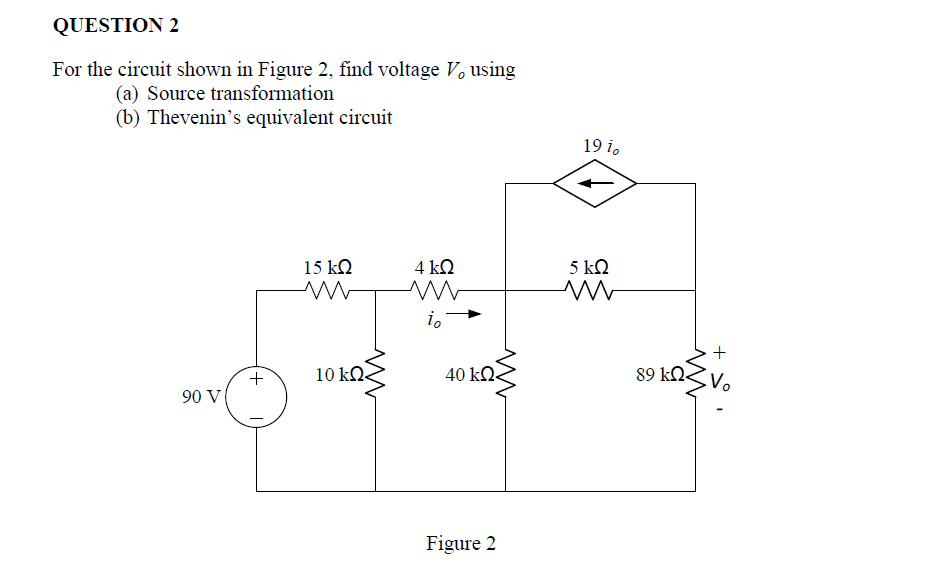
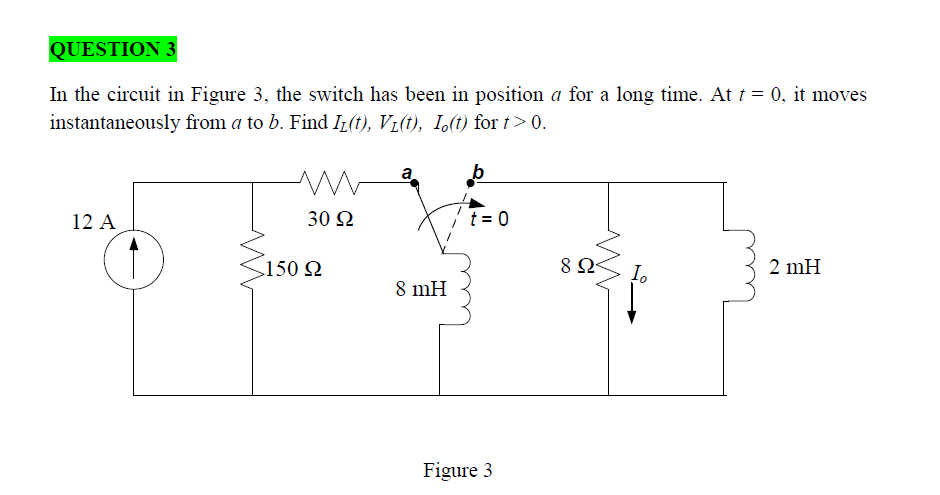
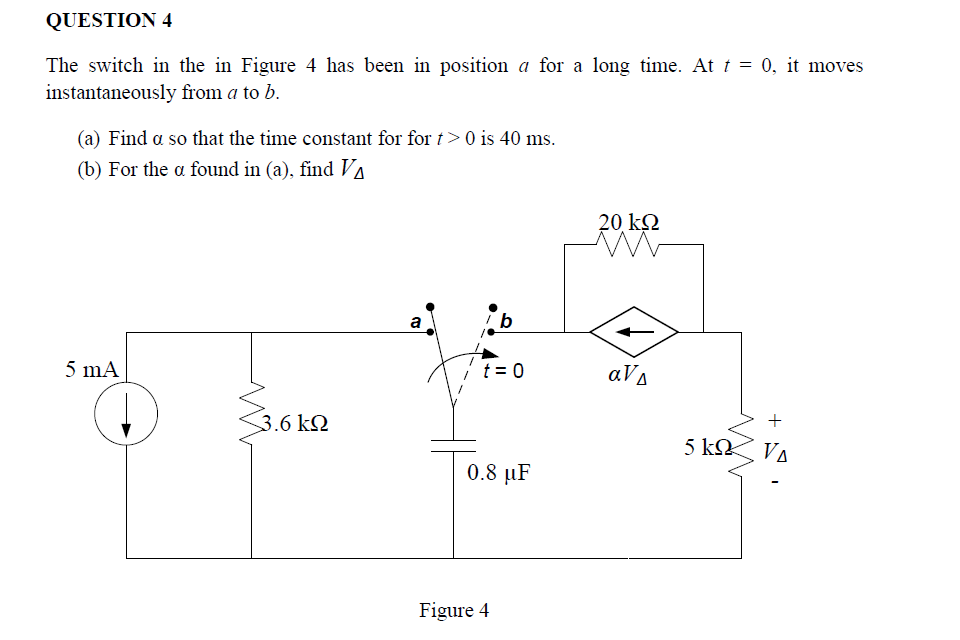
In order for current to flow in a resistor, you have to have a voltage across it. But if you short circuit a voltage source that is in parallel with it, then there is no way for a voltage to develop across the resistor. The key is to understand that replacing a voltage source with a short circuit, and a current source with an open circuit, is just a convenient way of setting the output of each type of source to zero in order to turn it "off". So a voltage source set to 0V output will produce or accept whatever current is required in order to maintain 0V across it.for question 1...
(a) superposition
when i open only one source that is current source ( 10mA) and voltage source will be short circuit. im confusing whether current can flow at 4k ohm ... can u explain more detail about it. tq
| Thread starter | Similar threads | Forum | Replies | Date |
|---|---|---|---|---|
| G | Help me! I need to solve this circuit | Homework Help | 10 | |
|
|
I couldnt solve this qn can someone help me out | Homework Help | 10 | |
| H | HELP!!! Solve for diode current this circuit | Homework Help | 17 | |
| D | Help to solve a circuit | Homework Help | 7 | |
|
|
Help solve this *simple* circuit riddle | Power Electronics | 14 |