Help finding HV H-Bridge

Thread Starter

Scotty Hoang

Joined Mar 7, 2017
8
Hi all,
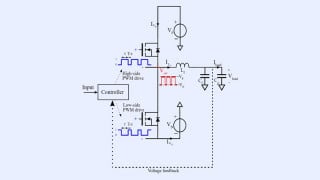
First-time poster. I'm currently on a project where I have to drive a true Resistive Load with high voltage and High current at 50V and 50 Amps. The project requires fast push and pull of current, hence H-bridge. I'm using an Arduino to generate PWM and control outputs; however, I have yet to find anyHV H-bridge that suited my specification. Can anyone direct me to a product or site that I can go to? FYI, the resistive load is a large copper coil for generating EM field.
Thanks~
 

GopherT

Joined Nov 23, 2012
8,009
Hi all,
First-time poster. I'm currently on a project where I have to drive a true Resistive Load with high voltage and High current at 50V and 50 Amps. The project requires fast push and pull of current, hence H-bridge. I'm using an Arduino to generate PWM and control outputs; however, I have yet to find anyHV H-bridge that suited my specification. Can anyone direct me to a product or site that I can go to? FYI, the resistive load is a large copper coil for generating EM field.
Thanks~
What is your definition of HV. Do you have a number in mind?
 

Thread Starter

Scotty Hoang

Joined Mar 7, 2017
8
HV = high voltage. My PSU can drive 50V and output 50Amps. I want a H-bridge that can handle that kind of power and still be able to do fast switching between current direction.
 

Sensacell

Joined Jun 19, 2012
3,785
Your load is NOT truly resistive, it generates a magnetic field, right? That is the definition of an inductor.

Not that this makes too much difference, but you must include diodes to steer the current from this field when it collapses.

What is your switching frequency?
 

Thread Starter

Scotty Hoang

Joined Mar 7, 2017
8
I really want it to run at 100KHz, but I can settle for less. The main problem right now is that I have a mechanical switch to reverse the direction of the current, in extension the EM field, but it takes up to 7 seconds to complete the reversion.
 

GopherT

Joined Nov 23, 2012
8,009
I really want it to run at 100KHz, but I can settle for less. The main problem right now is that I have a mechanical switch to reverse the direction of the current, in extension the EM field, but it takes up to 7 seconds to complete the reversion.
First, questions related to 7-seconds for reversal time...
1) Is the motor free running or is it connected to some gears/pulley/...
2) Do you have a DATASHEET for this motor?

Next, why 100kHz? What benefit do you get from such a high Pwm frequency?
1) Every time a MOSFET transistor turns on (switches) some peak surge of heat is generated (switching losses). The more switching events that happen each second, the bigger more derating must be done (the bigger the transistor must be used) for the load. I'm not sure you'll want to invest in the components you'll need for a 50 amp inductive load at 100kHz - much cheaper to do much, much slower switching speed.
 

Thread Starter

Scotty Hoang

Joined Mar 7, 2017
8
maybe 7 seconds was an exaggeration, but it does take a few seconds to switch. I'll include to specs sheet below. And I'm building this device as a request from my department so I don't really know why they want it to be that high.However, I'm okay with slower speed, just not too slow.
I do have one question for you guys. Is the switching frequency different from the frequency of the duty cycle? Since EM field DO NOT have to reverse its poles that often. To save power, and reduce heat I don't want a constant current going over the load.
 

Attachments

Last edited:

kubeek

Joined Sep 20, 2005
5,796
First, questions related to 7-seconds for reversal time...
1) Is the motor free running or is it connected to some gears/pulley/...
2) Do you have a DATASHEET for this motor?
Note this is an inductor, not a motor.
I'm not sure you'll want to invest in the components you'll need for a 50 amp inductive load at 100kHz - much cheaper to do much, much slower switching speed.
Even 100Hz would be too fast by my judgement, if the old switch took a few seconds to switch the polarity.

Scotty Hoang: you should give us much better description of the inductor, especially its inductance, voltage and current, and you should really set your mind how fast do you need to switch.
 

Thread Starter

Scotty Hoang

Joined Mar 7, 2017
8
Note this is an inductor, not a motor.
Even 100Hz would be too fast by my judgement, if the old switch took a few seconds to switch the polarity.

Scotty Hoang: you should give us much better description of the inductor, especially its inductance, voltage and current, and you should really set your mind how fast do you need to switch.
The Inductance is a 76MM Electromagnet, link: http://www.gmw.com/electromagnets/dipole/5403/5403_Specs.html
But essentially a very larger copper coil with water cooling that can induce a Magnetic field of 1.2 Telsa. From the spec sheet, it said the inductance is approximately 180mH and max at 220mH. Since I'm specifically asked to have a system that can run up to 100kHz, I'm going to stay with this frequency. However, I'm open minded for any other suggestion.
 

tcmtech

Joined Nov 4, 2013
2,867
Well at a inductance of ~180 mH at 100 KHZ it has a equivalent impedance to a ~ 113,000 ohm resistor.

At the low end to even get the equivalent of a 1 ohm impedance you would have to be under ~44 Hz.

To get the full power of the coil you would have to be under .4 HZ.

Given that I see zero justification in the 100 KHz requirement other than obviously someone on the design team has zero basic electronics/electrical physics knowledge or math skills and just feel that tossing out a requirement for '100 KHz' switching frequency capability sounded good. :oops:
 

Thread Starter

Scotty Hoang

Joined Mar 7, 2017
8
Ah thank you, I have a much better understanding on my problem and what I need. Please let me recap on all the parameters of the system and what I want to achieve.
I want to induce an EM field using a 76MM Electromagnet. With my current setup, my PSU is supplying 25V and 50Amp (this is the maximum continous rating the Electromagnet can handle) to a switch that in-turn forward that continuous Power to my Electromagnet to produce 1.2 Tesla.
-the problem is this: at sometime during experiment, EM need to be reverse. However, the switch used mechanical relay and takes exactly 7.2 seconds to do the switching.
-What I want: I want to build a new switch can can change the direction of the EM file instantaneously.
-What I fear: Ideally, I want to pass continuous current to the Electromagnet just like the old switch. However, i fear that I cannot dissipate the heat generated, hence the switching frequency.
-what is my goal: to build a new switch that can reverse the EM pole instantaneously

Does this now make sense?
 

kubeek

Joined Sep 20, 2005
5,796
To get the full power of the coil you would have to be under .4 HZ.
Not necesarily, you would need high voltage to get it to swing the current that high, in other words a resonant setup that would get the full 20A flowing and achieve 1.2T at 100kHz. A 12.7nF in series will make it resonate at 100kH, and with a +/- 40V square drive it will do over 20A through the coil. That will rattle your fillings if you come close to it, but hey lets help the mad scientists ;)

Scotty I have no idea if the coils you have have metal cores and will even approach this frequency without melting due to hysteresis in the core, but that is up to you to find out.
I suggest starting with lower voltages and current and seeing where this goes.

Edit: note the 2.5kV at the capacitor, that is some serious business and needs very properly done capacitor. Basically this setup is very similar to an indcution heater, so you can find a lot of guidance there.
 

Attachments

tcmtech

Joined Nov 4, 2013
2,867
-the problem is this: at sometime during experiment, EM need to be reverse. However, the switch used mechanical relay and takes exactly 7.2 seconds to do the switching.
-What I want: I want to build a new switch can can change the direction of the EM file instantaneously.
I don't follow the 7.2 second switch time being any common DPDT switch could easily reverse the electrical polarity of the power going to the coil in milliseconds. The rest of the time would be spent by the magnetic field collapsing and reversing which for a ~180 mH running off a 25 volt power source will take a bit longer.

The 100 KHz capable switching of a H bridge system is largely irrelevant given the limited supply voltage. Theres no way around it.
 

tcmtech

Joined Nov 4, 2013
2,867
Not necesarily, you would need high voltage to get it to swing the current that high, in other words a resonant setup that would get the full 20A flowing and achieve 1.2T at 100kHz. A 12.7nF in series will make it resonate at 100kH, and with a +/- 40V square drive it will do over 20A through the coil. That will rattle your fillings if you come close to it, but hey lets help the mad scientists ;)
Well since he doesn't have an unlimited voltage source or even a high current +-40 volt one the reality of how fast he can reverse the magnetic field is rather fixed at this point. :rolleyes:

What math are you using anyway? LC circuit calculator, http://www.1728.org/resfreq.htm , says its ~14 Picofarads to get a 180 mH inductor to resonate at 100 KHz.

Also the coil he is using will likely never get that high being its own inherent by design self capacitance between its own coils will prevent it being it likely well above 14 pF itself. That, and even if it could the inductive voltage spike when the switch opens would be high enough to cause problems with the switching time assuming the 40 volt rail voltage limit it hit once it did reverse the power feed polarity didn't stop it anyway. At 25 volts it will never happen.
 

kubeek

Joined Sep 20, 2005
5,796
Well since he doesn't have an unlimited voltage source or even a high current +-40 volt one the reality of how fast he can reverse the magnetic field is rather fixed at this point. :rolleyes:
Well the reversing circuit was reversing some voltage so I guessed there is some power source available that can handle the DC requirements of the coils.

What math are you using anyway? LC circuit calculator, http://www.1728.org/resfreq.htm , says its ~14 Picofarads to get a 180 mH inductor to resonate at 100 KHz.
My bad, I thought it was 200uH

Also the coil he is using will likely never get that high being its own inherent by design self capacitance between its own coils will prevent it being it likely well above 14 pF itself. That, and even if it could the inductive voltage spike when the switch opens would be high enough to cause problems with the switching time assuming the 40 volt rail voltage limit it hit once it did reverse the power feed polarity didn't stop it anyway. At 25 volts it will never happen.
That´s true, I thought the inductance was much lower.
 

tcmtech

Joined Nov 4, 2013
2,867
I work with scrap yard magnet crane control units and have even built custom solid state ones as well so from that I can say that high powered electromagnets do not switch fast regardelss of what you do to them.

The stuff I work with are powered by 240 - 300 VDC 50 - 80 amps and electromagnets typically have series resistances of 3 - 4 ohms and inductive properties measured multiple Henry's. With those even if the power polarity is fully reversed the time it takes for the magnetic field to go from fullpower one direction, collapse, then reverse to full power the other way can be 5 or more seconds and that using some pretty clever cheating in the overall design of the electromagnets and the control systems to do it.

Given the rough number of the OPS electromagnet I would say that theoretically it can't go from full power in one polarity to full power in the other more than about once every 1 - 1.5 seconds at best assuming there is no inherent other factors in the actual units physical construction that would prevent tit liked having a purpose built ferro metallic core and or dedicated shunt coil as well which I suspect that it may if it has an inherent 7.2 second reversal time as he states.
 

Thread Starter

Scotty Hoang

Joined Mar 7, 2017
8
Thank you all for your posts. I have had a talk with my client, and it seems that there was a misunderstanding.
1) What they wanted was a throttling PWM that goes into turning the gate on-off without fully discharging all the energy stored in the inductor. This problem can easily be mitigated with a capacitor parallel with our inductor load.
2) Actual Reversal time is up to me; they just wanted it to be smaller than 7 seconds. Therefore I think 0.1 s reversal time will suffice. If my math is right, the spike V = dI/dt * L = 100A/0.1s * 140mH = 140V. O fix this problem, I'm thinking of placing a TVS diode parallel to the load that would trigger around this voltage range.
What do you think of my solution?
 

kubeek

Joined Sep 20, 2005
5,796
If I am not mistaken, you will be dissipating up to 40J when turningn the coil off, so the TVS will have to be quite beefy, but it seems doable now.
 

tcmtech

Joined Nov 4, 2013
2,867
Thank you all for your posts. I have had a talk with my client, and it seems that there was a misunderstanding.
1) What they wanted was a throttling PWM that goes into turning the gate on-off without fully discharging all the energy stored in the inductor. This problem can easily be mitigated with a capacitor parallel with our inductor load.
2) Actual Reversal time is up to me; they just wanted it to be smaller than 7 seconds. Therefore I think 0.1 s reversal time will suffice. If my math is right, the spike V = dI/dt * L = 100A/0.1s * 140mH = 140V. O fix this problem, I'm thinking of placing a TVS diode parallel to the load that would trigger around this voltage range.
What do you think of my solution?
Unfortunately with a solid state H bridge or mechanical switch when the polarity of the electromagnet is reversed it will do its best to produce a counter voltage to the source voltage while the magnetic field is collapsing which depending on how fast the electromagnets field collapses could mean it hitting the power source with a pretty high voltage feedback spike.

With the large salvage yard magnet cranes they are powered from huge DC generators which can take such a feedback (they just try and become motors for a second or so) without concern but with a typical electronic power supply they cant and thusly need some form of overvoltage clamping circuit to dump that feedback energy someplace.
 
Top