Has the Solid State Transformer’s Time Finally Come?

Ya’akov

Joined Jan 27, 2019
10,307
I am not "suffering confusion"!!!
it seems that you are.

MisterBill2 said:
IN that different language it seems that a "Transformer " is a SYSTEM that accepts one voltage (AC or DC) and delivers a different voltage output (AC or DC). NO DESCRIPTION is provided for the mechanism producing this effect except the word "transformer".
In MY LANGUAGE a transformer is a device that changes AC power at one voltage into AC power at a different voltage. I see that the subtle difference is lost to the folks describing the system.
This is confused. The word "transformer" is not used alone, it is a "solid state transformer"—it is not "transformer" qualified, it is the name of a subsystem, not of a part.

There is no real problem if you don't insist that "solid state" is a species of coil-and-core transformer. The word transformer is used because it fits the block diagram not the schematic.

There is nothing wrong with the term since it is used by specialists who are entirely familiar with its meaning. If you encounter it and find it uninformative—research it. Don't tell the people doing the work they are "wrong" to use a term of art coined for their work because you didn't instantly understand it.
 

panic mode

Joined Oct 10, 2011
5,295
I do not like the presentation. Presenter talked a lot and said nothing... Like how it compares to conventional transformer. I could think of many factors worth comparing.

Don't like the name. It is deceptive to say the least. Names that contain several words are a crutch used by lazy people without imagination. Names should be one word and preferably short. "Horse with no name" is not a name. And there is nothing soft about transformer. No gas, no plasma, no liquid, no chemical reaction everything is already solid state.

Next, i don't buy excuse that it is a "specialized" term. It is a product/solution created by electrical/electronics engineers, meant to replace transformers. Yet forum of electrical/electronics engineers who used transformers for decades cannot quite decipher what the heck is this new thing, how it works, what is it good for, what are the limitations or ... What to call it. That screams that presentation missed the point,

Synchronous converters are nothing new, even in power transmission. They are used to transfer power as DC over long distance for years. so what sets this product generation apart?
 
Last edited:

MisterBill2

Joined Jan 23, 2018
28,371
I TOTALLY AGREE with "panic mode" on every line of Post# 26. Stated better than I could do without a lot of effort. Especially since much of the time names convey a description of identity that is unique to the named item. That is true in the technical realm where I reside.
I understand very well that there is aother realm (segment) that holds that reality is a fluid, and thus words and names have little if any meaning.
I choose to avoid that realm.
.
 

MisterBill2

Joined Jan 23, 2018
28,371
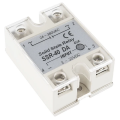
Yes!! A "solid state relay" really is an SSR.
I opened one of those SSRs that had failed. All of the parts inside would qualify as solid state! there are either triac or scrs and I think a diode or two, depending. Also a resistor. Abd when yousee the inside it becomes clear that the SSR DOES need a heatsink.
 
Last edited by a moderator:

Ya’akov

Joined Jan 27, 2019
10,307
I do not like the presentation. Presenter talked a lot and said nothing... Like how it compares to conventional transformer. I could think of many factors worth comparing.

Don't like the name. It is deceptive to say the least. Names that contain several words are a crutch used by lazy people without imagination. Names should be one word and preferably short. "Horse with no name" is not a name. And there is nothing soft about transformer. No gas, no plasma, no liquid, no chemical reaction everything is already solid state.

Next, i don't buy excuse that it is a "specialized" term. It is a product/solution created by electrical/electronics engineers, meant to replace transformers. Yet forum of electrical/electronics engineers who used transformers for decades cannot quite decipher what the heck is this new thing, how it works, what is it good for, what are the limitations or ... What to call it. That screams that presentation missed the point,

Synchronous converters are nothing new, even in power transmission. They are used to transfer power as DC over long distance for years. so what sets this product generation apart?
It is a name for system designers. It replaces a transformer on a block diagram not in a schematic. The transformer it replaces is, in itself, not merely a transformer—it is a packaged subsystem.

The name invokes "transformer" because that is its role in the system. If a "solid state transformer" is in the block diagram, no "transformer" will appear. The name makes its function clear and explains the lack of a traditional transformer inherently.

Ralph Waldo Emerson said "A foolish consistency is the hobgoblin of little minds." (Emerson was a bit of a jerk, but the idea behind his harshness is good). I know of no "little minds" here, or fools for that matter—but fealty to consistency when it interferes with communication is definitely sub-optimal.

Remember, while there may be some marketing involved in the name it is used by engineers to build real systems. I have learned that my aesthetic objections to language usage are both often ignorant, and always irrelevant to the expressive power of the language involved.

Because of this I adopted a much more open-minded attitude towards usages that initially rankle. I try to look at the question of why a word is in use. Yes, sometimes it is ignorance of the speaker which is uncomfortable but still not a reason to condemn an accepted usage.

Other times it is my ignorance and further investigation reveals this. In the end, there are cases where I still can feel uncomfortable with some things even if I can see the writing on the wall—that this will be the future of the language. I've learned to accept these things—mostly.

Lately, it is the choice of words in translation from Chinese to English that get me most uncomfortable (eg.: "welding" for soldering, "gears" for levels, &c.) but life is too short to let it bug me much. I don't really enjoy complaining about such things (though if you ask some people that know me they might feel otherwise).
 

MisterBill2

Joined Jan 23, 2018
28,371
Certainly "Voltage converter" is more effort to write or key-in", but it is totally correct, although it conveys little information, other than the effect. "Voltage Converter Module" is totally correct and easily shortened to "VCM" for short. So using that term also will explain the function correctly to a wider range of readers every time.
 

panic mode

Joined Oct 10, 2011
5,295
So Solid State Relays are OK?
that too is a poorly chosen name. names don't have several words in it. a while ago people invented a whole range of products and gave them nice names - diode, triode, penode, variac, varactor, varistor, transistor, cyclothron, oscilloscope, multimeter...
many of them have two or more words in their root but got merged into a single popularized word.

at some point "solid state" was adopted to describe devices without vacuum tubes, mercury rectifiers, moving parts etc. but then it somehow became ok to slap multi word prefix without considering it if actually makes any sense. that is a definition of poor naming....
conventional relay did have moving parts, mercury rectifiers had sloshing liquid... solid state relay and solid state rectifier had no moving parts but the non creative people still chose word salad instead of making up new names.

besides debate on naming convention, did anyone figure out how they do direct conversion from claimed 35kV to 800VDC? what are the limitations?
if one has a 9000V to 1000V transformer, and wants to test it, it can be connected to 9VAC source and measure 1VAC on secondary. and this can be reversed. powering secondary by 1VAC should return 9VAC on primary.
suppose one gets SST and wants to do the same, i seriously doubt that would work with such low voltages. so clearly there are limitations that nobody explains, there is no specs, no side by side comparison, (cost,size, efficiency...) and no mention how exactly this direct conversion from 35kV to low voltage DC bus is supposed to take place.

the whole point of this topic was that SSTs are replacing conventional transformers and first video was fine. then in post #4 there was a video showing specific implementation and referring to TIDA-011012 and making claims that were not substantiated.
so, anyone care to fill in the gaps, or this will turn into a strawman argument where we talk about names and who has the right to name it, rather than answer the questions on those gaps?
i mentioned name was ill chosen just to support that message in the video was poor/incomplete. that was just one aspect. name does not replace what the message was about.

i want to see on one side 35kV to 800VDC transformer + conventional rectifier, and on another side 35kV SST that replaces them. i want to see size comparison. i want to see table of figures that compare other relevant parameters. TIDA-011012 and video in #4 do not do that. because all i see is that "we got new SST and... this is the first SST". explain that.
 
Last edited:

MisterBill2

Joined Jan 23, 2018
28,371
that too is a poorly chosen name. names don't have several words in it. a while ago people invented a whole range of products and gave them nice names - diode, triode, penode, variac, varactor, varistor, transistor, cyclothron, oscilloscope, multimeter...
many of them have two or more words in their root but got merged into a single popularized word.

at some point "solid state" was adopted to describe devices without vacuum tubes, mercury rectifiers, moving parts etc. but then it somehow became ok to slap multi word prefix without considering it if actually makes any sense. that is a definition of poor naming....
conventional relay did have moving parts, mercury rectifiers had sloshing liquid... solid state relay and solid state rectifier had no moving parts but the non creative people still chose word salad instead of making up new names.

besides debate on naming convention, did anyone figure out how they do direct conversion from claimed 35kV to 800VDC? what are the limitations?
if one has a 9000V to 1000V transformer, and wants to test it, it can be connected to 9VAC source and measure 1VAC on secondary. and this can be reversed. powering secondary by 1VAC should return 9VAC on primary.
suppose one gets SST and wants to do the same, i seriously doubt that would work with such low voltages. so clearly there are limitations that nobody explains, there is no specs, no side by side comparison, (cost,size, efficiency...) and no mention how exactly this direct conversion from 35kV to low voltage DC bus is supposed to take place.

the whole point of this topic was that SSTs are replacing conventional transformers and first video was fine. then in post #4 there was a video showing specific implementation and referring to TIDA-011012 and making claims that were not substantiated.
so, anyone care to fill in the gaps, or this will turn into a strawman argument where we talk about names and who has the right to name it, rather than answer the questions on those gaps?
i mentioned name was ill chosen just to support that message in the video was poor/incomplete. that was just one aspect. name does not replace what the message was about.

i want to see on one side 35kV to 800VDC transformer + conventional rectifier, and on another side 35kV SST that replaces them. i want to see size comparison. i want to see table of figures that compare other relevant parameters. TIDA-011012 and video in #4 do not do that. because all i see is that "we got new SST and... this is the first SST". explain that.
are you talking DC in?? or just a 35,000volts AC in and 800 volts AC out??
I have one 120 volts AC IN and 10,000 volts AC out, and it will easily hold a 1 -1/2 inch spark. It is rated at 25 milliamps AC out. It was for a neon (gas discharge tube) sign.
And, very interesting, I have another one, 300 volts DC in and 12,000 volts out. BUT it includes two vacuum tubes, It was part of an older television set with a projector screen. The actual CRT was fairly small., the set of mirrors was impressive. The deflection system electronics were a nightmare to keep working.
 
Last edited:

panic mode

Joined Oct 10, 2011
5,295
did you watch the video? at about 40sec mark he states that product they are demonstrating is a direct replacement for older products that do direct conversion from 35kV (AC/DC not specified) to 800VDC... and reverse.

upon hearing this i looked up TIDA-011012 schematics and checked specs of parts - only to find no support for such claim.
 

MisterBill2

Joined Jan 23, 2018
28,371
I have seen closer to an actual solid state tansformer, though. It used an oscillator to generate a higher voltage at a few kilohertz to excite a piezo-electric assembly that in turn produced a much higher voltage. Not a lot of power, but enough for some sort of electrostatic display device. I never saw it working, though.
 

MisterBill2

Joined Jan 23, 2018
28,371
did you watch the video? at about 40sec mark he states that product they are demonstrating is a direct replacement for older products that do direct conversion from 35kV (AC/DC not specified) to 800VDC... and reverse.

upon hearing this i looked up TIDA-011012 schematics and checked specs of parts - only to find no support for such claim.
What you can find to see in videos is totally amazing. Processes that violate all the laws of physics, amazing energy generators that can solve the worlds energy shortages, and cure every ill.
 
Top