I have long had a conviction that I want to check: "Signal grounds should always be build in a strict tree structure, because that makes ground loops impossible." Am I correct?
Not entirely correct. One cannot make such as blanket statement without looking at the specific application, e.g. magnitude and frequency of currents, mixed signal application, physical design and layout of components, etc. One can still have ground loops in a solid piece of copper plate.I have long had a conviction that I want to check: "Signal grounds should always be build in a strict tree structure, because that makes ground loops impossible." Am I correct?
Ok, this was a critical factor I was missing as well. It's "looping" of the shielding connections that I was actually concerned about in this harness design I'm looking at.I would consider the opposite?
Earth bonding is where different or separate earth planes are connected/bonded together as shown in the Siemens Pub.
Also equi-potential bonding can now eliminate the need to just earth one end of a shielded cable, As seen in CH 6, both ends of a shielded cable can be connected using this method, which now eliminates EMI radiation.
I'm aware of the edge cases. I should always say "generally not" and never say "never". Especially when engineers (read "pedants") may be present. And I'm not criticizing. I usually am that pedant.Not entirely correct. One cannot make such as blanket statement without looking at the specific application, e.g. magnitude and frequency of currents, mixed signal application, physical design and layout of components, etc. One can still have ground loops in a solid piece of copper plate.
I've never heard of a tree ground structure.I have long had a conviction that I want to check: "Signal grounds should always be build in a strict tree structure, because that makes ground loops impossible." Am I correct?
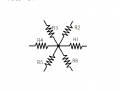
In practice, Star GND generally refers to a common earth termination point in a control panel, for example, where all grounded circuits end up terminating, this together with the service GND.Ok, this was just a problem of terminology for me then. There's no "star" in my background (math). What you're calling a star looks like a tree to me -- a tree of height 1.
If you are referring to ground layout for PCB's, it is called a "star" ground layout. It is a ground trace topology where all ground traces originate from one central point. Star grounding really isn't necessary with the proper use of "ground planes", but there are exceptions where separate ground planes are used but are interconnected at a central point. If you call this a "tree structure", no one will know what your referring to, as "star" is commonly used in the industry.I have long had a conviction that I want to check: "Signal grounds should always be build in a strict tree structure, because that makes ground loops impossible." Am I correct?
Initially the method was to only connect shielded cables at one end of the shield, one problem was that the open end shield acted as an antenna !A star topology, but also being careful that the 0V/Ground/Earth/Sheild/Screen is not connected twice to any separate subsystem. That is, if you are distributing subsystems and using shielded cables to connect them together, the shield should be bonded to the 0V point on the output side and not connected at the input.
I built many recording studios using the method I described. So long as the shield is well bonded to the output side device 0V point, and that device is well bonded to a good earth ground, there is no issue with RF induction. This also relies on good, low impedance shielding on the cables.Initially the method was to only connect shielded cables at one end of the shield, one problem was that the open end shield acted as an antenna !
With the later advent of instituting equi-potential bonding between separate areas of a system, where GND loops were eliminated, it was recommended and made possible to earth GND both ends of the shield of a shielded cable.
Most of my experience has been with industrial electronics, mainly machine control, CNC etc.I built many recording studios using the method I described. So long as the shield is well bonded to the output side device 0V point, and that device is well bonded to a good earth ground, there is no issue with RF induction. This also relies on good, low impedance shielding on the cables.
But, you are correct that if you can ensure and equipotential state for all devices, the open shield is redundant. Since we often had no control over the internal arrangement of the device shielding and connections, we couldn't be sure the ground connection of the jacks would be equipotential.
It all depends on what is important in the particular application. Ground loops are just one consideration. You also have crosstalk due to reference voltage rejection (also known as ground bounce) and controlling EMI by minimizing image current loops. To a significant degree, these are competing effects. You can combat reference rejection using a star configuration, but that is all but sure to really aggravate the EMI issues in high speed designs, which are best addressed by having a highly distributed grounding scheme (ground plane being ideal).I have long had a conviction that I want to check: "Signal grounds should always be build in a strict tree structure, because that makes ground loops impossible." Am I correct?