Glad I'm not a passenger

WBahn

Joined Mar 31, 2012
33,076
What's the modern record?
I think this is the new record for a warship, but I've only been able to confirm that for aircraft carriers. The prior one, for a carrier, was 206 days for the Eisenhower in 2020. But during CoVID, a number of ships went over 200 days. The longest I've been able to find is the USS Stout.

But in the non-warship category, the record is 1,152 days by Reid Stowe in 2007 to 2010 in what he called his Mars Ocean Odyssey. He was in a self-built 70-foor schooner.
 

nsaspook

Joined Aug 27, 2009
16,438

Logistics

1786906446988.png
1980, logistics were even worse back then. Once we left Singapore, we had no fresh food or ports until Mombasa and no western quality food resupply until Perth.
 
Last edited:

Thread Starter

cmartinez

Joined Jan 17, 2007
8,834
I'm no aircraft safety expert. But other than the "it could've been a much graver mistake due to not following the correct procedure" argument, this looks like much ado about nothing to me.

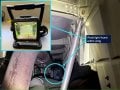
“They identified that two days earlier, a work light had been signed out against (the plane) and had not been returned,” the report said. The maintenance engineer who checked it out “could not confirm if the work light had been returned and raised the possibility that it remained in the aircraft wing.”
 

WBahn

Joined Mar 31, 2012
33,076
I'm no aircraft safety expert. But other than the "it could've been a much graver mistake due to not following the correct procedure" argument, this looks like much ado about nothing to me.

It is SERIOUS ado.

Numerous planes have crashed and many lives lost due to tools being left inside an aircraft. There are all kinds of things in most of those spaces (after all, the tool was being used for something in there) that tools can migrate to and break or jam.

This is why the Air Force went to consolidated tool kits (CTKs) back in the 1970s.

The 1977 TAC Attack (a maintenance publication for the Tactical Air Command) noted that, in 1976, TAC was destroying or seriously damaging one aircraft engine every four days, citing specifically that tool-induced FOD was a major culprit. Other impacts included jammed flight controls, dropped objects (would you want a wrench or other dense metal tool falling on you from 60,000 ft?), stuck throttles, lost canopies, and blown tires. It took many years to implement the CTK program and many more years to refine policies and procedures to ensure compliance. By the time I was working F-15s in the mid-80s, the policies were pretty strongly in place. Every tool used in the shop or flight line had to be engraved with the tool kit number and had to have a specific, place in the tool kit that was readily identifiable as to which tool was missing. This included every socket and every drill bit. The only exceptions were parts that were too small (the smallest tool bits) or tools that would be damaged by being engraved (not many of those). In that case, they had to be in a case (such as a drill bit index) that made it clear if any pieces were missing. Tool kits had to be signed out before a job (or at the start of a shift, in the case of shop-level maintenance) and signed in by a different person at the end of the job (or shift). Signing in and out required visual verification that every tool was accounted for. In tech school, we were told that this resulted in a 90% reduction in tool-related FOD incidents).

Another part of the policy was how incidents were handled, which varied from shop, to hangar, to flight line. The only incident I was directly involved in was in the hangar. I was working on a bird and when I was finished, I put the tools back in the box and was missing a pair of needle-nose pliers. I quickly looked around my work area, including in the jet's fuselage bay where I was working (which was cramped and I had to stand on tip-toe to barely reach my forearm for and aft in the space) and I didn't find it. At that point, I had to report it missing to the hangar supervisor. That started a clock. He now had something like five of ten minutes (I don't recall the exact time limits, but these are close) to help me find it, He called over a couple of other technicians and the four of use searched the area, including each of us searching the fuselage bay. When the time expired, the hangar doors were closed and everyone there started searching. I think we had 30 minutes to either find it or report it to Maintenance Supervision, at which point all ramp operations would come to a halt and all aircraft on the ramp would be unable to move. There were stages after that, but we didn't get to them. Just before we had to report up, I made one last effort to feel throughout the bay (this was probably the tenth or twelfth time it had been searched by numerous different people, maybe more) and as I was about to give up again, the tip of my finger touched the pliers and I was able to fish them out, much to everyone's relief. I fully expected to get raked over the coals for this, but not one word was ever said. I asked about that and was told that had I not reported it in a timely fashion, I would have faced serious consequences, probably including an Article 15 and perhaps some time spent in Corrective Custody (a.k.a., jail). But as long as people promptly report missing tools, there will be no disciplinary action taken as that would incentivize people to not report. I was involved in a few other tool searches, but only to that degree. As far as I know, every search I was involved with resulted in the tool being found. I also helped one of the civilians set up a new CTK for our shop -- and it took us several weeks to do it. We had to do the work in a space where no other people were allowed to enter while we had tools out until the tools were engraved and we had to inventory everything per the tool list each time we started and stopped until the cutouts were finished.
 

nsaspook

Joined Aug 27, 2009
16,438
Now that I hadn't considered ... I stand corrected ...
Now imagine the s**tstorm if a TS crypto card was lost or misplaced. At the end of the ZULU hour daily card change, every card was logged into the destruction log, placed in a secure burn bag and all used cards were burned in the site incinerator every week Knowingly falsifying the log entry was up to 20 years in prison and losing a card due to negligence was, well, very bad. Only had one misplaced used card while I was on watch, it was stuck to the back of a sticky clipboard on the desk where it was placed after being removed from the machine. We found it before the shift was over so it wasn't reported. :eek:

Things like this below in the past created a zero-tolerance for mistakes.

https://stationhypo.com/2025/12/21/...g-after-the-uss-pueblo-seizure-part-17-of-19/
CDR Bucher, too, came in for criticism. Although the captain had tried in Bremerton and Japan to obtain a rapid-destruction system, an NSA report faulted him for not following through and “ensuring that his men knew what to do in an emergency.”
...
The damage evaluators struggled to determine precisely what had fallen into communist hands because the sailors had failed to keep track of what they burned or tore apart. For example, no one was sure what had become of the “key cards” — IBM-style punch cards used to program code machines each day. NSA investigators established that of 36 key card booklets aboard, only two had been fully destroyed. The rest, they were forced to assume, had been compromised.

It was clear that the loss included all code cards for November and December 1967 — materials that should have been burned within weeks of use but hadn’t been. These were particularly valuable, because an enemy that had intercepted and recorded encrypted messages during those months could use the captured cards to decrypt them. While the North Koreans likely lacked the technical capacity to exploit two months of worldwide U.S. radio traffic, the Soviets did.
 

nsaspook

Joined Aug 27, 2009
16,438
Top