Glad I'm not a passenger

nsaspook

Joined Aug 27, 2009
16,359

Troops are people. I've flown in the old C5, It's not a luxury jet but it's safe, you have a seat, a lav and even a box lunch with a nice drink. :eek:
 
Last edited:

WBahn

Joined Mar 31, 2012
32,944
Whenever a plane "falls" out of the sky almost immediately after takeoff, my first two suspicions are either engine failure, if it's a twin (the other engine often takes you straight to the scene of the accident) or weight and balance (usually aft loaded). The latter could be either because of incorrect loading of the aircraft, or because something shifted in flight. My top contender in this case, based on almost nothing, so could very easily not even be close, would be something shifting aft during the climb. Two other possibilities would be a mechanical failure in the control system and another would be spatial disorientation of the pilot in the clouds.
 

nsaspook

Joined Aug 27, 2009
16,359
This guy really makes the point that @WBahn talked about that altimeter setting being critical. I'm still surprised that a PAT designated (training to fly in a defacto war environment) flight doesn't have real time, live radar based altimeter data to check the air pressure based readings with.. Very informative and IMO shows the ATC trusted the helo pilot to do the right thing threading that needle.
 

WBahn

Joined Mar 31, 2012
32,944
Again, a radar altimeter is giving you different information than is relevant here. Assigned altitudes and flight paths are not based on height above the ground, they are based on indicated altitude above mean sea level. If they had been using a radar altimeter, then as they moved inland from the Potomac, the terrain would have risen and they would have climbed if they had tried to maintain the same reading on their radar altimeter. The radar altimeter can only be used as a check on the barometric altimeter if they take into account the elevation of the terrain immediately below them at that moment.

Now, one thing that this guy got wrong is that he said that ADS-B and TCAS rely on the altimeter setting (in the Kollsman window) being correct. But this isn't the case. The Kollsman window merely adds an offset to the needles on the display of that instrument. The pressure altitude that is used by ADS-B and TCAS are taken from the instrument BEFORE the Kollsman adjustment, specifically to remove errors due to mismatched altimeter settings. All of the systems use a fixed reference datum, namely pressure altitude.
 

joeyd999

Joined Jun 6, 2011
6,338
I think at this point I'm more concerned about the 500 hours.

Was the environment appropriate for her level of experience? I'm hearing lots of different answers.
 

nsaspook

Joined Aug 27, 2009
16,359
I think at this point I'm more concerned about the 500 hours.

Was the environment appropriate for her level of experience? I'm hearing lots of different answers.
She needs to learn how to fly in that pressure cooker environment of possible attacks like 9/11. She had a well experienced warrant office instructor pilot at her side.
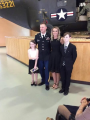
https://www.newsweek.com/who-andrew-loyd-eaves-pilot-believed-dead-black-hawk-crash-2024514
1738527230470.png1738527369333.png
I see mainly Navy ribbons on his chest.

His service awards include:

  • Army Commendation Medal x3,
  • Navy Commendation Medal
  • Army Achievement Medal
  • Navy Achievement Medal x3
  • Navy "E" Ribbon x2
  • Navy Good Conduct Medal x3
  • National Defense Service Medal
  • Global War on Terrorism Expeditionary Medal
  • Global War on Terrorism Service Medal
  • Armed Forces Service Medal
  • Military Outstanding Volunteer Service Medal
  • Army Service Ribbon
  • Navy & Marine Corps Overseas Service Ribbon
  • Army Aviator Badge

I don't want to point fingers before all the data is in but while the ultimate responsibility is the on the pilot, the trainer could/should have pulled the training mission if he didn't think she was qualified to fly close, by the seat of your ass, flight plans.
Training is dangerous and stuff happens.

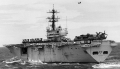
I've unfortunately seen (and because I worked in communications read the accident reports, one of crashes hit the steel upper deck on top of the radioshack and we rushed out on the catwalk to see injured people in the water just before the bird sunk into the sea) two deadly helo crashes during a two year stint on a helo carrier (USS Okinawa).
1738526889935.png

I was in mortal fear of death every instant I flew (I did repair missions from my ship to the fleet at various stations) on those damn flying death traps. The miracle to me is that horrible incidents like this one are so rare today.

RI.I.P. to all that died.
 

WBahn

Joined Mar 31, 2012
32,944
I think at this point I'm more concerned about the 500 hours.

Was the environment appropriate for her level of experience? I'm hearing lots of different answers.

I haven't heard whether the 500 hours was total time or time-in-type (i.e., in Blackhawks). In either case, it's not a lot of time, so calling her a highly experienced pilot is almost certainly not justified. For reference, you have to have 250 hours to get an FAA Commercial Pilot Certificate.

On the other hand, with about 65 hours pilot-in-command time, I flew out of the Air Force Academy as a private pilot, which has very demanding airspace with parachute, sailplane, towplane, and powered aircraft operations all going on simultaneously at a high-altitude airfield tucked up against the mountains with all the squirrelly weather that entails (More than once I've seen the windsocks on the opposite ends of the runway pointing in opposite directions) and, as a result, very strict local area procedures. Admittedly, the airfield is only open during the day, since it doesn't have lights. But I flew, at night, through Stapleton International's Class B airspace many times with even less time before I moved to the Springs. The first time I flew in the Class B, with an instructor, was when I had about 15 hours, hadn't yet soloed, and it was at night.

You can expect a big difference between a 250 hr pilot and a 500 hr pilot. Also, military flight training is more intense, with a lot more pre- and post-flight training and a lot more simulator time on top of actual flight time, than is typical in the civilian world.

I might be a bit more concerned about her evaluator on the flight only having 1000 hours. But, again, that concern is mostly based on my experience with the kind of hours that civilian flight instructors rack up before being considered for duties as a check pilot.
 

nsaspook

Joined Aug 27, 2009
16,359
https://www.usatoday.com/story/news...er-airplane-collision-dc-updates/78154023007/

National Transportation Safety Board investigators have determined the CRJ700 airplane was at 325 feet, plus or minus 25 feet, at the time of impact. The information was based on data recovered from the jet's flight data recorder that tracks the aircraft's movements, speed and other technical information.
...
The plane's altitude suggests the Army helicopter was flying above 200 feet − the maximum altitude for the route it was using. Yet the control tower's radar apparently showed the helicopter at 200 feet at the time of the accident, though that information has not been confirmed, Banning said.
 

nsaspook

Joined Aug 27, 2009
16,359
Again, a radar altimeter is giving you different information than is relevant here. Assigned altitudes and flight paths are not based on height above the ground, they are based on indicated altitude above mean sea level. If they had been using a radar altimeter, then as they moved inland from the Potomac, the terrain would have risen and they would have climbed if they had tried to maintain the same reading on their radar altimeter. The radar altimeter can only be used as a check on the barometric altimeter if they take into account the elevation of the terrain immediately below them at that moment.
...
I agree completely with your previous explanation (and this one) of why the radar altimeter is not the relevant datum. As the NTSB explains, there is a discrepancy of altitude from control tower radar and the planes data. How to you reconcile that into which one is correct or are they both likely correct but are different datums that don't directly compare without terrain offsets? I would think (likely wrong) that the offset to match the barometric altimeter be in the towers radar read back as it's a fixed site, at a known offset.

On the helo, with today's technology, having real time terrain offsets while flying should be possible using computer route mapping with a IMU as a sanity check during critical flight paths.
 
Last edited:

WBahn

Joined Mar 31, 2012
32,944
I agree completely with your previous explanation (and this one) of why the radar altimeter is not the relevant datum. As the NTSB explains, there is a discrepancy of altitude from control tower radar and the planes data. How to you reconcile that into which one is correct or are they both likely correct but are different datums that don't directly compare without terrain offsets? I would think (likely wrong) that the offset to match the barometric altimeter be in the towers radar read back as it's a fixed site, at a known offset.

On the helo, with today's technology, having real time terrain offsets while flying should be possible using computer route mapping with a IMU as a sanity check during critical flight paths.
Again, terrain offsets have NOTHING to do with ANYTHING (beyond influencing what the established min/max allowed altitudes, per a barometric altimeter, are).

I don't know about currently, but historically it has been rare for a control tower to have radar that was capable of giving sufficiently reliable altitude information off of a primary return to be useable for aircraft separation. They rely primarily on the aircraft's transponder to report pressure altitude. They may or may not make adjustments for barometric pressure and temperature effects (and, if they do, they would apply it to all aircraft so that altitudes are applies to apples).

One thing to keep in mind (and something that the investigators are going to be very aware of as they determine strike angles) is that the CRJ is about 25 ft tall and a Blackhawk is about 16 ft tall. So what does it mean for them to be at the same altitude in terms of a collision? In addition, transponders are only required to report pressure altitude to a resolution of 100 ft. Furthermore, barometric altimeters, when tested, must agree within ±20' of a reference altimeter when both are set to 29.92" Hg and the data from a transponder only has to agree with the altimeter, when set to 29.92" Hg, to with ±125'.

I don't expect to see any major change to the helicopter routes as a result of this accident. But I would expect to see changes in procedures for those routes that will ensure further separation, primarily in terms of separation in time. They might move the helicopter route inland to the east to go around DCA, but those low-altitude routes are placed over the river for a reason -- a couple of them. Flying that low, you don't want things like buildings and towers scattered along the route. Worrying about a few bridges is more than enough excitement. Furthermore, following a river gives a much higher adherence to tracking the designated route accurately, day or night. So I'm not expecting the route to change -- but there are political/emotional factors at play, so that can override other factors. One possibility is to require ATC to assign speeds to helicopters to deconflict them in time under the assumption that they are at the same altitude, despite procedures designed to separate them vertically. But, keep in mind, that that was already the case here -- I've seen nothing that would indicate that the routes were intended to allow helicopters to fly under landing jets directly above them, and the fact that ATC directed the helo to pass behind the CRJ is evidence of this. Providing better separation may be as simple as not authorizing visual separation, especially at night, along the critical portions of that route. This might require ATC to increase separation between aircraft following one another in and out of DCA, at least when helo activity is happening nearby on the route. But doing things like this are pretty routine for ATC as they sequence planes coming in from various directions at various speeds into a landing queue.
 

nsaspook

Joined Aug 27, 2009
16,359
Again, terrain offsets have NOTHING to do with ANYTHING (beyond influencing what the established min/max allowed altitudes, per a barometric altimeter, are).
Exactly, that what I'm trying (poorly) to saying with your feedback. There needs to be IMO some real-time system of established min/max allowed altitudes, per a barometric altimeter, not just what seems to be a static one. Is this present system really the best we can do with today's technology, when we can chopstick big booster rockets? I hope not because the lack of accuracy and high uncertainty at low altitudes means that human factors adjustments can be deadly. I also don't think routes were intended to allow helicopters to fly under landing jets directly above them but because stuff happens, it's an added safety factor if they stay below some altitude.
 
Last edited:

WBahn

Joined Mar 31, 2012
32,944
Exactly, that what I'm trying (poorly) to saying with your feedback. There needs to be IMO some real-time system of established min/max allowed altitudes, per a barometric altimeter, not just what seems to be a static one. Is this present system really the best we can do with today's technology, when we can chopstick big booster rockets? I hope not because the lack of accuracy and high uncertainty at low altitudes means that human factors adjustments can be deadly. I also don't think routes were intended to allow helicopters to fly under landing jets directly above them but because stuff happens, it's an added safety factor if they stay below some altitude.
The established altitudes are per a barometric altimeter.

There's no better way, that I'm aware of, to provide as good a common altitude determination over a wide area as a barometric altimeter, especially such that a commercial airliner, a jet fighter, a news helicopter, and a decades old private puddle jumper can all afford and have a high degree of confidence that they all agree to their altitudes, relative to each other, within less than fifty feet from min to max. Aside from barometric pressure, the only other measurement available, affordably and widely, to aircraft is GPS. But GPS is designed primarily for lateral positioning and trades off vertical positioning performance to achieve it. I used to watch my GPS's indication of the altitude of my driveway when I lived on the mountain and it varied by a couple hundred feet, min to max, over time.

The issue in this case isn't low-altitude flying, it's aircraft separation. These are very, very different issues. Aircraft separation applies whether they are 100' above the ground or 10,000' above the ground. Actual distance above the ground is immaterial from an aircraft separation standpoint -- what is critical is that everyone use the same reference. This is where precision matters far, far more than accuracy. Low-altitude flying, on the other hand, isn't about keeping two planes from bumping into each other, it's about avoiding CFIT (controlled flight into terrain) and is where accuracy is paramount over precision.
 

nsaspook

Joined Aug 27, 2009
16,359
Point taken but as a non-pilot and a ordinary member of the flying public, it doesn't IMO instill confidence in the current system when the NTSB says there is a discrepancy in recorded positional data from the accident. I'm sure they will figure out the truth but IMO they shouldn't need to reconcile basic facts like that, days later waiting for data from the helo recorder to confirm one or the other or neither.

https://www.nbcwashington.com/news/...-aircrafts-altitude-during-dca-crash/3833336/
Conflicting initial data raises questions on aircrafts' altitude during DCA crash
Data from the jet’s flight recorder showed its altitude as 325 feet, plus or minus 25 feet, when the crash occurred, NTSB officials told reporters. Data in the control tower, though, showed the Black Hawk helicopter at 200 feet
 

WBahn

Joined Mar 31, 2012
32,944
If the CRJ was on a normal decent down the glideslope, which is 3°, at 150 kts (which I recall reading early on was its speed based on FlightWatch-like data) would be a vertical speed of about 13 ft/s.

It be nice to know what the ATC displays were showing for the CRJ's altitude at the same time that it was showing the Blackhawk's altitude.

But what most of this is showing is why the NTSB has historically refused to release hardly any information until it was confirmed as much as it was going to be. But today, they are between a rock and a hard place because so much partial information is available immediately that the news and blogs run with stories based on that partial information and then operate in an echo chamber. So the NTSB tries to dampen some of it by releasing partial information and "set the record straight" and to appear to be forthcoming, and it results in the news and the blocks running stories based on an assumption that the partial information is gospel, and/or trying to make a big deal about the fact that the information released wasn't final and set in stone.

This is why the NTSB used to be extremely tight-lipped until their preliminary report came out, which is normally about thirty days after the event.
 

nsaspook

Joined Aug 27, 2009
16,359
If the CRJ was on a normal decent down the glideslope, which is 3°, at 150 kts (which I recall reading early on was its speed based on FlightWatch-like data) would be a vertical speed of about 13 ft/s.

It be nice to know what the ATC displays were showing for the CRJ's altitude at the same time that it was showing the Blackhawk's altitude.

But what most of this is showing is why the NTSB has historically refused to release hardly any information until it was confirmed as much as it was going to be. But today, they are between a rock and a hard place because so much partial information is available immediately that the news and blogs run with stories based on that partial information and then operate in an echo chamber. So the NTSB tries to dampen some of it by releasing partial information and "set the record straight" and to appear to be forthcoming, and it results in the news and the blocks running stories based on an assumption that the partial information is gospel, and/or trying to make a big deal about the fact that the information released wasn't final and set in stone.

This is why the NTSB used to be extremely tight-lipped until their preliminary report came out, which is normally about thirty days after the event.
Those days are gone forever.

The NTSB must operate in today's reality where navigation system information is public domain, officials in charge operate in a much more open (good, bad and ugly) media and direct information is easily accessible (FlightWatch and others) without the advanced or specialized equipment of the past. It's better to have heard it and asked questions about it from a first hand official source than some internet blog.
 

joeyd999

Joined Jun 6, 2011
6,338
Those days are gone forever.

The NTSB must operate in today's reality where navigation system information is public domain, officials in charge operate in a much more open (good, bad and ugly) media and direct information is easily accessible (FlightWatch and others) without the advanced or specialized equipment of the past. It's better to have heard it and asked questions about it from a first hand official source than some internet blog.
I'm enjoying this new crowdsourcing of information. X is spectacular at this.

It helps me to exercise my critical thinking skills -- as opposed to "experts" telling me what I'm supposed to think. I wish others would see it as that.
 
Top