Glad I'm not a passenger

Thread Starter

cmartinez

Joined Jan 17, 2007
8,783
I admire and respect honest people that believe that admitting one's mistakes is a sign of strength. Unlike the unreasonable ones that believe it is a weakness:


“I made a mistake.” 4 words of ownership that if we incorporated at work, home and even play, humans might be able to get along better.

Captain Kohei Asoh, who crashed into San Francisco Bay, response changed leadership forever.

He was an experienced pilot with thousands of flight hours when he approached San Francisco International Airport on November 22, 1968. But something went terribly wrong. The DC-8 jet touched down not on the runway, but in the shallow waters of the bay, 2.5 miles short of its destination. The aircraft came to rest in just 30 feet of water. Emergency crews rushed to the scene, but miraculously, all 96 passengers and 11 crew members escaped without serious injury.

During the National Transportation Safety Board investigation, officials expected the typical response from pilots involved in accidents. Technical explanations, mitigating circumstances, equipment malfunctions. Instead, when asked what happened, Asoh delivered one of the most disarmingly honest statements in aviation history. He simply said he had made a mistake, using language so blunt it left investigators stunned. No excuses. No deflection. Just complete accountability.

His response became legendary in aviation circles and beyond. The term "Asoh defense" entered business school curricula and corporate training programs as an example of how owning mistakes completely and immediately can actually enhance credibility rather than destroy it. Leadership experts still cite this moment as proof that radical honesty, even when it reveals personal failure, commands more respect than elaborate justifications.


1769615011505.png
 

sagor

Joined Mar 10, 2019
1,049

Futurist

Joined Apr 8, 2025
789
Article says “allegedly died in October” ? Either he died or didn’t…. Easy to prove he died, the reason why is the thing that is “allegedly”.
I read it as:

Samuel Tremblett, 20, allegedly [died in October in Easton, Massachusetts, after crashing his car and becoming trapped inside as it burst into flames].
So the allegation is he died AFTER (crashing AND becoming trapped in a fire).
 

WBahn

Joined Mar 31, 2012
32,925

{QUOTE}
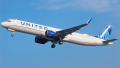
The passenger was headed from Los Angeles to Managua, Nicaragua, with a layover in Houston — but ended up in Tokyo, according to multiple reports.
I would love to get more details of the mechanics of this happening. I know different airports have different gate layouts and that I've only seen some of the possibilities, but it has been decades since I've boarded a flight in which my boarding pass wasn't scanned at the gate immediately before going onto the jetway -- and the scanning isn't pro-forma, either. A couple of times I scanned the wrong boarding pass (the pass for a later leg) and it sounds an alarm to get the gate agent's attention and I had to produce the correct pass.

Then, once on the plane, what is the likelihood that the seat you think is yours isn't reserved by someone on that flight? I know some budget airlines don't have reserved seating, but I don't think United (or it's subsidiaries) is one of them.

Then, in addition to all of the announcements and signs in the airport about what the flight is and where it is going, what's one of the first things that the aircrew says? Something like, "Welcome aboard United Flight 1234 with non-stop service to Tokyo."

Personally, unless it can be shown that the airline is at fault, I don't think they should have had to do a thing for him. Maybe next time he'll decide it might be worth his time to pay attention to which plane he's getting on. But, I realize that the airline is in a situation in which they will get nothing but bad press if they don't bend over backwards to accommodate him and "make it right."
 
Top