Glad I'm not a passenger

WBahn

Joined Mar 31, 2012
32,929

The car seems to have turned into the bike. BZ.
I wonder if the car was simply trying to pull off to give way to the emergency vehicles behind him and didn't expect some jerk on a motorcycle to try to pass him on the shoulder.

Rest In Peace Deputy Nunez
I see in this video they said that the car was driven by an off-duty officer that "intervened". If so, good for him (but should have whacked him harder and then backed over him a few times).

To bad things like the following almost never get any coverage.


Thread Starter

cmartinez

Joined Jan 17, 2007
8,786


August 17, 1943. Technical Sergeant James McKenna, an aircraft mechanic with the Fifth Air Force at Dobodura airfield, New Guinea, watched another pilot prepare for a mission against Japanese Zeros. The P-38 Lightning was fast and powerful. But it couldn't turn with a Zero. The control cables had slack. A three-eighths inch delay between stick movement and aircraft response. That tiny delay was killing pilots. Every training manual said the cable tension was within specifications. Engineering officers called it acceptable tolerance.

They were all wrong.

What McKenna discovered that August morning wasn't about following regulations. It was about physics and leverage in a way that contradicted everything the Army approved. He bent a six-inch piece of piano wire into a Z-shape and installed it as a cable tensioner without authorization. Lieutenant Hayes flew the modified aircraft that morning and destroyed three Zeros in seven minutes. By September, forty P-38s had the modification spreading mechanic to mechanic across the Pacific. And pilots survived. This technique spread unofficially through fighter squadrons crew chief to crew chief, improving kill ratios from two-to-one against Americans to nearly even before Lockheed integrated it into the P-38J model. The principles discovered at Dobodura continued to influence aircraft control systems through the Vietnam War.
 

Thread Starter

cmartinez

Joined Jan 17, 2007
8,786
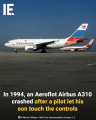
In March 1994, Aeroflot Flight 593 crashed in Siberia after the relief captain allowed his children into the cockpit. When his 15-year-old son accidentally disconnected the autopilot, the Airbus A310 rolled into an unrecoverable descent, killing all 75 people aboard. The tragedy exposed severe lapses in cockpit discipline and reshaped global aviation safety standards.

1762023027191.png
 

Reloadron

Joined Jan 15, 2015
7,892
In March 1994, Aeroflot Flight 593 crashed in Siberia after the relief captain allowed his children into the cockpit. When his 15-year-old son accidentally disconnected the autopilot, the Airbus A310 rolled into an unrecoverable descent, killing all 75 people aboard. The tragedy exposed severe lapses in cockpit discipline and reshaped global aviation safety standards.

Saw that one on Air Disasters. :)

Ron
 

WBahn

Joined Mar 31, 2012
32,929
In March 1994, Aeroflot Flight 593 crashed in Siberia after the relief captain allowed his children into the cockpit. When his 15-year-old son accidentally disconnected the autopilot, the Airbus A310 rolled into an unrecoverable descent, killing all 75 people aboard. The tragedy exposed severe lapses in cockpit discipline and reshaped global aviation safety standards.

When I was a small boy, it wasn't particularly uncommon for airline captains to invite kids up to the cockpit and some would let you sit in the captain's or copilot's seat and, sometimes, actually do something (there usually wasn't anything to do, but they sometimes made something up like tuning a radio or adjusting the thrust to change the airspeed slightly or making a small heading change. The other seat was always occupied by the one of the pilots who kept an eagle on everything. In and of itself, it's not a dangerous situation at all. It was up to the airline and the specific pilot-in-command as to whether to allow it. I don't recall when this became prohibited across the board. On this particular flight, it was already against airline regulations to permit hit kids to even sit in the pilot's seat, let alone touch any controls. But the problem on that flight wasn't what the son did, it's what the aircrew failed to do afterward, namely fly the aircraft. They failed to monitor what the aircraft was doing in time to recognize that it was starting to deviate from it's planned flight path. In fact, it was the 15-year old son that first recognized that something was wrong -- talk about an aircrew failing to maintain situational awareness! They then were confused by the predicted route display on a screen and dawdled for nine seconds, doing nothing, while the aircraft continued to increase its bank angle beyond 45° and almost to 90°. Nine seconds is an eternity in a situation like that. The three-ates of aviation are aviate, navigate, communicate -- in that order. They were so focused on the navigation component that they utterly failed to aviate first and foremost. After they finally started to try to fly the plane, they actually managed to recover the aircraft three separate times, but the first two were overcorrected due to poor airmanship skills (which a stressful situation only makes worse) and the third time was simply at too low an altitude to arrest the descent before impact.
 
Top