Getting Started For a Physicists

Thread Starter

LostPhysicist

Joined Oct 15, 2018
2
Hey everyone!

Lately I've been really interested in Electronics. I want to have it as a hobby; study it and build practical things, but I don't even know where to get started.

I'm just finishing my degree in Physics and Mathematics, so I do have an understanding of the theory behind things and know some basic circuits. However, I don't even know how to physically build an actual circuit!
I'd love it if you could guide me to resources you think would fit me. I want to do practical things myself and watch them actually work, not just know the theory behind it.

Please, if you can, guide me to some online (preferably free) resources that will teach me electronics.

I should mention that I also have some background in programming, which will probably come in handy.

I'm sorry for any English mistakes I may have had here. I'm not a native speaker.

Thanks alot for your help! Have a nice day :)
 

dl324

Joined Mar 30, 2015
18,326
Welcome to AAC!

When it comes to electronics, there's nothing particularly special about a physics or math degree. You still need to learn how design circuits. This site has some educational material, but with your background, I'd be inclined to just jump in and learn what you need to know for a particular project and not get bogged down with theory. Don't get me wrong, knowing theory won't hurt you because it will make things easier to understand.

Programming might give you a bit of logical thinking, but it's not a necessity until you want to start using microcontrollers to control things. That combines electronics and programming skills.
 

BR-549

Joined Sep 22, 2013
4,931
You will need an area. Equipment. Tools. Stock of misc. supplies and components. Do you want to cover everything in general first or specialized right away?
 

MrChips

Joined Oct 2, 2009
34,810
You have a headstart ahead of others. Electronics ought to come naturally for you. Why do I say this?
Because electronics is a branch of physics, and math is the language of physics. Being comfortable with math is an asset in electronics.

There are two approaches you can take. You can order a beginners electronics kit that comes with hundreds of the most common electronic components used by hobbyists. Some will come with projects to help you get started.

The other approach is project driven. For some people, learning is more effective and enjoyable at the same time when you have a real goal to work towards. The trick is to find a personal project that is both meaningful and yet simple so that you can bring it to fruition. Here are some examples of simple projects:

1) 5V 1A regulated power supply
2) Straight forward HH:MM:SS digital clock
3) Metal detector

Find a project that is useful, interesting to you, and simple.
 

Thread Starter

LostPhysicist

Joined Oct 15, 2018
2
Welcome to AAC!

When it comes to electronics, there's nothing particularly special about a physics or math degree. You still need to learn how design circuits. This site has some educational material, but with your background, I'd be inclined to just jump in and learn what you need to know for a particular project and not get bogged down with theory. Don't get me wrong, knowing theory won't hurt you because it will make things easier to understand.

Programming might give you a bit of logical thinking, but it's not a necessity until you want to start using microcontrollers to control things. That combines electronics and programming skills.
Thanks for your reply!
Do you have any projects to recommend to me?
I think I'm better of purchasing a kit with many parts and a breadboard(s). I want to start by building simple circuits before I move on to larger projects. Do you have any recommended kits that contain all the essentials?
When looking for kits, I found there are many different ones - some containing just parts, others motors, sensors and arduinos.

Thanks again!

You will need an area. Equipment. Tools. Stock of misc. supplies and components. Do you want to cover everything in general first or specialized right away?
I think I want to cover everything in general first. From my understanding I can buy kits that contain all the essential parts. Do you have any recommendations?
Thanks!

Blink a LED using a bistable built with transistors. That surely will spark ideas.
Honestly, I've never even seen a transistor. I think I'm better of starting with simple projects before moving on to big stuff.

You have a headstart ahead of others. Electronics ought to come naturally for you. Why do I say this?
Because electronics is a branch of physics, and math is the language of physics. Being comfortable with math is an asset in electronics.

There are two approaches you can take. You can order a beginners electronics kit that comes with hundreds of the most common electronic components used by hobbyists. Some will come with projects to help you get started.

The other approach is project driven. For some people, learning is more effective and enjoyable at the same time when you have a real goal to work towards. The trick is to find a personal project that is both meaningful and yet simple so that you can bring it to fruition. Here are some examples of simple projects:

1) 5V 1A regulated power supply
2) Straight forward HH:MM:SS digital clock
3) Metal detector

Find a project that is useful, interesting to you, and simple.
Thanks! I really appreciate your help.
I feel like a kit would fit me more. I've been googling some of the projects you wrote, and I found online tutorials, but they seem really advanced and I think I should get started with the basics first - start by building some simple circuits before moving on to the bigger stuff. I do appreciate your suggestions though, they sound really interesting and I'll try them after I get comfortable with the basics!
Besides - many kits I've seen have already some form of guide book with projects in it that will help me get started.
Do you have any particular recommendations? There are so many and I don't really know what's best.
Thanks again!
 

dl324

Joined Mar 30, 2015
18,326
Do you have any projects to recommend to me?
If you don't already have a power supply, that would be my recommendation for a first project. Build it from scratch. Buy a transformer, rectifier (either bridge or diodes), caps, voltage regulator, and some misc parts (resistors, potentiometer, LEDs, power cord, enclosure). You could add a digital voltmeter (that could also display current).

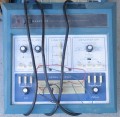
Voltage and current capability will depend on the types of projects you want to work on. If you're not interested in TTL, you might not need much current. I use an experimenter that has a solderless breadboard, two variable supplies, a clock generator, a couple pots, and AC. The power supplies aren't well regulated and current limit at 150mA, but it's sufficient for testing circuit ideas.
upload_2018-10-16_9-12-6.png
This is a picture I found on the web. I have a couple and mine are cleaner:rolleyes:
I think I'm better of purchasing a kit with many parts and a breadboard(s). I want to start by building simple circuits before I move on to larger projects. Do you have any recommended kits that contain all the essentials?
When looking for kits, I found there are many different ones - some containing just parts, others motors, sensors and arduinos.
Pick something that interests you so you have more incentive to complete the project when you run in to obstacles.
 

Doros

Joined Dec 17, 2013
144
Hello Lost Physicist,

In parallel of the simple project you will undertake, follow the educational part of this site from the beginning. i.e. Vol I, Vol II etc.

It will help you to have a sferical knowledge of electronics and not bits and bytes here and there. As a physisict you will move real fast.

The problem with someone who wants to study electronics on his own, is that he is at risk to get lost in this huge educational subject.

And do not get dissapointed
 

BR-549

Joined Sep 22, 2013
4,931
I would recommend that you order this book from amazon.

https://www.amazon.com/Electronic-C...onic+communacation+,aps,251&sr=8-1&ref=sr_1_1

I recommend it because in college we used the second edition and there were no mistakes in it. And it is very clear and straight forward. You can build all the circuits.....but concentrate on the fundamental circuits. Build, measure and sweep all your circuits.

For some reason sweeping a circuit/component seems to be rare now. Hardly ever here of it. But it's not only explanatory and diagnostic.....it's confirmation of circuit design.

Sweeping a circuit allows you to see the calculus of the circuit. You can sweep the amplitude, phase and frequency. Even duty cycle.

Once you learn your equipment and circuit response.......you can display and measure, and study the entire circuit dynamic. And adjust that dynamic in real time.....tune.

You will have to search google and youtube for "sweeping receiver/circuits with scope" for explanation and examples. Most will example rf....but all circuits can be swept.

Sweeping should be a BIG part of electronic instruction and construction. Want to know how that filter/amp is preforming?.......sweep it. Want to see/check for self resonance/parasitics?.....sweep it.

I would recommend this to all. Especially with the new scopes with FFT. And of course with the digital generators. Amazing inexpensive test gear now.
 

ArakelTheDragon

Joined Nov 18, 2016
1,366
I think you watch the "Big Bang Theory" too much. Physicist do not really have much to do with electronics. They mostly develop formulas.
If you want to be an engineer, that does not mean programming like in the "Big Bang Theory", it can be a lot of fields. And then you have to pick which field do you want.

The specialty(University specialty) may LOOK like something, but its not a guarantee that it is that something.
 

bertus

Joined Apr 5, 2008
22,923
Hello,

There are some series of books on the internet about electronics:

The US Navy Electricity and Electronics Training is already known and posted by @JoeJester in his signature:
https://the-eye.eu/public/murdercub...US_Navy_Electricity_and_Electronics_Training/
There is also the US Navy Electronics Technician series:
https://the-eye.eu/public/murdercube.com/Electronics/Electronics/US Navy Electronics Technician/
And the US Navy Information Systems Tech Training:
https://the-eye.eu/public/murdercub...cs/US_Navy_Information_Systems_Tech_Training/

Also the eBook on this site can also be downloaded.
Most of the eBook is written by Tony R. Kuphaldt.
There are also sections added written by members if the AAC forum.
Each volume has its own PDF on this site.
In the left colum you will see PDF version given.
Here are all PDF's in links:
https://www.allaboutcircuits.com/assets/pdf/direct-current.pdf
https://www.allaboutcircuits.com/assets/pdf/alternating-current.pdf
https://www.allaboutcircuits.com/assets/pdf/semiconductors.pdf
https://www.allaboutcircuits.com/assets/pdf/digital.pdf
https://www.allaboutcircuits.com/assets/pdf/reference.pdf
https://www.allaboutcircuits.com/assets/pdf/experiments.pdf

They also can be found at the ibiblio site:
http://www.ibiblio.org/kuphaldt/electricCircuits/

Tony also has written an other book wich is available here:
http://www.ibiblio.org/kuphaldt/socratic/sinst/

Bertus
 
Top