function of capacitor in inverter circuit of an HP L1910 monitor

Thread Starter

jason peace

Joined Jun 13, 2019
1
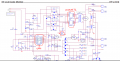
hey so im completely new to electronics. i just started troubleshooting some hp L1910 monitors.the problem i"ve encountered in many is that the screens comes on but after a few seconds in goes dark and stays dark, but u can still see what's in the background a little bit. now after opening up the monitor i"ve found the cause and it was bad capacitor now not all of them had that bulge on top. but also after replacing the one that i couldnt see directly if it was bad. the problem was fixed. the capacitor was an 1000uf/25v. in the circuit below u can see i identified it. the two chips cirkeld mosfets are N & P-Channel 30-V (D-S) MOSFET and IC801 is an OZ9938 it's a high performance, cost-effective CCFL (Cold Cathode Fluorescent Lamp) controller designed for driving large-size Liquid Crystal Display (LCD) applications requiring 2 to 6 CCFLs. The controller converts unregulated DC voltages into a nearly sinusoidal lamp voltage and current waveforms. the capacitor is connected between these two so that must mean these two chips are essential thus maybe explaining how important the capacitor must be seeing it causes the problem my question now is why is it that this particular capacitor is causing the problem? what is the function of it in this circuit cause capacitor have a lot functions depending on circuit right?
and how does it going bad effect the circuit?Inverter.PNG
 

Berzerker

Joined Jul 29, 2018
624
jason peace said:
hey so im completely new to electronics.
That don't sound like "new to electronics"
Tooo many give aways..... you can read Diagrams/Schematics, you know components and you've already figured out the problem ???
Then your question is "why"?
Brzrkr
 

sean96

Joined Nov 5, 2018
25
That don't sound like "new to electronics"
Tooo many give aways..... you can read Diagrams/Schematics, you know components and you've already figured out the problem ???
Then your question is "why"?
Brzrkr
by new i mean i have basic knowledge of electronic concepts and components. i only figured it out caused i googled and tried varies advices.but know i want to get to the root of the problem and right know i dont have the knowledge to figure it out. and i know the components just cuz i googled the codes used in the circuit
 

narkeleptk

Joined Mar 11, 2019
586
maybe stepping up the voltage on the cap will help.
It could also just be age and low performance from that type of cap they used.

Have you read the datasheet for the IC's in question? They my give you the information your seeking.
 

sean96

Joined Nov 5, 2018
25
maybe stepping up the voltage on the cap will help.
It could also just be age and low performance from that type of cap they used.

Have you read the datasheet for the IC's in question? They my give you the information your seeking.
i didnt thoroughly read the datasheets but i since you mentioned it, i will.
 

Berzerker

Joined Jul 29, 2018
624
Not saying anything bad about you sean96 but I'm really new to electronics. Less than a year at it and I'm 58. I joined because I'm wanting to learn and most guys and girls here don't realize I read post after post, Don't mean I understand the answers but I read on! I still look up things I don't get everyday like "heat gun soldering" didn't know there was such a thing till I read it in a post! I have bad eye site and been trying to practice on my soldering but keep messing up... "BIG GLOBS". Don't want that on my first PCB! But I did read your post and am trying to see all the answers.
Brzrkr
 

narkeleptk

Joined Mar 11, 2019
586
big globs means you need more flux and/or better iron tip care for better heat transfer.
Best practice for iron tip, wipe tip every-time before you use it on a joint, after you use it on a joint and then to wet it when you park it in holder.
 

Berzerker

Joined Jul 29, 2018
624
@narkeleptk
big globs means you need more flux and/or better iron tip care for better heat transfer.
Best practice for iron tip, wipe tip every-time before you use it on a joint, after you use it on a joint and then to wet it when you park it in holder.
Don't want to derail @sean96 thread. But thanks for the info! I will try it next time I practice. using standard solder.
Brzrkr
 
Top