Facebook
 Google
 GitHub
 Linkedin
Hello,
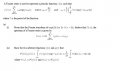
Ive been staring at this maths problem for a LONG time now and having difficulties with the following question. Im going to attach the original question just in case I have missed anything important out.*note* I am referring to question a ii, the previous question has been solved and included just in case it helps for this one (not that I think it does...).
I have my teachers solution so im trying to piece a few things together. What i am trying to get my head around is how;
∫g(t)exp(jΩt) exp(-jwt)dt = G(ω-Ω) (The limits are ∞ and -∞ for the integral)
If i can understand this, then I will be able to understand the problem! Thanks
Ive been staring at this maths problem for a LONG time now and having difficulties with the following question. Im going to attach the original question just in case I have missed anything important out.*note* I am referring to question a ii, the previous question has been solved and included just in case it helps for this one (not that I think it does...).
I have my teachers solution so im trying to piece a few things together. What i am trying to get my head around is how;
∫g(t)exp(jΩt) exp(-jwt)dt = G(ω-Ω) (The limits are ∞ and -∞ for the integral)
If i can understand this, then I will be able to understand the problem! Thanks
Attachments
-
 42.4 KB Views: 28