First filter capacitor change

Thread Starter

Skylar Coy

Joined Apr 29, 2017
133
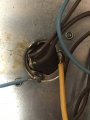
So I have an amplifier that I have been doing work on I have replaced the output transformer and fix a few burnt regular capacitors. But considering this amplifier is from 75 I would like to replace the power filter capacitors anyway. I know how to drain them and I know proper safety procedures inside the amplifier I just do not understand the principles of changing Filter capacitors. The one second in the amp are 40/500 and I found some exactly the same, http://www.thetubestore.com/Capacit...-Series/Atom-Electrolytic-Capacitor-40uF-500V , however the current ones in the amplifier have 4 terminals, mind you they are the large aluminum type of capacitors. The ones I can't find only have two connections. How does that work replacing them? Here Are some pictures. image.jpg
 

ian field

Joined Oct 27, 2012
6,536
So I have an amplifier that I have been doing work on I have replaced the output transformer and fix a few burnt regular capacitors. But considering this amplifier is from 75 I would like to replace the power filter capacitors anyway. I know how to drain them and I know proper safety procedures inside the amplifier I just do not understand the principles of changing Filter capacitors. The one second in the amp are 40/500 and I found some exactly the same, http://www.thetubestore.com/Capacit...-Series/Atom-Electrolytic-Capacitor-40uF-500V , however the current ones in the amplifier have 4 terminals, mind you they are the large aluminum type of capacitors. The ones I can't find only have two connections. How does that work replacing them? Here Are some pictures. View attachment 126213
Multiple capacitors in a single can were very common - usually a common ground lug and probably as many as 3 + lugs.

40uF sounds like the filter on a valve amp, don't use anything bigger - it'll strip the cathode in the rectifier.
 

Thread Starter

Skylar Coy

Joined Apr 29, 2017
133
Multiple capacitors in a single can were very common - usually a common ground lug and probably as many as 3 + lugs.

40uF sounds like the filter on a valve amp, don't use anything bigger - it'll strip the cathode in the rectifier.
On the schematic it says 40/500 so how do I know which terminal is which
 

Thread Starter

Skylar Coy

Joined Apr 29, 2017
133
Multiple capacitors in a single can were very common - usually a common ground lug and probably as many as 3 + lugs.

40uF sounds like the filter on a valve amp, don't use anything bigger - it'll strip the cathode in the rectifier.
Not all have something connected to them
 

ian field

Joined Oct 27, 2012
6,536
On the schematic it says 40/500 so how do I know which terminal is which
The most common was a colour code with the key printed on the side of the can.

Could be a multi cap with only one element used, or a single element capacitor with more tags than it actually needs - sometimes they volunteered a few extra solder points to help production.

If there's only one value on the schematic and printed on the can, then that's probably all there is. You could check the other tags with a continuity tester - if a capacitor is present, it should draw charging current long enough to give an indication. The ground/common tag is usually black or occasionally no paint. Sometimes they use symbols like squares, circles and triangles.

For the reasons already stated; you don't want to use larger capacitance - a modern capacitor of the right specification will probably be physically smaller - you could consider preserving originality by gutting the old capacitor can and hiding the new component inside it.
 

Thread Starter

Skylar Coy

Joined Apr 29, 2017
133
The most common was a colour code with the key printed on the side of the can.

Could be a multi cap with only one element used, or a single element capacitor with more tags than it actually needs - sometimes they volunteered a few extra solder points to help production.

If there's only one value on the schematic and printed on the can, then that's probably all there is. You could check the other tags with a continuity tester - if a capacitor is present, it should draw charging current long enough to give an indication. The ground/common tag is usually black or occasionally no paint. Sometimes they use symbols like squares, circles and triangles.

For the reasons already stated; you don't want to use larger capacitance - a modern capacitor of the right specification will probably be physically smaller - you could consider preserving originality by gutting the old capacitor can and hiding the new component inside it.
So I found the two cyliners with that rating labeled on them. One cap only has 1 terminal of the 4 being used? While the other has 3
 

Ylli

Joined Nov 13, 2015
1,092
The picture in the first post shows a single section chassis mounted electrolytic capacitor. The three pin in a circle are all connected to the can and are the negative (-) connection for the capacitor. There are three of them because they double as mounting tabs. The single connection closer to the center with the two brown wires is the positive (+) terminal of the capacitor.

If there is room under the chassis, I would simply leave the old electrolytic in place, and install the axial leaded part under the chassis. Negative lead of the new part to one of the ground lugs. Remove the brown wires from the center pin of the old part and connect to the positive connection on the new part. Done.
 
Top