Facebook
 Google
 GitHub
 Linkedin
I have to make synchronous sequential logic that implements finite state machine shown in this picture:
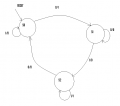
I am allowed to use J-K flip-flops and standard logic gates.
Now, i tried to do it this way, i made transition table, after i described states S0, S1 and S3 with values 00, 01, 10 respectively, and it looks like this:
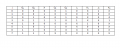
Now, i am not sure if i have to use 11 for Q1Q0 because there's no state described with 11, yet, table looks "unfinished" without it, and it's easier to minimize those functions. Now, after minimizing this is what i got as inputs:
J1=Q0X, K1=X', Jo=Q1'X', Ko=X.
Now, the part that i'm the least sure of:
Output value. I've seen it in some examples but i never understood the meaning of it, is it output of the whole sequential logic or what? Anyway, this is how the table looks like:
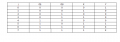
so Y looks like this: Y=Q1'Q0'x'+Q1X. Basically, i want to know if this is correct, am i allowed to add 11 in the table even though there are three states and why do i have to create logic for the output?
I am allowed to use J-K flip-flops and standard logic gates.
Now, i tried to do it this way, i made transition table, after i described states S0, S1 and S3 with values 00, 01, 10 respectively, and it looks like this:
Now, i am not sure if i have to use 11 for Q1Q0 because there's no state described with 11, yet, table looks "unfinished" without it, and it's easier to minimize those functions. Now, after minimizing this is what i got as inputs:
J1=Q0X, K1=X', Jo=Q1'X', Ko=X.
Now, the part that i'm the least sure of:
Output value. I've seen it in some examples but i never understood the meaning of it, is it output of the whole sequential logic or what? Anyway, this is how the table looks like:
so Y looks like this: Y=Q1'Q0'x'+Q1X. Basically, i want to know if this is correct, am i allowed to add 11 in the table even though there are three states and why do i have to create logic for the output?