Finding a SAR ADC with Acquisition Before Conversion

Thread Starter

Farzad001

Joined Jul 8, 2024
3
Hi,

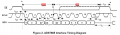
I want to use the ADS7885 for my signal monitoring circuit. My goal is to capture data from my signal exactly when I enable the SAR ADC. However, after reviewing the datasheet, I noticed that when the ADC is enabled, it first performs conversion before acquisition (See the first Figure ). This is a problem for me because I need to capture data at a specific moment in time.

If conversion happens first, I might receive invalid data, as the ADC would be converting a previously acquired sample rather than my intended signal. To get the correct data, I would have to wait until the next ADC cycle, which is not ideal for my application. What I want is an ADC that, upon enabling, immediately acquires the signal and then converts it before sending the data—so I can disable it afterward.

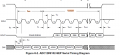
When I checked the ADC128S102 datasheet, I found that it works the way I need: it first enters acquisition mode, then performs conversion (See the last figure ).

Now, I need help finding similar ADCs with this behavior, but with differential inputs for future use. Could you confirm if my understanding is correct? Also, what keywords or specifications should I use to search for such ADCs?"
1741177445481.png

1741177454188.png
 

BobTPH

Joined Jun 5, 2013
11,466
your understanding has to be wrong. How can you do conversion before acquisition? I think the timing diagram must be showing the acquisition period for the next conversion.
 

Thread Starter

Farzad001

Joined Jul 8, 2024
3
your understanding has to be wrong. How can you do conversion before acquisition? I think the timing diagram must be showing the acquisition period for the next conversion.
Thanks for the reply. That’s exactly what I don’t understand! If the timing diagram shows the acquisition period for the next conversion, what happens the first time we enable the ADC? There was no prior acquisition, so where does the initial conversion data come from?

Even if the ADC had sampled something before, if it was disabled for a long time, that previous data may no longer be valid. How does the ADC handle this situation? Does it output invalid or unknown data on the first conversion after enabling?

I hope I explained my issue clearly.
 

BobTPH

Joined Jun 5, 2013
11,466
When you are not doing a conversion, the ADC is in acquisition mode. Acquisition just means that a capacitor is charging to the input voltage. The acquisition for the first conversion started when the chip was enabled.

I think what the diagram is trying to show is that, after a conversion, you must wait for the input capacitor to charge up again before doing the next conversion. You can wait longer, but not shorter between conversions. The conversion time plus the acquisition time is the minimum time between samples.
 

MisterBill2

Joined Jan 23, 2018
27,193
Thanks for the reply. That’s exactly what I don’t understand! If the timing diagram shows the acquisition period for the next conversion, what happens the first time we enable the ADC? There was no prior acquisition, so where does the initial conversion data come from?

Even if the ADC had sampled something before, if it was disabled for a long time, that previous data may no longer be valid. How does the ADC handle this situation? Does it output invalid or unknown data on the first conversion after enabling?

I hope I explained my issue clearly.
OK, there is, and has been for a long time, an alternative scheme to use with A/D converters. That is to have an ANALOG SAMPLE AND HOLD circuit feeding the A/D converter. when a measurement is required the S/H circuit changes from following the input voltage to holding the voltage that was present at the instant of the "HOLD" command. There is a bit of decay during the hold time, but there are schemes to reduce the decay rate, such as using a fast converter.
So there you have a proven method of doing just what is requested. PLUS you have the keywords to do a search for the details.
 

nsaspook

Joined Aug 27, 2009
16,255
OK, there is, and has been for a long time, an alternative scheme to use with A/D converters. That is to have an ANALOG SAMPLE AND HOLD circuit feeding the A/D converter. when a measurement is required the S/H circuit changes from following the input voltage to holding the voltage that was present at the instant of the "HOLD" command. There is a bit of decay during the hold time, but there are schemes to reduce the decay rate, such as using a fast converter.
So there you have a proven method of doing just what is requested. PLUS you have the keywords to do a search for the details.
Almost every good ADC has a programmable analog S&H (sometimes several on controllers designed for things like Motor Control where simultaneous same instant sampling is needed on several channels)

PIC32MZ or MK series has.
12-bit ADC Module
18 Msps rate with six Sample and Hold (S&H) circuits (five dedicated and one shared)

So you could get same instant (S&H) values of 6 separate signals for later conversion. This could all be done with DMA, automatically without main program intervention.
https://ww1.microchip.com/downloads...MK-Devices-Using-MPLAB-Harmony-DS90003319.pdf
 
Top