Finding 433.93 MHz Device being saturated inside garage.

Thread Starter

RADIX60

Joined Jul 20, 2026
2
Trying to isolate and find what device inside my garage might be saturating a 433.93 wireless outlet plug. Using two different brand name plugs and remotes, 5 wireless outlet receivers each. Receivers get saturated in middle of garage to about 2 inches from the remote. But work from extension cord all the way to end of driveway. Killed 2 breakers that feed power to inside garage, killed water heater, and HVAC. Receiver still getting saturated inside garage. Ordered RTL-SDR Blog V3 RF analyzer, but won't arrive until after Sept. 9th to 19th. Might make a shielded box to isolate direction of device causing interference.

MOD NOTE: E-mail address removed to avoid spam.
 
Last edited by a moderator:

MisterBill2

Joined Jan 23, 2018
27,870
If you have some sort of portablereceiver for that frequency, but it is getting saturated, making it unusable for tracing the source, try partly shielding that receiver with some aluminum foil. That will reduce the sensitivity enough to help localize the source a bit.
Consider also that the problem might possibly be a broad-band noise source, like an electric arc in some connection or device. It might even be a receiver, if it is a regenerative-detecor type. MANY years ago I discovered that a regenerative receiver kit I had built would also radiate a signal for quite a few feet.
 
Welcome to AAC.

Using a directional antenna and a receiver tuned to the offending frequency you should be able to zero in on whatever is causing the issue. And it could even be a neighbor's home causing the offending issue.
 
I had a similar problem with my weather station transmitters, something causing interference and stomping out the signal. Not as bad as your situation though.

What I did was make a sniffer using a 433MHz receiver module output then connected to a loudspeaker. Then I went for a walk. RXB12 module (uses SYN470R chip) with usual spring antenna, powered off 3 AA cells.
BUT the IC's output is so wimpy 10uA it can't even drive an Arduino w/pullup. So you must add an amplifier transistor to drive a speaker.

What I found is very high power TX bursts from the utility meters (water/electricity) every few minutes.
Outdoor motion-sensing light was making some RF noise too.

Keep in mind that 433MHz receivers make a lot of RF noise because of the local oscillator feedthrough.
So a battery powered 433MHz device can emit RF, this is how ASK/OOK devices work, they are dirty.
 

joeyd999

Joined Jun 6, 2011
6,386
You made me wonder if a mobile's radio could detect 433 MHz. Here's what Grok says (YMMV):


**No, there is no mobile app that can reliably detect 433 MHz signals using only the phone's built-in radio hardware.**

### Why Not?
- **Phone hardware limitations**: Smartphones have radios for cellular bands, Wi-Fi (2.4/5 GHz), Bluetooth (2.4 GHz), NFC (~13.56 MHz), and GPS — but **not** the 433 MHz ISM band (commonly used for wireless remotes, sensors, doorbells, weather stations, TPMS, etc.). The phone's RF frontend and antennas aren't tuned for or capable of receiving in that frequency range natively.
- Apps claiming "RF signal detection" (e.g., RF Signal Detector) typically only monitor cellular, Wi-Fi, or Bluetooth signals visible to the phone's existing hardware — they can't tune to arbitrary frequencies like 433 MHz.

### What Works Instead?
You **can** detect/decode 433 MHz signals on Android with an **external USB Software Defined Radio (SDR)** dongle (e.g., RTL-SDR) + OTG cable:
- **RTL-SDR 433 app** (Google Play): Runs the popular `rtl_433` decoder on-device. Supports 258+ protocols for sensors, remotes, etc. No internet/root needed.
- Other SDR apps like **RF Analyzer**, **SDR++**, or **SDR Touch** work with RTL-SDR/HackRF for spectrum viewing and receiving around 433 MHz.

**Requirements**:
- Android phone with USB OTG support (most modern ones do).
- RTL-SDR dongle (~$20–30) + appropriate antenna.
- Power considerations (some dongles need a powered hub).

**iOS**: Even more restricted. No direct USB SDR support like Android, and no apps that use built-in hardware for 433 MHz. You'd need external Wi-Fi/Bluetooth bridges or dedicated hardware.

### Alternatives Without Extra Hardware
- For **transmitting/learning** 433 MHz signals in smart home setups, use dedicated gateways (e.g., BroadLink, Sonoff) controlled via phone apps — not the phone's radio itself.
- Record signals from an existing remote with a cheap Arduino/ESP8266 + 433 MHz module, then replay via app-controlled devices.

If you're trying to monitor specific devices (e.g., garage door, sensors), an RTL-SDR setup on Android is the most straightforward portable option. Let me know more details about your use case for tailored recommendations!
 
For my garage door opener, it was nothing to do with RF interference that caused it to have really short range.
I traced it down to dried out electrolytic capacitors on the control board, noisy power to the RX chip. Handful of new caps and it's good.
A real head banger because I thought it was the remote transmitter instead and messed around with that too much.
 

Thread Starter

RADIX60

Joined Jul 20, 2026
2
Looking for work again, Desktop Support Engineer, Fancy Name for Level 1 and Level 2 IT Support for Windows 7,10,11 Machines. Deland, Florida - Trying to track down an electrical device in my garage that is emitting 433.93 MHz frequency and Saturating my Wireless Outlet Receivers. The Mystery Continues... More details in my first posting.
Mod: moved your post here. @RADIX60

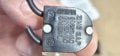
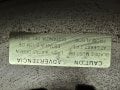
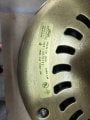
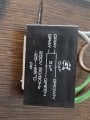
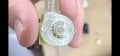
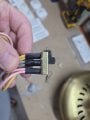
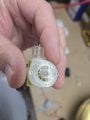
Found the Device that was emitting RF Frequencies that was interferring with the Wireless Remote Control Outlet Receivers as well as my Garage Door Opener. An Old Ceiling Fan from 1999 that was installed on the ceiling on the garage. Not sure how, guess failing parts were somehow emitting RF in a spectrum that was interfering with the Receivers ability to receive signals from the remote. Very standard Ceiling Fan Parts no burn marks or arcing of wires, nothing to indicate a failure.
 

Attachments

Last edited by a moderator:
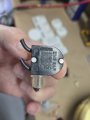
ANY of the switches shown could be suffering from internal arcing if they were switching mains voltages. That includes carbon track leakage and poor contact arcing. Two quite different things, both capable of "creating grief".
So hitting the switches with contact cleaner might be the fix. Or it might take more than that.
 
Top