Figuring the circuit of this LM358 "very low signal" amplifier

Thread Starter

FranciscoB

Joined Feb 8, 2014
138
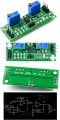
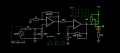
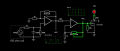
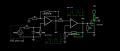
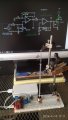
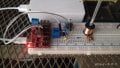
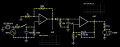
I would like to build a copy of this circuit on a breadboard and have been trying to figure it out through these three images.

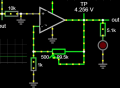
I used Falstad online circuit simulator with a voltage source of 5V and a 100mV test signal.

There's a capacitor connected between the VCC leg of the IC and somewhere else I cant figure out.

I was expecting a more prominent voltage swing when adjusting the potentiometers. There must be something wrong im overlooking as I dont know much about opamps.

Thank you
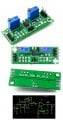
 

Attachments

panic mode

Joined Oct 10, 2011
4,948
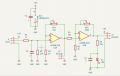
that cannot work, second opamp inverting input is grounded, the non-inverting input is used to create positive feedback so output will always latch up. without access to the board and removing any parts, this seem to be the likely circuit:
1720551816834.png
 
Last edited:

Thread Starter

FranciscoB

Joined Feb 8, 2014
138
Thank you so much for your corrections and for the schematic. Now the simulation seems to run correctly on Falstad: https://tinyurl.com/28o56qdz

I edited my image as I had also mislabeled a copper patch as VCC instead of GND. I attached the corrected image to this post.
 

Attachments

Thread Starter

FranciscoB

Joined Feb 8, 2014
138
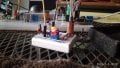
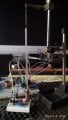
I put the following project together around an LM324, the input signal coming from the magnet vibrating over the 150 ohm coil.

The plan in to rebuild it around the LM358. Any suggestions regarding some components I should add for signal condition? Like filtering, for example.
 

Attachments

ericgibbs

Joined Jan 29, 2010
21,421
Hi FB,
That combination of 1K and 100nF should remove any spikes.
What signal level do expect at the Input of the 1st OPA.?
E
 
Last edited:

Thread Starter

FranciscoB

Joined Feb 8, 2014
138
Frankly I dont know, as I dont own an oscilloscope. I only measured the resistance of the coil with a multimeter, which is around 180ohm. ..
 

panic mode

Joined Oct 10, 2011
4,948
the input to the circuit is AC... i would to get the steady output rather than pulse train.
probably use AC coupling, high gain, and missing pulse detection circuit (or rectification, filter...)
 

Thread Starter

FranciscoB

Joined Feb 8, 2014
138
the input to the circuit is AC... i would to get the steady output rather than pulse train.
probably use AC coupling, high gain, and missing pulse detection circuit (or rectification, filter...)
I need to get an oscilloscope before attempting something like this :)
 

Audioguru again

Joined Oct 21, 2019
6,826
You already have DC pulses since the LM358 input rectifies the AC signal. Simply filter the DC pulses to make an average or peak DC voltage. It might take a fairly long time for the rectified DC to reach its maximum.
Note that your signal input is AC but the LM358 Absolute Maximum Input Level is -0.3V.

Wires all over the place on a breadboard usually pickup lots of AC from electricity and other interference since the wires are antennas.
 
Top