Fender cover up

MisterBill2

Joined Jan 23, 2018
27,540
I was QUITE CLEAR that it is a FIVE POSITION switch on the guitar. It works with the three pickups and connects any one of the three pickups, in addition to two combinations of pickups. That allows for five different "sounds", which is an option that I had not been aware of before. What WOULD TEND TO SCARE ME AWAY wold be a battery compartment on a guitar.
 

Thread Starter

Zorrow333

Joined Apr 15, 2025
28
Yes I understood you well. Its the battery and what its making to the guitar that can be scarry. You get incredibly much more output and volume with a guitar with batteries than ones without.
 

MisterBill2

Joined Jan 23, 2018
27,540
Putting the gain into the amplifier, or into a stomp box on the floor makes a lot more sense than putting a battery that will run down eventually, seldom at a convenient time , and certainly can leak corrosives to do damage, into an expensive guitar does not make sense to me.
Putting active electronics inside a guitar using the well established "Phantom Power" with a 3-pin XLR connector makes more sense, OR using a TRS (Tip, Ring, Sleeve) plug and what looks like a standard cable, but with a battery feed from outside, also makes more sense. And certainly that "Clapton" kit could be produced in a small enough package to maybe be added into a solid body . BUt aside from the pickup switching, what is there that would not work as well at the other end of a GOOD QUALITY cable. ???
 
Last edited:

Thread Starter

Zorrow333

Joined Apr 15, 2025
28
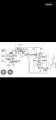
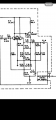
I think first and fore most Clspton hated pedals, so he wanted all the power in the guitar. Then you can loose a small amount of output ( or large if its an old cable ) by the signal going through a cable to the pedal and then into the amplifier. Now its going immidiately to the amolifier from the guitar. But there seem to be other benefits of having an all active guitar with active electronics if you are into high output. The active guitar seems more effective in everything. I read somewhere a passive guitar could loose between 15 to 30 % output ( dont quote me on this as I am not sure if those were the correct Numbers ) thats quite a lot while an active guitar lost nothing ( 0 % ) of output. I seem to remember there could be things Done to minimize this output loss by having shorter more modern cables but still there could be a 5 to 15 % output loss with a passive guitar. In this case I think he has gone only for power and the loudest guitar possible. There is deffinitely something going on around the 2 2N6429 transistors and capacitors C14 C8 and C7 as it says + 10/16 V. Could be some voltage trippling or more. If he only wanted to have a Humbucker sound on a Strat that could easily be Done by changing the frequenzis on the guitar. He would not have needed an extremely high output active guitar with active electronics and 25 DB boost, that just makes the guitar have an enourmous amount of output. Far far more than a passive Humbucker or passive single coil guitar would be able to do. Some speculate the 3 stage boost actually gives it 50,6 DB boost instead of 25 DB boost by reading the active cuircuit. As he used to record with a 30 DB Trebble booster a Marshall amp blasted to Max giving him through the Marshall amp another 20 DB boost. So that would be 50 DB boost and a passive Gibson Les Paul. Now he could even get more output just using his onboard active electronics of 50,6 DB boost and an amp without boost. As I Said before this guitar is as far away from a normal Stratocaster as possible but very fun to play with, but you have to keep it low if you have neighbours around you. I once measured The Clapton Strat to 99,1 decibel and on the exact same settings on the amp with a regular Stratocaster I measured 33 decibel. Thats an astronomical difference.
 

Attachments

schmitt trigger

Joined Jul 12, 2010
2,090
For me, and it is a personal opinion, the “sustain-king” is Dave Gilmour.
He used pedals, sometimes stacking them together.
Clapton was a different style and obviously had different guitar playing preferences.

The thing they had in common is that all the devices were fully analog, employing either discrete semiconductors or even tubes.
 

Ian0

Joined Aug 7, 2020
13,132
Are you possibly confusing voltage gain and power gain? 25db of voltage gain is 50db of power gain.
No it isn't. Voltage gain is 20.log(Vout/Vin),
Power gain is 10.log(Pout/Pin)
so, assuming the impedance remains constant:
VGain = 10.log((Vout^2/R)/(Vin^2/R))
= 10.log ((Vout/Vin)^2)
= 10. 2.log(Vout/Vin)
=20.log(Vout/Vin)
 

MisterBill2

Joined Jan 23, 2018
27,540
OK, That whole circuit can easily be assembled (surface mount parts) on a small PCB that mounts to a standard plug that connects to the guitar and then a cord with power can go to an amp plus a battery box and never need to modify the guitar.

And as for the loss in the cord, certainly a cord made of the wrong stuff will do that or even worse. But if you use the cord made to work with a crystal microphone it will be a different story. And if you cheat and use a plug-in wireless box then there is no cord.
Understand that "shielded cables" come in more types than flavors of ice cream! I saw an on-line shielded cable catalog with over 47 PAGES of cable types! So there are some much more suited than others.
 

Thread Starter

Zorrow333

Joined Apr 15, 2025
28
For me, and it is a personal opinion, the “sustain-king” is Dave Gilmour.
He used pedals, sometimes stacking them together.
Clapton was a different style and obviously had different guitar playing preferences.

The thing they had in common is that all the devices were fully analog, employing either discrete semiconductors or even tubes.
Dont doubt that for a second, but the dusts in coming out of the Clapton signature Stratocaster is like absolutely nothing I have heard before. That Clapton doesnt use it is another matter.
 

Thread Starter

Zorrow333

Joined Apr 15, 2025
28
Dont doubt that for a second, but the dusts in coming out of the Clapton signature Stratocaster is like absolutely nothing I have heard before. That Clapton doesnt use it is another matter.
Sustain coming from the Clapton signature Stratocaster is like nothing Else ai have ever heard . It should have Said. Its incredible. That Clapton doesnt use it is another matter. But you can hold the tone For a minute or so.
 

Thread Starter

Zorrow333

Joined Apr 15, 2025
28
No it isn't. Voltage gain is 20.log(Vout/Vin),
Power gain is 10.log(Pout/Pin)
so, assuming the impedance remains constant:
VGain = 10.log((Vout^2/R)/(Vin^2/R))
= 10.log ((Vout/Vin)^2)
= 10. 2.log(Vout/Vin)
=20.log(Vout/Vin)
In this case Fender marks it as 25 DB voltage boost.
 

MisterBill2

Joined Jan 23, 2018
27,540
Back in the late 1970's times I discussed adding an electromagnetic driver to the head end of a guitar with a T. Herald, who was a custom guitar builder at the time. My thinking was that it would allow extended sustain of tones. All it would require was an external amplifier and a "analog solenoid" device to couple the signal back to the strings. Unfortunately for the project I had no resources to take it any farther. Now I see that it is done much more simply, in a totally electronic manner.
This thread prompted my recollection. Has anybody seen a "Herald" guitar? He was adding an internal piezo-electric pickup to acoustic guitars, which is what I was helping him with.
 

BobTPH

Joined Jun 5, 2013
11,518
And from anyone I have heard it 50 DB power gain equals 25 DB voltage boost. Thats been the one thing being very clear.
Check out post #26.

@Ian0 has it right.

And, as for AI, the “AI summary” I got from Google showed the same equations, proving the two are the same, then followed it with an example where they multiplied by two to convert from voltage gain to power gain. Go figure.
 
Top